
On this page
If you're planning a food cupboard, use this table to compare familiar tins. It covers energy and protein per tin, with figures from UK labels. For the full emergency food list, see our separate guide.
Calories can help compare tins, but this page isn't a prescribed diet or a calorie target. The NHS average adult figures below are a reference only. Needs vary with age, size and activity.
How we worked out the figures
We took energy and protein figures from each product label as published by its maker or a UK supermarket, checked 4 November 2026. Where a label gives per-100 g figures only, we multiplied by the tin's net weight. Those figures are marked as worked out. Recipes change, so check your own tin. Fish and chickpeas use drained-weight figures where shown. We haven't tested or lab-analysed these foods.

Full image attribution
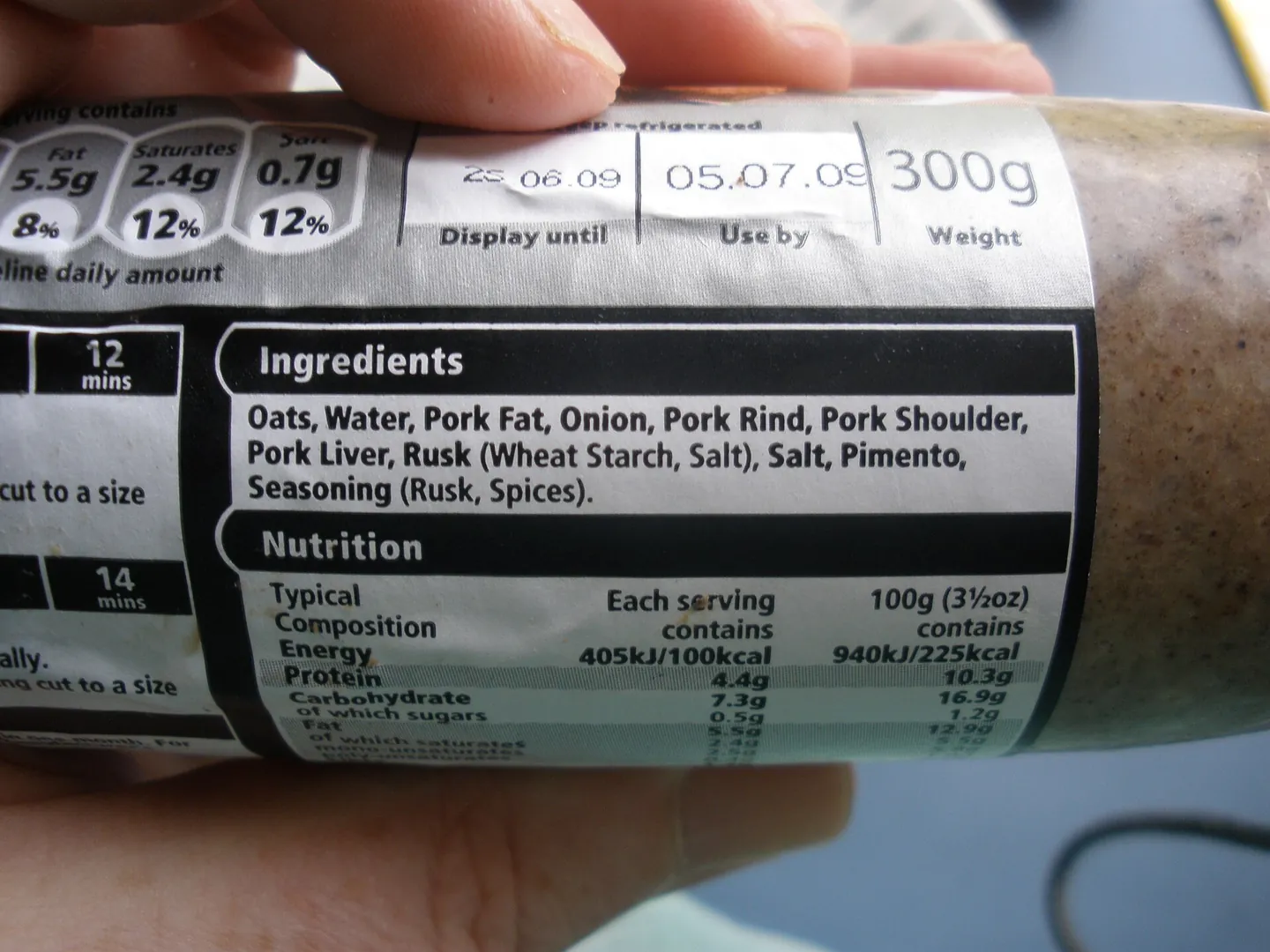
White pudding ingredients label.JPG — O'Dea; CC BY-SA 4.0. Resized and converted to WebP; source: https://commons.wikimedia.org/wiki/File:White_pudding_ingredients_label.JPG
Amazon links in this guide are affiliate links. As an Amazon Associate I earn from qualifying purchases. Read our affiliate disclosure.
| Tin | Best for | kcal per 100 g | kcal per tin | Protein per tin | Tins for about 2,000 kcal | Notes |
|---|---|---|---|---|---|---|
| Carnation Sweetened Condensed Milk, 397 g | Most energy in one tin | 322 | About 1,278, worked out | About 30 g, worked out | 1.6 | 55 g sugars per 100 g; milk |
| SPAM Chopped Pork & Ham, 340 g | Most energy per savoury tin | 292 | About 993, worked out | 51 g, worked out | 2.0 | Salt 2.4 g per 100 g; label says gluten free, may contain milk |
| Princes Corned Beef, 340 g | Most protein per tin | 222 | About 755, worked out | 85 g, worked out | 2.6 | Label: beef 98%, salt, preservative sodium nitrate |
| Princes Chilli con Carne, 392 g | A hot one-pan meal | 147 | About 576, worked out | About 25 g, worked out | 3.5 | Contains wheat and celery |
| Princes Stewed Steak in Gravy, 392 g | Protein for a stew | 116 | About 455, worked out | About 57 g, worked out | 4.4 | Contains wheat |
| Hunger Breaks All Day Breakfast, 395 g | A full meal in one tin | 112 | 442, label | 20.5 g, label | 4.5 | Contains wheat, egg and milk |
| Ambrosia Rice Pudding, 400 g | Ready-made pudding | 93 | 372, label | About 12 g, label | 5.4 | Milk; vegetarian |
| Heinz Beanz, 415 g | Vegan staple | 81 | 336, label | 20 g, label | 6.0 | Vegan |
| Napolina Chick Peas, 400 g, 240 g drained | Vegetarian protein | 126 drained | About 302 drained, worked out | About 17 g, worked out | 6.6 | Contains sulphites (sodium metabisulphite) |
| Heinz Cream of Tomato Soup, 400 g | Shown for comparison | 51 | 204, label | About 3 g, label | 9.8 | Contains milk; a tin of soup is a light meal |
| Princes Mackerel Fillets in Sunflower Oil, 125 g | Oily fish with omega-3 | 271 drained | Not given; check drained weight | Not given | n/a | Fish; 2.0 g omega-3 per 100 g drained |
| Princes Sardines in Sunflower Oil, 120 g | Small, protein-dense fish | 249 drained | Not given; check drained weight | Not given | n/a | Fish |
| Fray Bentos Steak & Kidney Pie, 425 g | Only with a working oven | 146 | 620, label | 27.2 g, label | 3.2 | Needs an oven; contains wheat and barley |
The 'tins for about 2,000 kcal' column divides 2,000 by the energy per tin and rounds to one decimal. It is a comparison only. Products and recipes change; check your tin.
Highest energy per 100 g
- Carnation condensed milk, 322 kcal
- SPAM chopped pork and ham, 292 kcal
- Princes mackerel in sunflower oil, 271 kcal drained
- Princes sardines in sunflower oil, 249 kcal drained
- Princes corned beef, 222 kcal
- Princes chilli con carne, 147 kcal
- Fray Bentos pie, 146 kcal
- Napolina chickpeas, 126 kcal drained
- Princes stewed steak, 116 kcal
- Hunger Breaks all day breakfast, 112 kcal
- Ambrosia rice pudding, 93 kcal
- Heinz Beanz, 81 kcal
- Heinz cream of tomato soup, 51 kcal
Fat and sugar add energy. Oily fish and fatty meats rank higher here; soups and beans in sauce rank lower.
How many tins is a day's reference?
The NHS gives average reference figures of around 2,000 kcal a day for women and 2,500 for men. Needs vary with age, size and activity. These figures are not a prescribed diet or a calorie target. Food labels often show a 2,000 kcal (8,400 kJ) reference intake for an average adult.
For example, two tins of Princes chilli con carne (about 1,152 kcal), one Ambrosia rice pudding (372 kcal) and one Heinz Beanz (336 kcal) add up to about 1,860 kcal. Bread, crackers, oats or a drink with milk could add to a meal, but we haven't assigned them a calorie figure here. A tin of soup alone has 204 kcal, so soup-only days fall well short. Pair soup with something more filling. For balanced menus, see how to plan balanced emergency meals and the NHS Eatwell Guide. Our food calculator counts portions, not calories.
Mix tins rather than relying on one
Condensed milk and SPAM are high in sugar or salt according to their labels. Use them as part of a mix rather than a daily base. The NHS Eatwell Guide gives a broader picture of food groups. Our meal portions and nutrition guide covers balanced menus.
Hot or cold?
Follow the preparation instructions on the tin. If you heat food, use the hob while it works, or a camping stove used outdoors. Without heat, use meals that need no cooking. The Fray Bentos steak and kidney pie needs an oven, so it isn't a power-cut meal without a working oven. Keep a manual tin opener.
Allergies and special diets
The labels we used list milk in Carnation, Ambrosia, Heinz tomato soup and Hunger Breaks; SPAM may contain milk. Hunger Breaks, Princes chilli, Princes stewed steak and Fray Bentos list wheat or gluten; Fray Bentos also lists barley. Hunger Breaks lists egg. Princes chilli lists celery. Mackerel and sardines contain fish. Napolina chickpeas list sulphites. Heinz Beanz is labelled vegan. Recipes change. Read the allergen box on every tin you buy. See allergies and special diets and the Food Standards Agency allergy guidance.

Full image attribution
Gluten-free food products in Israel, April 2024 15.jpg — Chenspec; CC BY-SA 4.0. Resized and converted to WebP; source: https://commons.wikimedia.org/wiki/File:Gluten-free_food_products_in_Israel,_April_2024_15.jpg
Shelf life
Most tins in this comparison show a best-before date rather than a published shelf-life figure. Of the sources here, only the Nestlé Professional Carnation page states one: 18 months. Best before is about quality; use by is about safety. Read how long tinned food lasts and how to eat and replace cupboard food.

Full image attribution
Cupboard in the kitchen - Daebang Little Switzerland.jpg — Jinho Jung from Seoul, South Korea; CC BY-SA 2.0. Resized and converted to WebP; source: https://commons.wikimedia.org/wiki/File:Cupboard_in_the_kitchen_-_Daebang_Little_Switzerland.jpg
Common questions
What tinned food has the most calories?
By label energy per 100 g, Carnation sweetened condensed milk ranks highest in our table, followed by SPAM chopped pork and ham, then oily fish in oil.
How many calories are in a tin of soup?
A 400 g tin of Heinz Cream of Tomato has 204 kcal on its label. Other soups differ, so check the tin.
How many calories are in a tin of baked beans?
A 415 g tin of Heinz Beanz has 336 kcal from the label's 168 kcal per half can.
How many tins of food a day for one adult?
There isn't a set number. NHS average adult reference figures are around 2,000 kcal for women and 2,500 for men. Needs vary, and these figures aren't a prescribed diet or calorie target.
Which tinned foods last the longest?
We don't rank tins by shelf life. Most makers show a best-before date rather than publishing a shelf-life figure. See our tinned-food shelf-life guide.
Related guides
Sources and checking
- NHS: understanding calories
- NHS: reading food labels
- NHS Eatwell Guide
- Food Standards Agency: best-before and use-by dates
- Food Standards Agency: food allergy and intolerance
- Nestlé Professional: Carnation condensed milk
- Sainsbury's: SPAM chopped pork and ham
- Princes: corned beef
- Princes: mackerel fillets in sunflower oil
- Princes: sardines in sunflower oil
- Princes: chilli con carne
- Princes: stewed steak in gravy
- Sainsbury's: Hunger Breaks all day breakfast
- Sainsbury's: Napolina chick peas
- Ambrosia: rice pudding
- Heinz: Beanz
- Heinz: cream of tomato soup
- Sainsbury's: Fray Bentos steak and kidney pie
Sources checked 4 November 2026. Worked-out values use per-100 g figures and the pack weight. Recipes and labels can change.