
On this page
- Decide what the reserve is for
- Check capacity before cooking
- Cook only what you can manage safely
- Plan the cooling step
- Write labels that answer the next cook's questions
- Count meals without holding the door open
- Plan defrosting as part of choosing dinner
- Build the reserve through ordinary meals
- Agree rules for a shared freezer
- Before your next batch session
- Sources
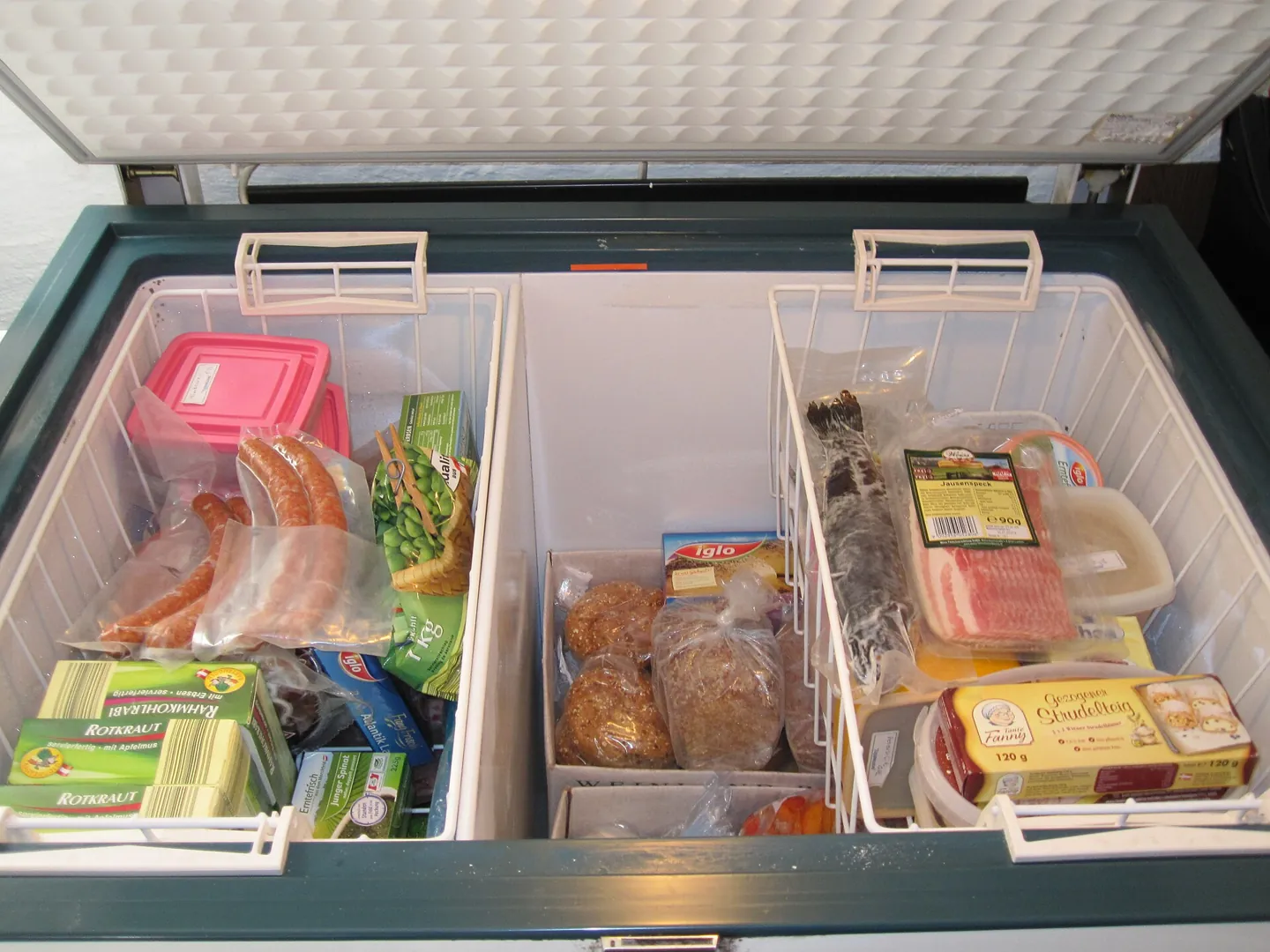
A useful freezer reserve is recognisable food in portions you can use. It is not a drawer of unlabelled tubs, a bulk purchase that never fits the weekly menu or a promise that electricity will always be available. A few well-managed meals can make an awkward week much easier.
This guide concerns ordinary preparation, storage and rotation while the freezer works normally. If electricity has failed or food may have warmed, use the separate power-cut food safety guide. Do not apply normal frozen-storage assumptions to food with an uncertain temperature history.

Full image attribution
Food label from the Co-operative Food Sausages.jpg — No machine-readable author provided. Malcomburetta assumed (based on copyright claims).; CC0 1.0. Resized and converted to WebP; source: https://commons.wikimedia.org/wiki/File:Food_label_from_the_Co-operative_Food_Sausages.jpg
Decide what the reserve is for
Choose the problem you want the freezer to solve. Meals for a day when you are unwell may need only a microwave and little washing-up. Ingredients for someone who enjoys cooking are different. A raw joint is useful stock, but it is not a ready-made dinner for a tired carer.
List a few meals your household already eats and can prepare safely. Consider who will heat them if the usual cook is unavailable. Write instructions that person can follow, including whether accompaniments are needed. Do not assume the name of the dish explains its preparation.
Keep a separate cupboard reserve for power or cooking disruption. Our emergency food list and no-cook meals cover food that is less dependent on kitchen equipment. Frozen portions can supplement those meals when conditions allow.
Check capacity before cooking
Read the appliance instructions, including its freezing capacity and loading advice. A freezer with empty drawer space is not necessarily designed to freeze an unlimited amount of newly prepared food at once. Leave room for the containers and the handling needed to get them in safely.
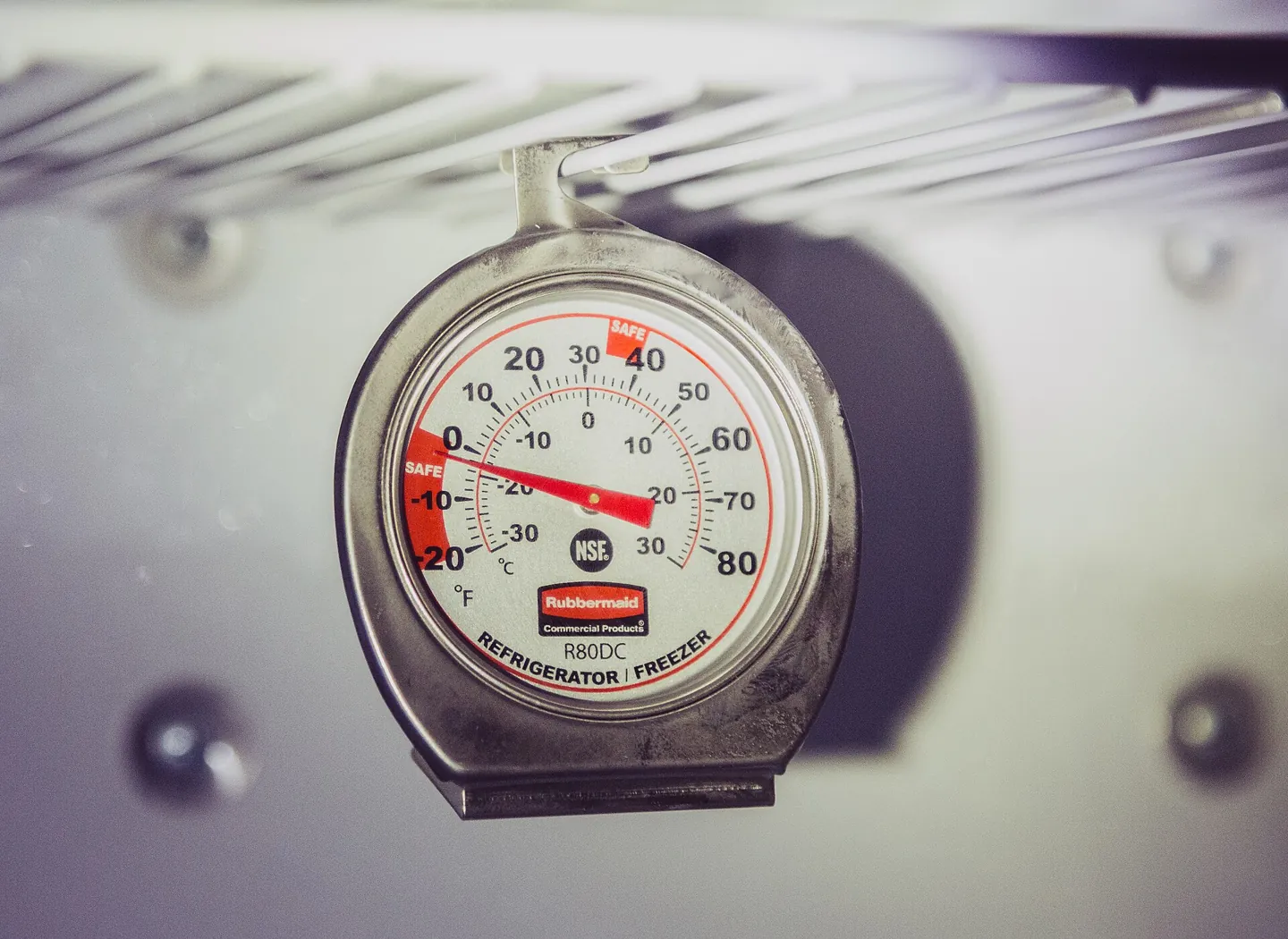
The FSA's chilling and freezing guidance recommends a fridge between 0 and 5°C and a freezer around -18°C. A suitable thermometer helps check the actual storage conditions; a dial number alone does not tell you the temperature.
Check fridge space as well. Cooling and defrosting both need planning. If every shelf is full, making a large batch creates a handling problem before anything reaches the freezer. Reduce the batch or arrange the space first.
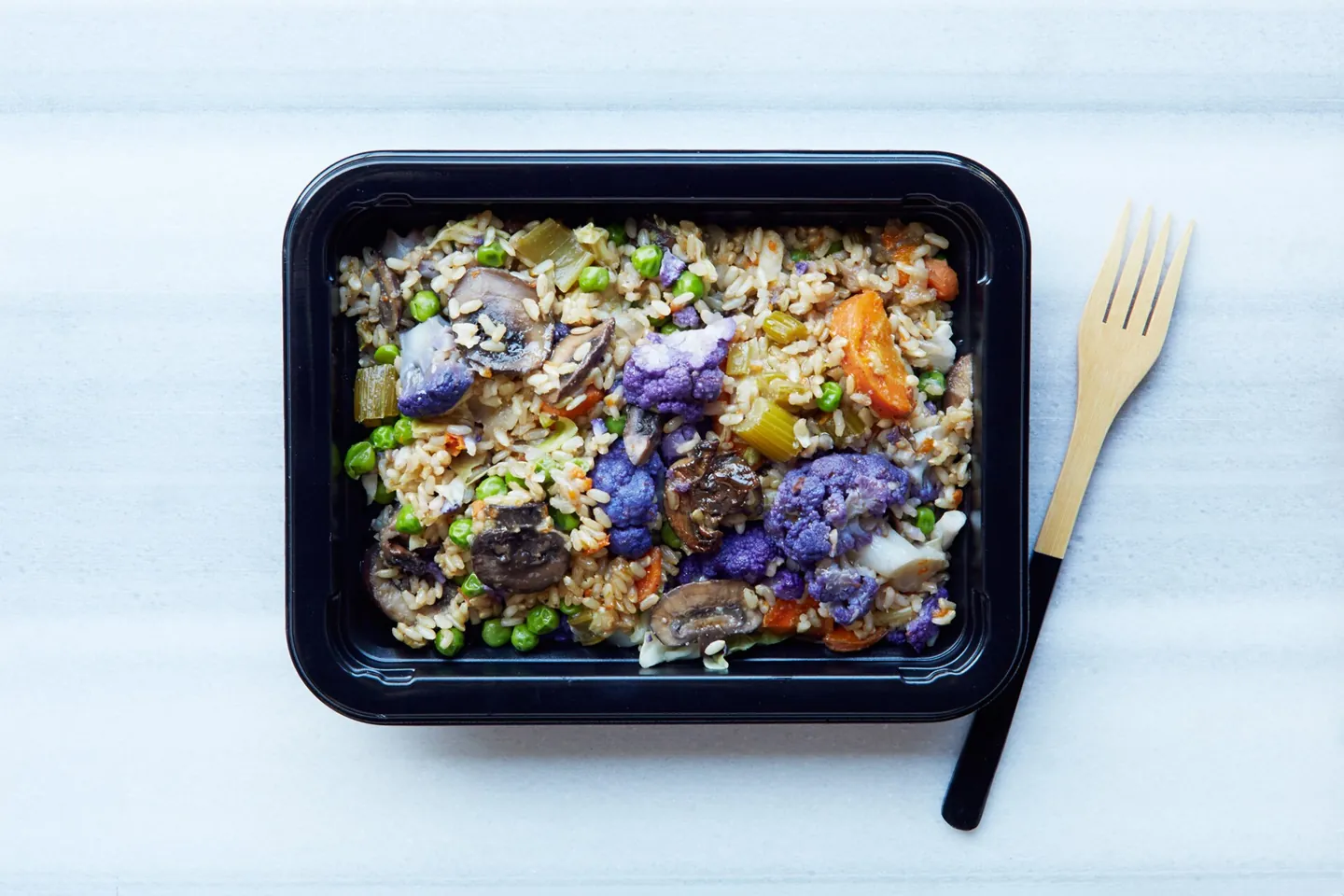
Choose containers that fit the appliance and the intended portion. Several small meals can be more flexible than a single large block. Consider whether the person using them can lift the container, remove the lid and read the label.
Cook only what you can manage safely
Start with a familiar recipe and a modest extra amount. Use ingredients that are still safe and have been stored properly. Freezing is not a way to rescue food that has already become unsafe, and a fresh label cannot erase earlier poor handling.
Follow the recipe and product instructions for cooking. Check the whole dish rather than relying on a bubbling edge or a hot container. The FSA cooking guidance explains checking that food is cooked through and the use of a food thermometer where appropriate.
Set out the clean containers, labels and cooling space before finishing the cooking. A common difficulty is discovering that the only available tubs still contain other food. It is easier to reduce the recipe than to improvise a storage arrangement with a large hot saucepan waiting.
Keep raw ingredients and their equipment away from finished food. Once a meal is cooked, return used boards and utensils for cleaning rather than using them to divide portions. A batch session creates more transfers between pans, containers and worktops than a single meal.
Plan the cooling step
Divide cooked food into smaller portions to help it cool. The FSA advises cooling cooked food and putting it in the fridge within one to two hours, and cooling warm dishes before freezing. Eat refrigerated leftovers within 48 hours or freeze them promptly if that will not be possible; rice has a shorter chilled-storage limit. Do not leave a large pan on the worktop overnight. Follow stricter food-specific instructions where they apply.
Keep the portions protected from raw-food splashes, pets and unnecessary handling while cooling. Use a timer so the kitchen task is not forgotten when another household job interrupts. Record the cooking date when you make the food, not several days later from memory.
Rice needs particular care. The NHS rice and grain advice explains that poor storage can permit toxins that reheating does not remove. It advises cooling rice and grains within an hour if they are not eaten immediately, then refrigerating. Eat refrigerated cooked rice within 24 hours. For rice intended for freezing, the FSA home food fact checker advises cooling it quickly in small portions and getting it into the freezer within an hour of cooking. Defrost it in the fridge, reheat once until steaming hot throughout and eat immediately. Do not leave rice in its cooking pan to cool slowly, or try to rescue rice left out overnight by reheating.
If the household cannot reliably manage the cooling step for a particular recipe, choose a different batch meal or an appropriate commercially frozen option. Convenience is not improved by a process that requires more attention than you can give it.

Full image attribution
Meal prep food container (43991880552).jpg — Ella Olsson from Stockholm, Sweden; CC BY 2.0. Resized and converted to WebP; source: https://commons.wikimedia.org/wiki/File:Meal_prep_food_container_(43991880552).jpg
Write labels that answer the next cook's questions
| Label item | Why it helps |
|---|---|
| Plain food name | Distinguishes similar-looking dishes without opening them. |
| Cooked or raw | Prevents guessing the treatment still needed. |
| Preparation and freezing dates | Supports rotation and an honest record of handling. |
| Number and type of portions | Shows whether the pack is one lunch or a shared main meal. |
| Ingredients or linked recipe record | Keeps dietary and allergen information available. |
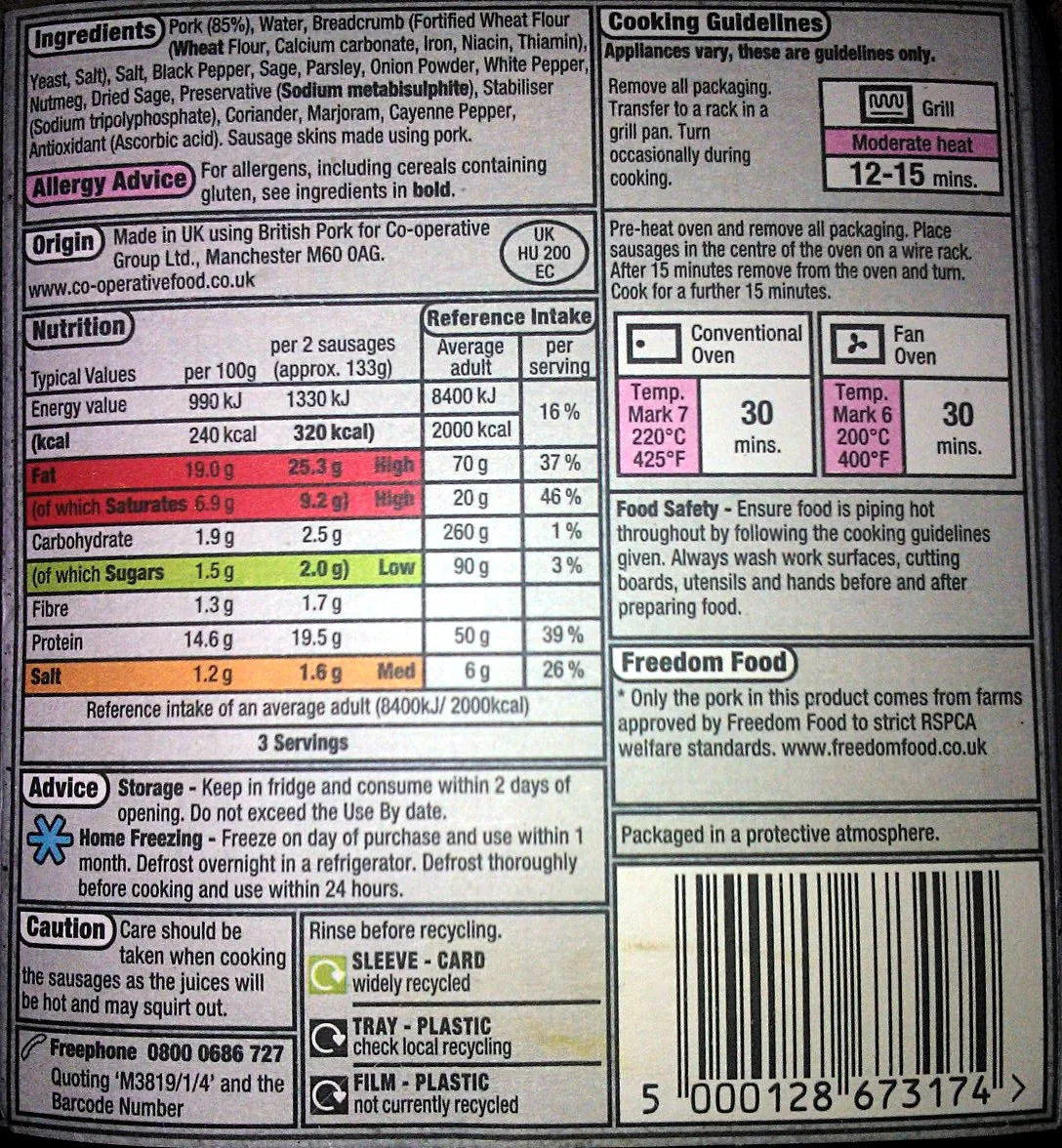
| Defrosting and cooking directions | Tells another household member how to use the meal. |
Use a label on the container itself, not only on a lid that might be swapped. Where space is limited, give the meal a simple code linked to a paper recipe sheet. Avoid a system that needs an internet connection to determine whether food is raw.
The special-diet planning guide covers separate portions and cross-contact precautions. Do not label a homemade dish free from an allergen unless its ingredients and preparation genuinely support that claim under the person's established plan.
Count meals without holding the door open
Keep an inventory outside the freezer. Paper on a nearby cupboard works well if everyone can reach it. Record the food, date, portions and drawer or basket. An optional digital copy can help with shopping, but the working list should be easy to change at the moment a meal is removed.
Count finished portions separately from ingredients. Two bags of vegetables and a raw chicken do not equal three prepared meals. Use distinct headings such as "ready meals", "ingredients" and "accompaniments" if that matches your cooking routine.
Update the count when taking food out, not after eating. Mark it as defrosting if someone else might choose the same meal. This prevents buying replacements for food already available or thawing more than the household can use.
Keep older suitable meals accessible and choose them during normal menu planning. Do not assign one blanket storage life to every homemade dish. Follow product, recipe and appliance guidance, recognising that quality and safe handling are separate questions.
Plan defrosting as part of choosing dinner
The FSA advises defrosting food in the fridge and using it within 24 hours after it is fully defrosted. Follow the product's instructions where food is intended to be cooked from frozen. Do not assume a homemade version can use the same method as a commercially prepared meal.
Move the container onto a suitable tray or into a covered arrangement that prevents leakage onto other food. Record when it was moved and, where needed, when thawing completed. A thick block may require more planning than several individual portions.
When reheating leftovers, follow FSA advice to reheat only once and make the food steaming hot throughout. Follow stirring and standing instructions for microwave heating. The time for one portion is not automatically suitable for two containers squeezed together.
If plans change after defrosting, use current food-specific guidance to decide what remains possible. Do not repeatedly freeze, thaw and reheat the same prepared meal to preserve the inventory count. A small portion system reduces the chance of that dilemma.

Full image attribution
Rubbermaid R80DC Refrigerator Freezer Thermometer (40251799920).jpg — Tony Webster from Minneapolis, Minnesota, United States; CC BY 2.0. Resized and converted to WebP; source: https://commons.wikimedia.org/wiki/File:Rubbermaid_R80DC_Refrigerator_Freezer_Thermometer_(40251799920).jpg
Build the reserve through ordinary meals
Start by making one extra suitable portion when cooking something familiar. Label it, add it to the list and plan to eat it during a later ordinary week. If nobody chooses it, ask why before making a bigger batch. The answer may be texture, portion size or inconvenient reheating.
The portion-planning guide helps match containers to actual appetites. A household with different schedules may need individual portions; a shared evening meal may work better in a larger container. Neither arrangement is universally best.
Review the reserve before a holiday, change of household routine or busy period. Use food that is becoming forgotten, check labels and remove items whose identity or handling history cannot be established safely. An accurate short list is more useful than a reassuring but unreliable long one.
Agree rules for a shared freezer
In a shared house, give each person a clear area and agree where communal meals belong. Put the inventory where everyone can update it. A label should say who the food is for as well as what it contains, particularly when a separate portion meets a dietary requirement.
Agree what to do when someone notices a door left open, a damaged seal or an unexpected temperature reading. Record the concern and assess the food using appropriate guidance; do not silently reset the appliance and leave other people to assume normal storage continued.
Before your next batch session
- Choose a familiar meal and decide who will use each portion.
- Check fridge space, freezer temperature and appliance loading instructions.
- Prepare suitable clean containers and labels before cooking.
- Cook thoroughly and manage cooling within relevant guidance.
- Apply stricter instructions for rice and other specific foods.
- Label contents, status, dates, portions and preparation directions.
- Add the meals to an inventory kept outside the freezer.
- Plan a normal occasion to eat and replace them.
Sources
Primary sources checked on 2 November 2026. Incident instructions and individual care plans take precedence where relevant.