
On this page
- Make the first minute useful
- Ask for the relevant service
- Give a location that another person can find
- Use the phone you have
- Use a recognisable whistle signal
- Use light without creating another hazard
- Make waiting sustainable
- A realistic moorland example
- Before and during an incident
- Questions people ask
- Sources
A whistle can attract attention, but it cannot explain that someone has fallen, name the hill or tell rescuers which side of a stream you are on. Start with communication and location. Treat audible and visible signals as ways to support that information when coverage is poor or rescuers are approaching.
Prepare before a walk by learning your phone's emergency controls, carrying a torch and whistle where you can reach them, and leaving a route plan with someone reliable. None of these guarantees reception or rescue within a particular time. Together they give you more ways to make an incident understood.

Full image attribution
Zebralight H600Fc Mk IV headlamp in a GITD silicone holder.jpg — Siarhei Besarab; CC BY-SA 4.0. Resized and converted to WebP; source: https://commons.wikimedia.org/wiki/File:Zebralight_H600Fc_Mk_IV_headlamp_in_a_GITD_silicone_holder.jpg
Make the first minute useful
Stop in a safe position and assess what has happened. Keep the group together where possible. If someone is seriously injured, trapped, becoming dangerously cold or unable to continue safely, seek emergency help rather than waiting for the situation to become more dramatic.
Separate immediate needs from optional tasks. One person can make the call while another follows first-aid instructions or helps keep the casualty sheltered. Avoid everyone using their phone simultaneously to search for advice while nobody communicates with the emergency services.
Give the call handler a clear account, including the number of people, the problem, your location and a callback number. Say when something is uncertain. An honest last known position is better than a confident but invented grid reference.
Ask for the relevant service
| Situation | What to request |
|---|---|
| Mountain or remote hill emergency | Call 999 or 112; ask for Police, then Mountain Rescue. |
| Emergency at sea or on the coast | Call 999 or 112; ask for Coastguard. |
| Person in difficulty in inland water | Call 999 or 112 and explain the water incident; RNLI advises asking for Fire and Rescue. |
| Medical emergency with road access | Call 999, describe the medical problem and location, and follow the operator's direction. |
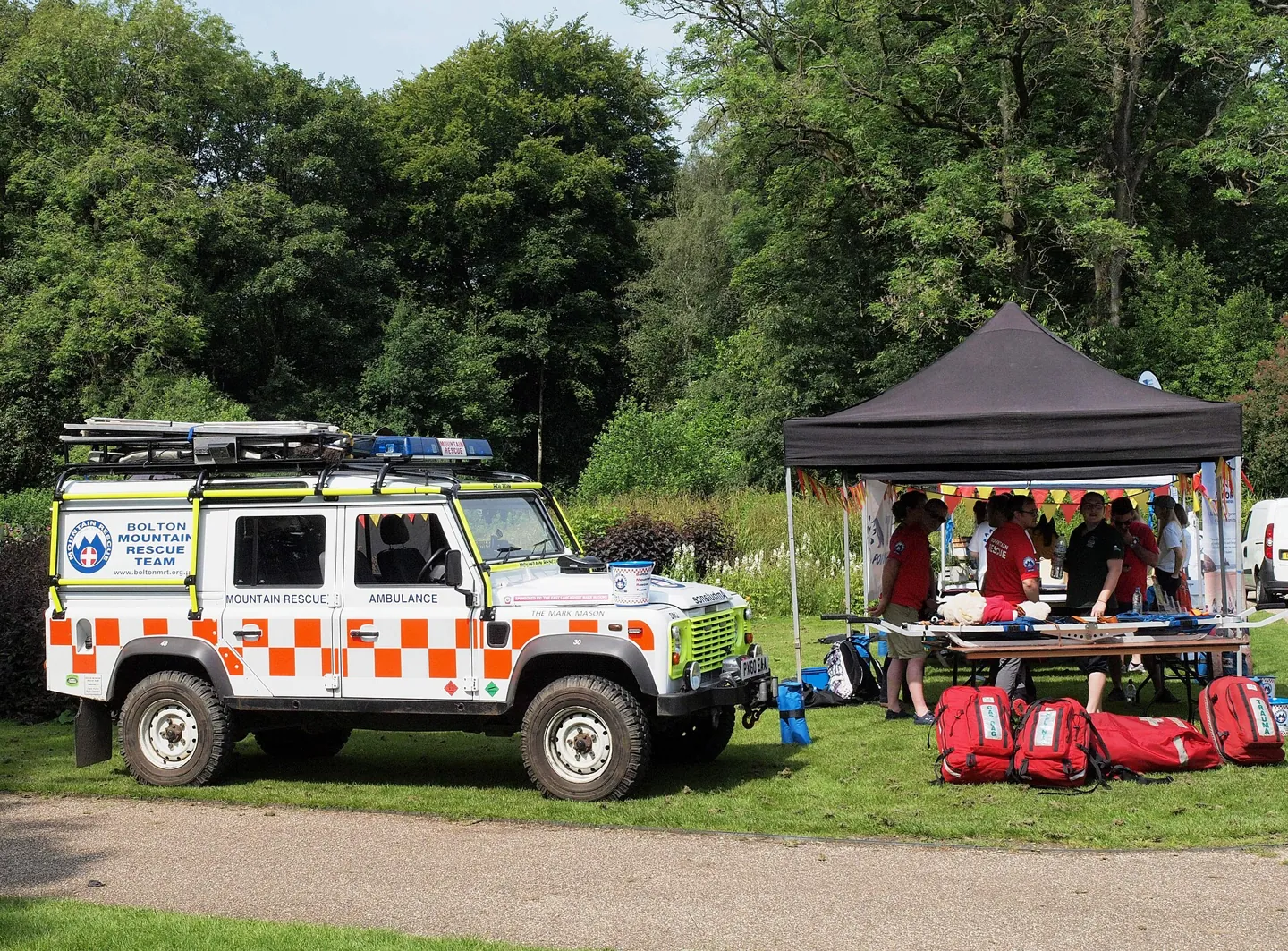
Mountain Rescue England and Wales gives the Police then Mountain Rescue procedure. The RNLI explains Coastguard and inland-water contact arrangements. You do not need to find a volunteer team's personal number or call the nearest lifeboat station.
If you are unsure which service applies, describe the emergency and setting to the operator. Do not delay calling while trying to classify a complicated incident. A casualty on a coastal cliff, for example, needs the location and danger explained clearly.
Give a location that another person can find
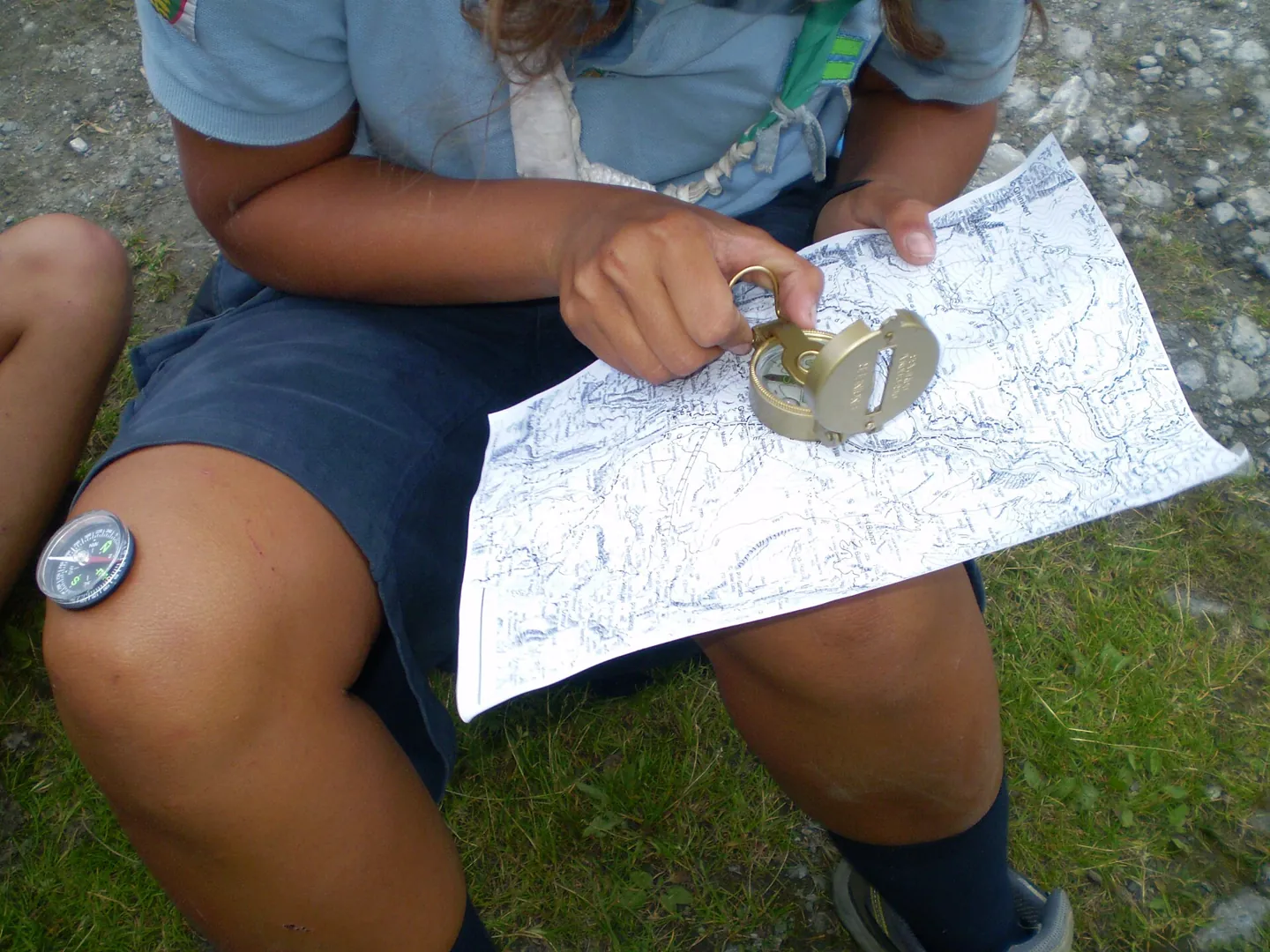
Prepare several compatible pieces of information: the map reference, the named hill or area, the nearest identifiable feature and your route from the last certain point. State which map or app you are using. Include grid letters or the relevant grid system rather than reading six digits without context.
Use the map and compass guide to practise this on familiar ground. Great Britain and Northern Ireland use different map grids. Never add letters from memory to a reference produced by a different mapping system.
If the call handler asks you to open a location link, follow their instructions where possible. A phone's ability to display a position does not mean it has already transmitted that position to rescuers. Read back the details and confirm whether your message was received.
Describe access honestly. A visible road may be separated from you by a fence, steep bank or river. Tell the handler which side of the feature you occupy and whether there is a bridge or gate. Do not invent a shortcut for rescuers or send another walker across difficult ground to prove one exists.
Use the phone you have
The RNLI advises trying 999 or 112 even when the phone shows no service, because another network may be available for an emergency call. This is not satellite coverage: if no suitable network reaches you, an ordinary mobile call may still fail. Keep the phone protected from water and within reach.
Check whether another person has a charged phone and usable reception, as Mountaineering Scotland advises. Use the best available option without scattering the group across slopes. A different provider may help; it is not a reason to climb a hazardous summit looking for bars.
Keep battery for calls and instructions. Reduce unnecessary screen use, protect the device from cold and use a charged power bank if available. Once contact has been established, keep the phone able to receive callbacks. Do not switch it into flight mode as a battery-saving habit while rescuers are trying to reach you.
The mobile outage guide covers wider communication failures. For accessibility services, complete any registration and practise the approved process before travelling. EmergencySMS requires advance registration; do not assume an ordinary text to 999 will work without it.

Full image attribution
Mountain Rescue Team - geograph.org.uk - 6198377.jpg — Steve Houldsworth; CC BY-SA 2.0. Resized and converted to WebP; source: https://commons.wikimedia.org/wiki/File:Mountain_Rescue_Team_-_geograph.org.uk_-_6198377.jpg
Use a recognisable whistle signal
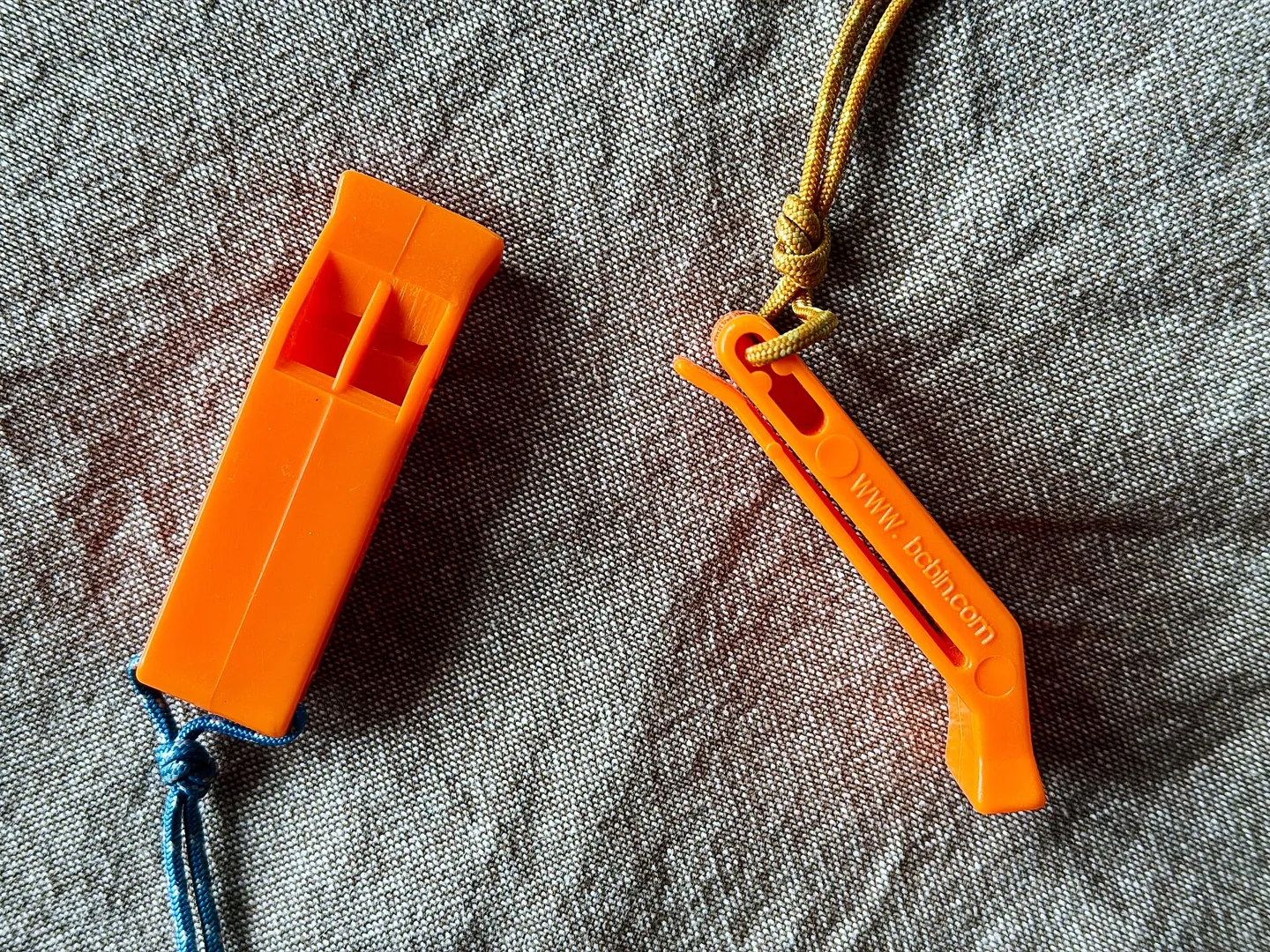
Mountain Rescue England and Wales describes six long blasts spread over a minute, followed by a minute's pause, then repetition. Keep signalling even if you hear a reply, unless rescuers instruct otherwise, because the sound may help them locate you. The pause also gives you a chance to listen.
Use a whistle you can operate with cold hands and limited effort. Keep it on your person or an accessible strap, not buried under spare clothing. Check that a pouch or clothing does not block it. Do not place a tight cord around your neck or create a snagging hazard.
Wind, terrain and distance affect whether anyone hears. Do not interpret silence as proof that nobody is searching. Continue the communication plan, conserve your strength and avoid moving to a more dangerous exposed point merely to make the signal louder.
Do not practise a repeated distress signal in remote terrain where someone might reasonably call for help. Learn the sequence verbally or with brief checks in a controlled setting where nearby people understand the activity. Equipment testing should not create a false alarm.
Use light without creating another hazard
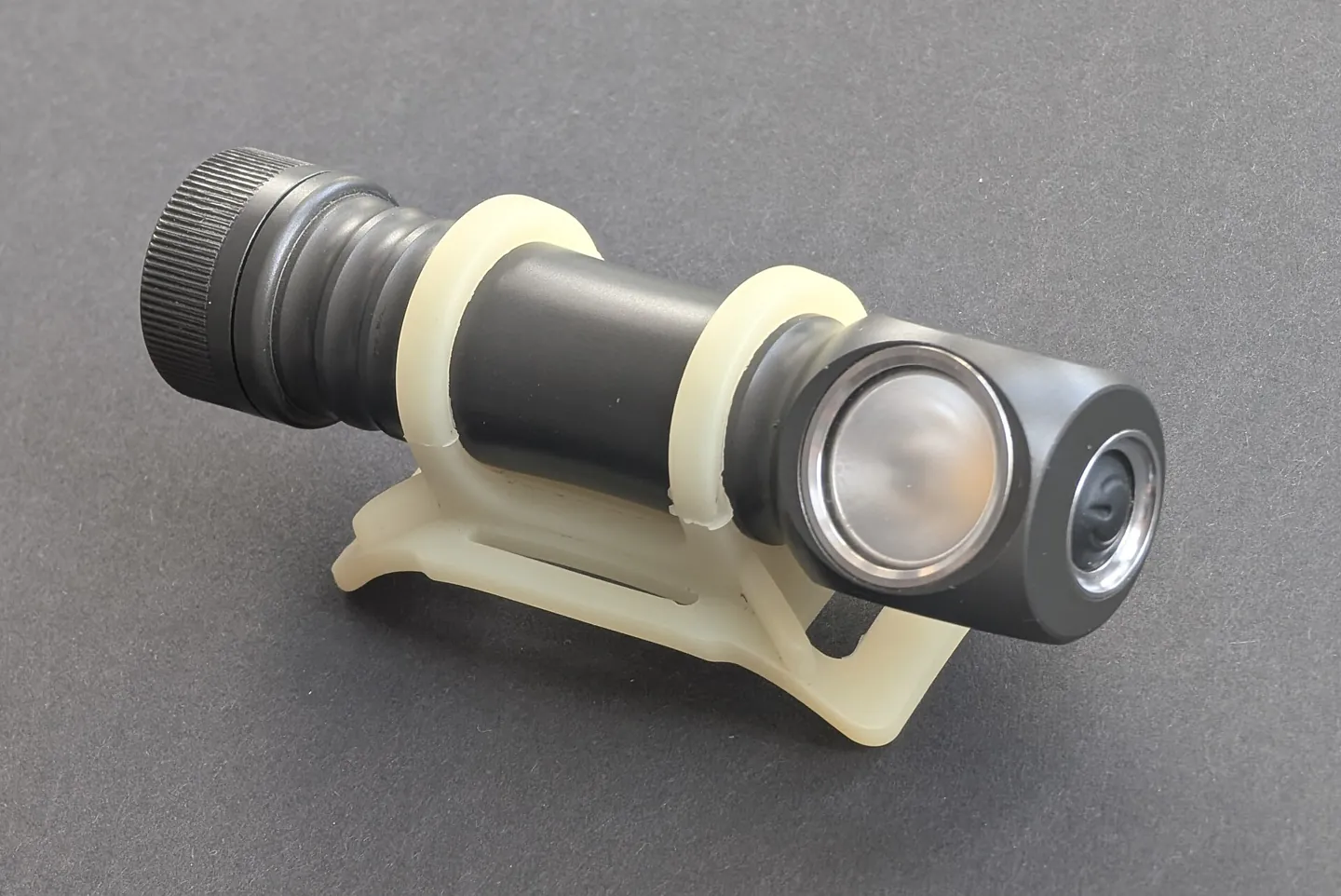
A torch can use the same pattern: six flashes over a minute, then a minute without signalling before repeating. A head torch leaves hands free for safe movement and care, while a separate torch may be easier to point from a stationary position. Learn the controls before a trip so that you can find the useful setting without cycling through every mode.
Signal from a safe, stable place. Do not stand at a cliff edge, move onto a road or climb a tree to improve visibility. Aim towards the likely observers when you can do so safely, and follow any direct instructions from the rescue team.
Never point a laser at an aircraft or use one as an improvised rescue signal. Do not light a fire, flare or disposable barbecue to attract attention on a walk. Fire introduces burn and wildfire risks and may create a second incident. This guide uses ordinary torches and whistles, not pyrotechnics.
Make waiting sustainable
After calling, follow the team's instructions about remaining in place. If immediate danger forces a move, make the smallest safe change and communicate the new position as soon as possible. A location fix becomes less useful when the group walks elsewhere without telling anyone.
Put on spare layers before people become too cold, protect them from wind and rain and keep supplies accessible. Use the first-aid learning guide to arrange training before an outing. In the incident itself, follow the call handler's instructions rather than attempting procedures recalled vaguely from a video.
Allocate simple roles. One person maintains communication, another watches the casualty and another checks time and supplies. In a small group, one person may do several jobs. Keep explanations calm and factual so the casualty knows that a plan is underway.
A realistic moorland example
Two walkers lose the path in low cloud and one twists an ankle. They stop on stable ground away from a stream. The uninjured walker identifies the last confirmed junction, reads the current map position with its uncertainty and calls for help. They explain the injury and that walking out is no longer safe.
They use a torch and whistle if directed or if voice contact fails, while keeping the phone ready for a callback. They do not separate so that one can race to the skyline. Their route card gives the home contact useful context if communication later stops.
The earlier lesson is to act when the weather first undermines the plan. Reading changing weather explains those decision points. Signalling equipment supports a response; it should not be the justification for starting a route beyond the group's abilities.

Full image attribution
AGESCI Guide using a compass in a topography contest.jpg — Superchilum; CC BY 3.0. Resized and converted to WebP; source: https://commons.wikimedia.org/wiki/File:AGESCI_Guide_using_a_compass_in_a_topography_contest.jpg
Before and during an incident
- Carry a charged phone, accessible whistle and working torch.
- Learn to read the location format on your actual map or app.
- Leave a route and agreed overdue procedure with a reliable contact.
- Call the relevant emergency service when help is needed.
- State what happened, where you are and what remains uncertain.
- Use the six-signal pattern and pauses when appropriate.
- Keep the callback phone available and protect its battery.
- Tell rescuers if danger forces a change of position.
- Keep the group warm and follow first-aid instructions.
Questions people ask
Will a whistle bring help if there is no signal?
It may attract somebody within hearing range, but there is no guarantee anyone is nearby. That is why route information, communication planning and appropriate equipment matter before departure.
Should I send a location to a friend instead of calling 999?
In an emergency, try direct contact with the emergency services first. A friend may be unavailable or misunderstand the message. If a message to someone else is the only contact you can achieve, state clearly that you need emergency help and ask them to confirm receipt.
Sources
Research checked on 2 November 2026. These sources support the safety points; examples and planning worksheets are original editorial guidance.