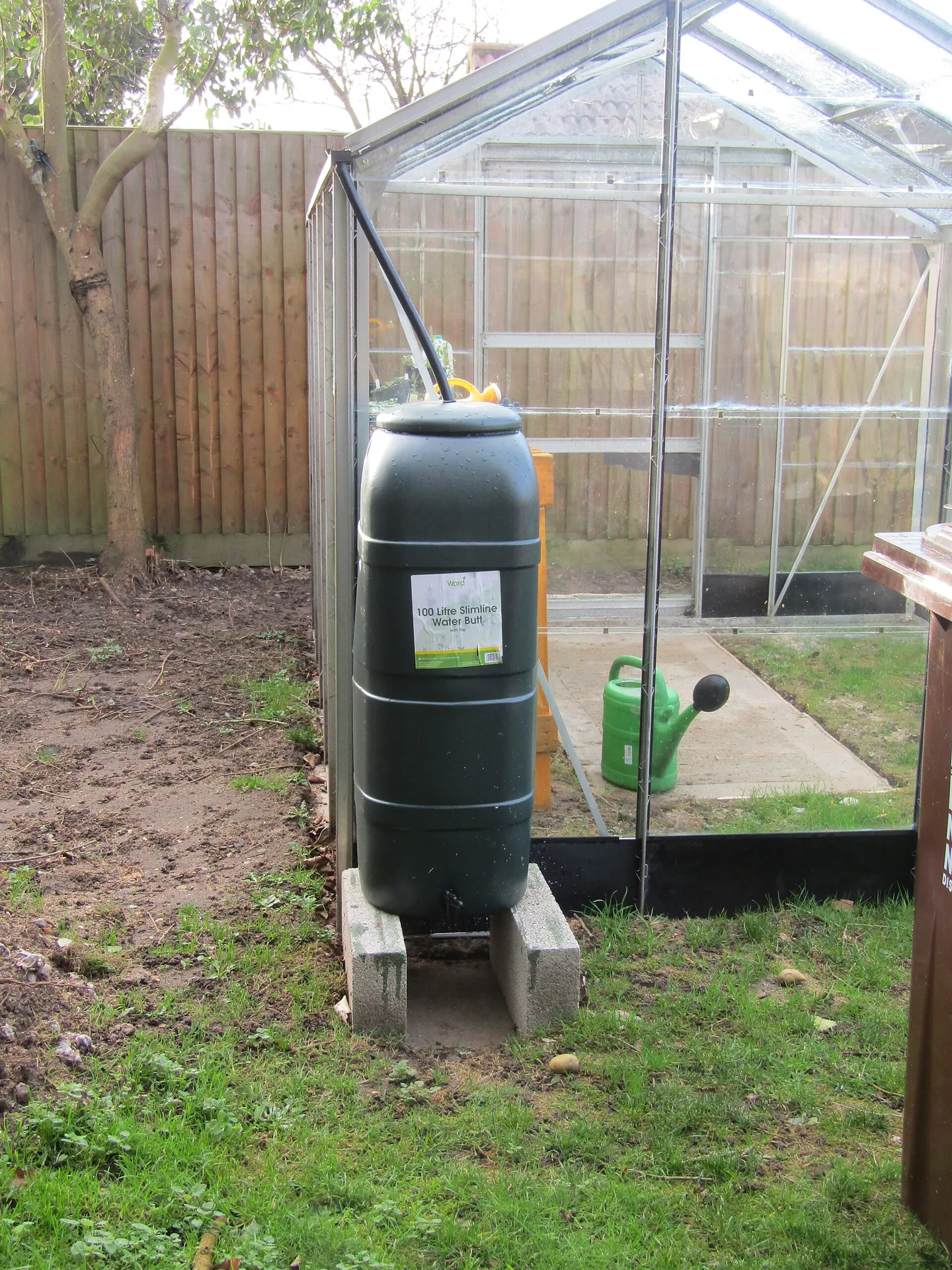

On this page
- Give the rainwater a specific job
- Keep drinking-water preparedness separate
- Choose a safe, useful position
- Plan collection and overflow together
- Size for a useful task, not a promised drought reserve
- Use and maintain the water butt
- Treat plumbed rainwater reuse as a separate project
- Understand the limits during a water outage
- A small garden installation
- Common questions
- Sources
Give the rainwater a specific job
Start with a garden task you already do, such as watering established ornamental plants with a watering can. Estimate how often you do it and where the water is used. This makes it easier to choose a useful location and capacity than starting with the largest tank that will fit beside the house.
Thames Water recommends collecting roof rainwater in a water butt as a way to save water in the garden. The practical benefit depends on having demand when water is available. A tank that fills in winter and remains inaccessible behind stored furniture is a poor substitute for a modest, usable setup.
Keep the scope strict. Water collected from roofs and stored in a garden butt is non-drinking water. Do not use it for drinking, cooking, brushing teeth, washing food, preparing infant feeds, cleaning food-contact utensils or filling pets' drinking bowls. This guide gives no treatment method for turning it into potable water.
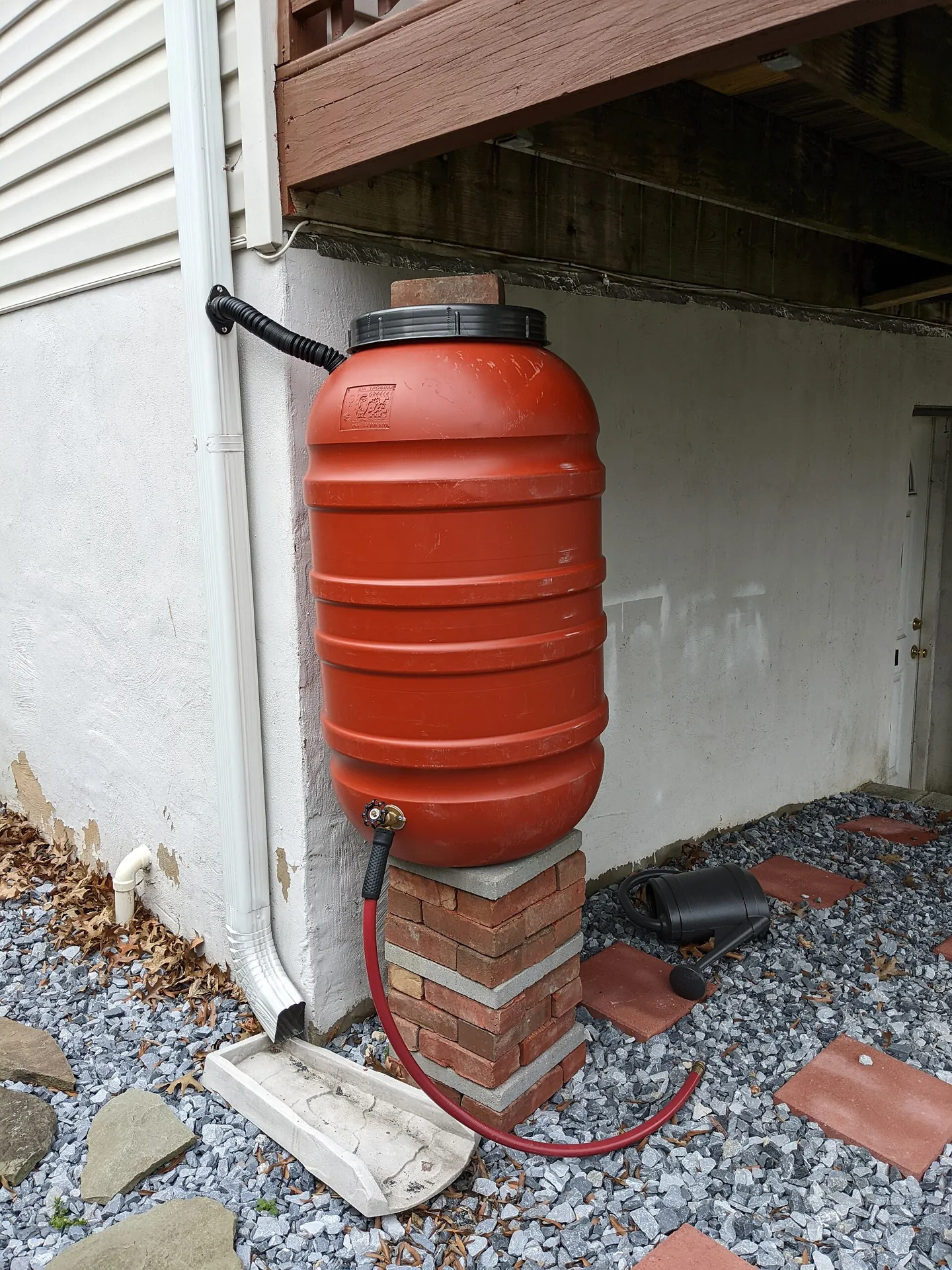

Full image attribution
Red rain barrel.jpg — Cornellrockey; CC BY-SA 4.0. Resized and converted to WebP; source: https://commons.wikimedia.org/wiki/File:Red_rain_barrel.jpg
Keep drinking-water preparedness separate
Roof run-off can collect contamination before it reaches the tank, and stored water can change during warm weather. Clear appearance, lack of smell or a leaf filter does not prove drinking-water safety. Boiling or adding an unspecified treatment product is not a complete response to unknown contamination.
Use the household water-quantity guide and safe drinking-water storage guidance for the potable reserve. Label rainwater containers and watering cans so that another household member cannot mistake them for emergency drinking supplies.
Store equipment for the two supplies separately. Do not reuse a rainwater hose to fill drinking containers or dip a drinking bottle into the butt. If a visitor helps with the garden, explain the distinction rather than assuming the label will be noticed.
Choose a safe, useful position
Look for a suitable downpipe near the plants you intend to water. Check ownership and permissions before modifying shared gutters, rented property or communal drainage. The person responsible for the building may have requirements about appearance, access and drainage that affect the design.
A full tank is heavy. Water alone weighs roughly one kilogram per litre, so a 200-litre example contains about 200 kilograms of water before the tank and stand are counted. This is a simple mass calculation, not a structural approval. Do not put a large container on a balcony, weak deck or improvised tower without appropriate assessment.
Use a stable, level base and a stand intended for the container. Leave enough room to fill and lift a watering can without twisting awkwardly or blocking a path. Keep access to doors, meters, vents and drains clear. Think about where a person would step when the ground is wet or icy.
A close-fitting, secure lid is important for excluding debris and preventing access by children and animals. Check that it cannot be casually displaced. Do not choose an open barrel simply because it is easier to dip a can into. Avoid any arrangement that creates an accessible deep-water hazard.
Plan collection and overflow together
Follow the manufacturer's instructions for the diverter, tank, stand and connectors. Check that components fit the downpipe and that their installation will not damage the guttering. If fitting requires work at height or alterations beyond your competence, use a suitable tradesperson.
A leaf screen reduces debris entering the tank, but it is not a drinking-water treatment system. Inspect the collection surface and avoid using run-off affected by suspect roofing materials, chemical treatments or other pollution. Seek advice if the source is uncertain, rather than assuming any roof is suitable.
Decide where water goes when the butt is full. A correctly installed diverter may return excess flow to the downpipe, while other arrangements use a dedicated overflow. The actual design must suit the building and drainage. Do not direct overflow towards foundations, neighbouring land, a public path or a place where it will create an ice hazard.
| Part | Check | Problem to avoid |
|---|---|---|
| Roof and gutter | Suitable collection surface and accessible upkeep | Polluted run-off or blocked guttering |
| Tank and stand | Compatible, stable and supported for the full load | Collapse, tipping or blocked access |
| Lid and openings | Secure cover and protected openings | Child access, debris and animals entering |
| Tap | Reachable without leaning on the tank | Leaks or awkward lifting |
| Overflow | Safe route when the tank is full | Damp, erosion or water crossing a path |
| Labels | Clearly marked non-drinking water | Confusion with potable supplies |
Size for a useful task, not a promised drought reserve
Record how much water your chosen garden task uses by counting the watering cans during ordinary care. Then compare that demand with the space and handling constraints. You can add capacity later if a small installation is useful and the site permits it.
Rainfall arrives unevenly. A full tank in a wet month does not guarantee water during a long dry spell. Avoid using an annual rainfall total as if it described daily availability. The amount collected also depends on roof area, losses, overflow and how often the stored water is used.
Choose plants and garden practices that reduce demand too. Our small-space growing guide can help with realistic garden planning. Rainwater storage should support an achievable garden, rather than create a dependency on constant irrigation that the tank cannot meet.


Full image attribution
-2022-04-24 Gutter downpipe, Saint Mary's, Northrepps.JPG — Kolforn ( Kolforn ) I'd appreciate if you could mail me ([email protected]) if you want to use this picture out of the Wikimedia project scope. This file is licensed under the Creative Commons Attribution-Share Alike 4.0 International license. You are free: to share – to copy, distribute and transmit the work to remix – to adapt the work Under the following conditions: attribution – You must give appropriate credit, provide a link to the license, and indicate if changes were made. You may do so in any reasonable manner, but not in any way that suggests the licensor endorses you or your use. share alike – If you remix, transform, or build upon the material, you must distribute your contributions under the same or compatible license as the original. https://creativecommons.org/licenses/by-sa/4.0 CC BY-SA 4.0 Creative Commons Attribution-Share Alike 4.0 true true; CC BY-SA 4.0. Resized and converted to WebP; source: https://commons.wikimedia.org/wiki/File:-2022-04-24_Gutter_downpipe,_Saint_Mary%27s,_Northrepps.JPG
Use and maintain the water butt
The RHS advises keeping gutters clear, using stored water regularly and cleaning water butts annually. It recommends emptying and cleaning a smelly butt instead of adding chemicals. Follow the container manufacturer's cleaning instructions and dispose of dirty water appropriately.
Plan maintenance while the tank is manageable. Do not climb into a tank or try to move it while full. An underground or larger storage system requires suitable professional maintenance arrangements. Keep children and pets away from the work, and wash hands afterwards.
The RHS also warns about breathing droplets from warm, stagnant water. One concern is Legionella: HSE explains that inhaling small droplets containing these bacteria can cause Legionnaires' disease. Pour gently close to the soil to reduce spray and splashing; a watering can does not guarantee that no droplets are produced. Do not use stored rainwater for misting people or filling children's water-play equipment. If your setup includes a hose or pump, follow its instructions and avoid aerosol-generating use.
After storms and periodically through the season, work through these checks:
- Check that the lid is secure and the stand has not moved.
- Look for leaks at the tap and connectors.
- Clear accessible screens according to the maker's instructions.
- Confirm that overflow reaches its intended destination.
- Keep the non-drinking-water label readable.
During freezing weather, follow the manufacturer's winter instructions rather than forcing a frozen tap or applying an improvised heater.
Treat plumbed rainwater reuse as a separate project
Some professionally designed systems supply specified non-drinking uses inside a building, such as toilet flushing. They involve separate distribution, identification, controls, maintenance and protection of the drinking-water supply. They are not an extension of connecting a garden hose to a butt.
Water Regs UK states that alternative sources must never be directly connected to mains drinking water. It also explains the need to notify the water supplier where supplies are combined through an appropriate separation arrangement. A valve, a label or a promise to remember which tap is open is not a substitute for compliant design.
Use a suitably qualified installer and ask your water supplier about the requirements for your nation and installation. Obtain a clear drawing of the non-drinking system, its approved uses and its separation from potable plumbing. Ask who maintains it and how future occupants or plumbers will recognise it.
Do not top up a tank by leaving a drinking-water hose submerged in the stored water. Do not connect a pump from the butt to household pipework. If a system needs mains backup, its designer must provide the required protection. This article intentionally gives no DIY plumbing specification.
Understand the limits during a water outage
A water butt may reduce demand for suitable garden tasks, but it does not replace a utility's emergency drinking-water arrangements. Continue to follow the supplier's instructions. If you receive a water-quality notice, use the specified safe supply for the affected tasks rather than substituting collected roof water.
Toilet flushing during an outage also depends on the sewer situation and the toilet system. Do not assume every outage permits manual flushing with any available water. Use the separate toilets and hygiene guide and follow utility advice, especially where drainage is affected.
Include maintenance and replenishment in your household continuity plan. If a larger rainwater system depends on an electric pump, record that dependency. The home battery backup guide explains why stored electricity must not be assumed available during a cut.
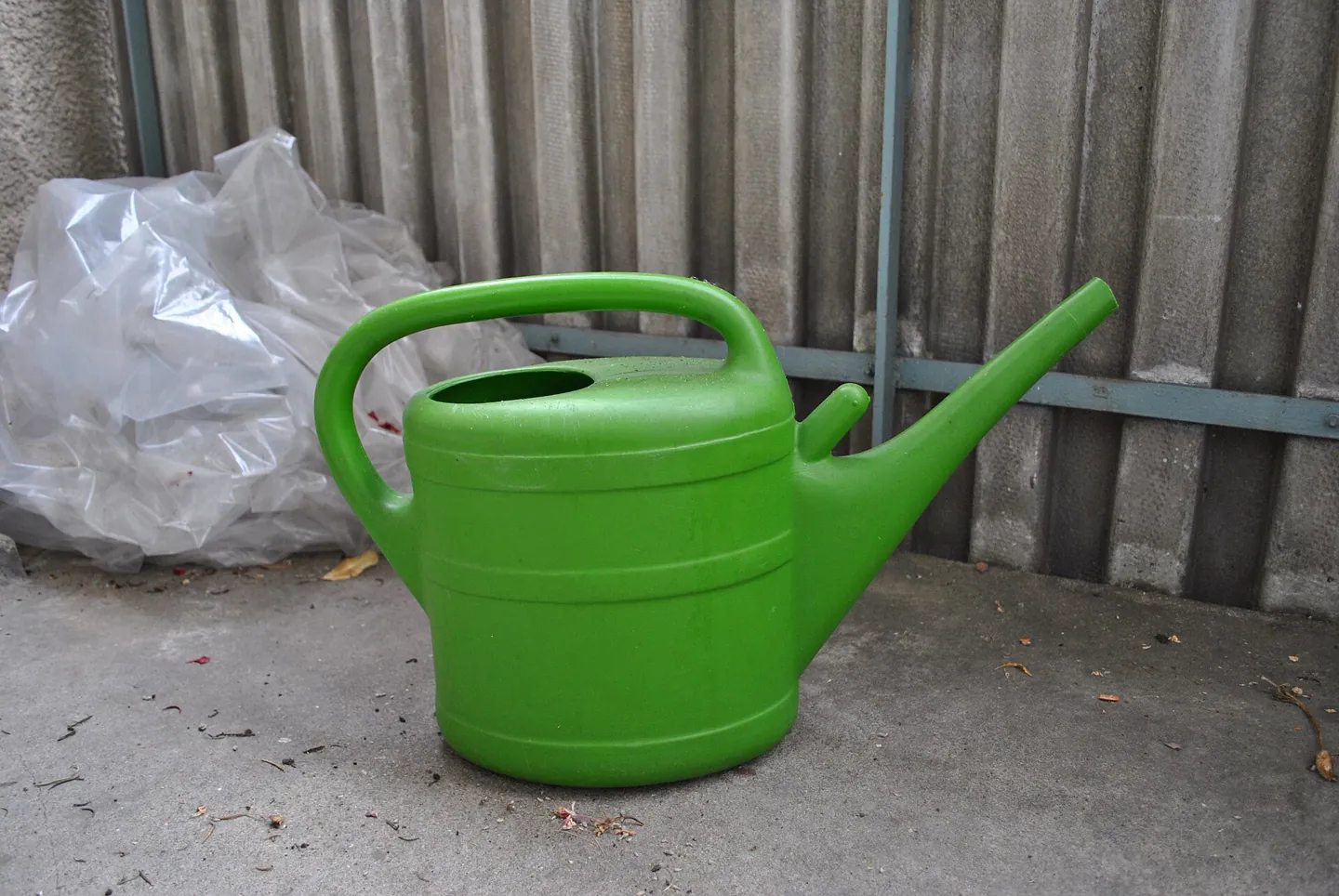

Full image attribution
Watering can.JPG — DonBanana; CC BY-SA 3.0. Resized and converted to WebP; source: https://commons.wikimedia.org/wiki/File:Watering_can.JPG
A small garden installation
Consider a terrace with a few established shrubs and pots. A suitable butt near the back door may let the household fill a small watering can without dragging a hose through the house. The useful checks are a secure stand, safe overflow, clear labelling and enough access for cleaning.
Adding several linked tanks would increase stored volume, but also add joints, load and maintenance. The household should expand only if the first tank is useful and the location remains safe. If the butt repeatedly stands unused, change the routine or reduce the installation rather than treating greater capacity as automatic resilience.
Common questions
Can I drink it after filtering?
This guide treats collected rainwater as strictly non-drinking water. A garden screen or unspecified filter does not establish potability. Keep a separate safe drinking-water supply.
Can I connect the butt to a toilet myself?
Do not improvise a connection. Plumbed non-drinking reuse needs competent design, suitable separation, identification and water-supplier requirements. Ask a qualified installer.
Does rainwater storage guarantee water through summer?
No. Capacity and rainfall timing may not match demand. Use it alongside lower-demand gardening and a realistic plan for dry periods.
Should I add disinfectant if the water smells?
Do not invent a chemical dosing routine. Follow the RHS advice to empty and clean the butt, together with the maker's instructions. Cleaning does not turn it into a drinking-water container.
Sources
- Thames Water: How you can save water. Checked 2 November 2026.
- Royal Horticultural Society: Collecting, storing and reusing water. Checked 2 November 2026.
- Water Regs UK: What backflow protection is required for alternative water sources?. Checked 2 November 2026.
- Health and Safety Executive: Legionella and landlords' responsibilities. Checked 2 November 2026.