

On this page
- Plan the work that a household has to do
- Write a small list of essential tasks
- Look for shared points of failure
- Build a usable reserve and a replenishment plan
- Agree care and medicine arrangements early
- Set review triggers before supplies become critical
- Use a short daily review during disruption
- Plan a move before it becomes urgent
- A rural household after storm damage
- Common questions
- Sources
Plan the work that a household has to do
A power cut lasting an evening can be managed very differently from repeated outages over a fortnight. A damaged road may leave shops open but difficult to reach. A household illness may leave utilities working while nobody can collect prescriptions. Longer disruption often means that some ordinary services continue and others become unreliable.
Start by listing essential tasks rather than choosing a number of weeks to stockpile. People need drinking water, suitable food, warmth, hygiene, medication, care and communication. Some households also need powered equipment, accessible transport, childcare or regular deliveries. The plan must describe how those tasks continue when their usual method fails.
The current government Be Ready guidance recommends preparing for three days and building readiness gradually. This article extends the planning method for a household with particular continuity needs. It does not claim that everybody should buy several weeks of supplies or that official help will arrive at a guaranteed time.

Full image attribution
Canned food.jpg — ProjectManhattan; CC BY-SA 3.0. Resized and converted to WebP; source: https://commons.wikimedia.org/wiki/File:Canned_food.jpg
Write a small list of essential tasks
Ask what would cause serious difficulty if missed today, tomorrow or later in the week. Be concrete. "Health" is too broad; "collect the repeat prescription before Friday" is actionable. "Keep connected" becomes "receive the care agency's arrival updates and contact a relative if the usual carer cannot attend".
For each task, name the person who normally does it and somebody who can cover, if available. A plan that assumes one organised adult will remain healthy and at home has an obvious weakness. Include tasks that person usually performs without anyone else noticing, such as ordering pet food or knowing the boiler service number.
Use the table below as a blank planning pattern, not a universal priority order. Your household decides the consequences of interruption. The person relying on a service should help define the backup wherever possible.
| Task | Usual dependency | Backup to confirm | Review trigger |
|---|---|---|---|
| Obtain regular medicine | Prescription, pharmacy and transport | Prescriber-approved supply plan and collection support | Supply reaches the agreed reorder point |
| Prepare suitable meals | Food, water, power and a capable cook | Familiar no-cook meals and another person who knows the diet | Next planned meals cannot be prepared safely |
| Receive essential care | Care staff, access and communication | Provider's contingency contact and agreed assistance | A visit is missed or travel becomes unreliable |
| Maintain safe warmth | Heating, electricity and suitable rooms | Warm clothing and a verified alternative place to stay | Conditions no longer meet the person's needs |
| Obtain drinking water | Mains supply or safe stored water | Utility distribution support and manageable collection | Reserve reaches the planned replenishment point |
Look for shared points of failure
A phone may support banking, pharmacy messages, work, maps and family contact. The same car may be used for school, care visits and shopping. A single failure can therefore affect several rows in the plan at once. Highlight these shared dependencies rather than treating each task as independent.
Write down alternatives that do not rely on exactly the same thing. A second app on the same flat phone is not an independent way to contact someone. Another online supermarket may still depend on the same closed road. A nearby friend may face the same flood or outage, so discuss what help remains realistic.
Use offline document storage for key contacts and instructions. Keep enough paper information to use a borrowed phone or speak to a service provider without opening an account dashboard. Store sensitive information securely and share only what a helper needs.
Build a usable reserve and a replenishment plan
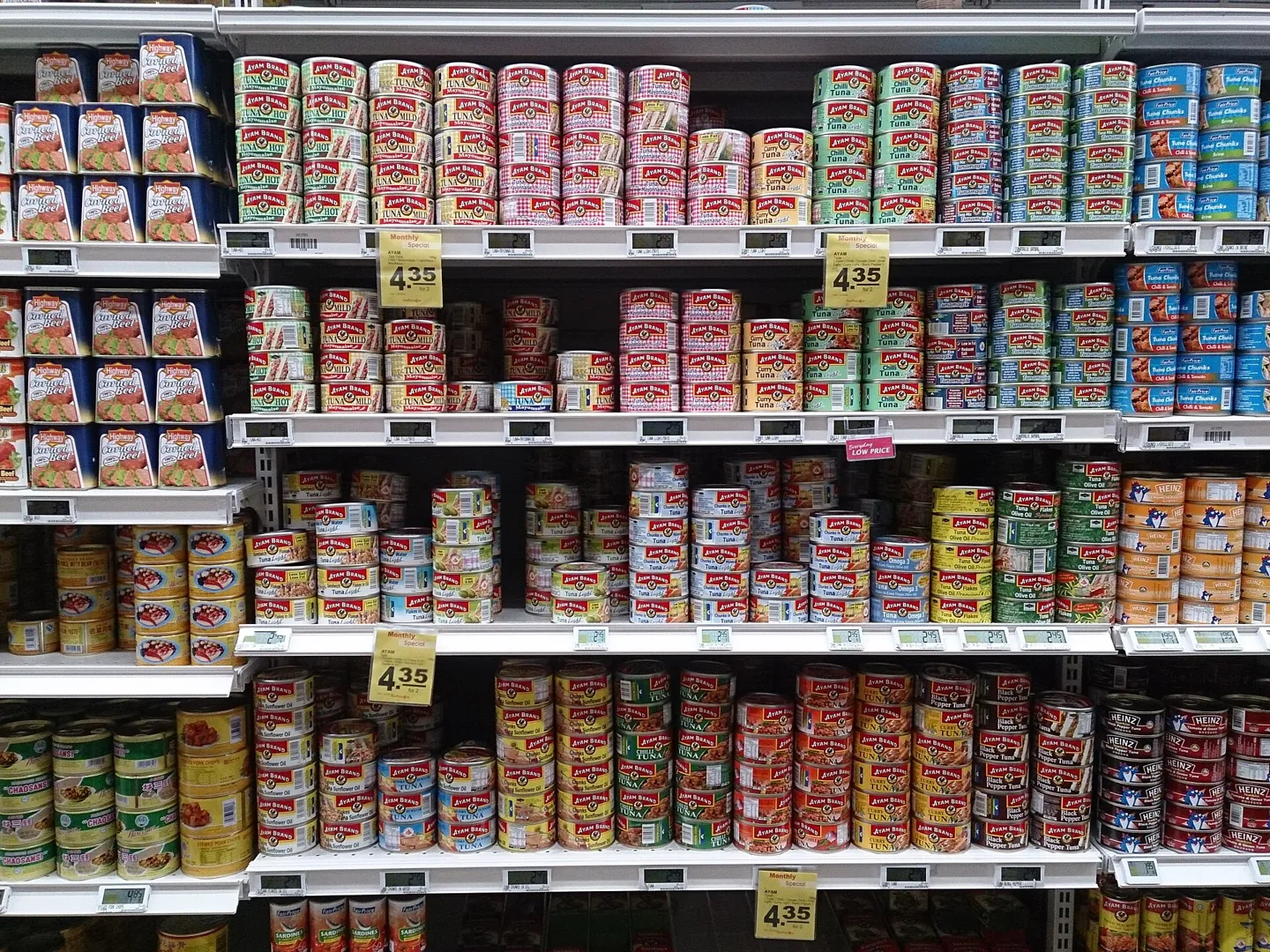
Base food supplies on meals the household already eats. List the water, cooking, refrigeration and washing requirements for each. A large sack of an unfamiliar staple is less useful than a smaller reserve that fits actual dietary needs and available preparation methods.
The rotating food cupboard guide covers everyday stock rotation. For continuity, add a reorder point and a fallback source. Record what can be substituted and what cannot, particularly for allergies, infant feeding and medically advised diets. Do not improvise clinical substitutions from a general preparedness list.
Plan water separately. Use household drinking-water quantities and safe storage methods. Work out who can carry a manageable load if distribution is needed. A theoretical collection point several miles away is not a solution for somebody without transport or lifting ability.
A garden water butt can support certain outdoor tasks, but it is not drinking water. Keep non-drinking rainwater use separate from the potable reserve. Do not count the same water twice under incompatible uses.

Full image attribution
Manual scrollable wooden wall calendar.jpg — Amitbalani; CC0. Resized and converted to WebP; source: https://commons.wikimedia.org/wiki/File:Manual_scrollable_wooden_wall_calendar.jpg
Agree care and medicine arrangements early
Ask the relevant clinician, pharmacist or equipment provider what continuity arrangements are appropriate. Record the usual ordering process, how long it takes locally and whom to contact if access fails. Do not change doses, share medicines or create an unsupervised stockpile to extend supplies.
NHS guidance for England describes emergency prescription routes, including pharmacy and urgent advice options. Availability and processes differ across UK nations and medicines. Write down the service that actually applies where you live, with an alternative way to reach it if internet access is unavailable.
For powered medical equipment, follow the provider's specific plan. Use medical-equipment outage planning to organise questions. A domestic battery or portable power device must not be assumed compatible or sufficient. Ask about the acceptable interruption, approved power options, monitoring and when relocation is needed.
Check eligibility for utility support and keep registration details current. The Priority Services Register guide explains its role and limits. Registration helps providers understand needs; it is not a guarantee of uninterrupted service or an immediate personal delivery.
Set review triggers before supplies become critical
A trigger is an observable reason to act. "When things get bad" is too vague. Better triggers include a missed care visit, the next prescription not being obtainable through the agreed route, a confirmed water distribution change or an inaccessible entrance preventing essential travel.
Choose triggers with enough time to respond. If collection takes a day, waiting until the last essential item is used leaves no margin. The appropriate threshold depends on the household and service; record the reason rather than copying a universal number from a checklist.
Decide who can authorise changes and how absent household members will hear about them. A family should not discover separately that different people have arranged incompatible accommodation. Keep a small decision log with the time, source of information and next review. This is especially useful when carers or relatives take turns.
Use a short daily review during disruption
Pick a predictable time to check essential needs, official updates and tomorrow's arrangements. Keep the review short enough that people will continue it. Constantly refreshing news can use battery and attention without changing any useful action.
- Check whether anyone's health, care or access needs have changed.
- Review safe water, suitable food and the next required medicine collection.
- Confirm the next day's care, work, school and transport arrangements.
- Check one or two reliable sources for service updates.
- Record what needs action, who will do it and when it will be checked again.
Let routine comfort matter. Familiar meals, sleep, school contact and a quiet activity help make an extended interruption manageable. Do not fill every spare hour with preparedness tasks. A tired household is more likely to make mistakes with cooking, medication records and travel.

Full image attribution
Kitchen table, New Orleans Feb 2026.jpg — Infrogmation; CC BY-SA 4.0. Resized and converted to WebP; source: https://commons.wikimedia.org/wiki/File:Kitchen_table,_New_Orleans_Feb_2026.jpg
Plan a move before it becomes urgent
Staying home is not always the best continuity option. Identify a realistic alternative location that can accommodate the household's needs, including pets, mobility, care, charging and food requirements. Confirm it with the host rather than putting an unasked relative's address on the plan.
Work out how you would get there safely, who would help and what must travel with you. Keep medication information, essential documents and the most important equipment accessible. If authorities instruct you to evacuate, follow their directions; a pantry does not make an unsafe building suitable to occupy.
Ready Scotland's household planning guidance encourages keeping contacts and practical arrangements together. Use that principle to make a short front page that another person can follow. Put detailed inventories behind it, not where they hide the emergency contacts.
A rural household after storm damage
Imagine a household in rural Scotland with intermittent electricity, a blocked local road and an older relative receiving daily care. Food stocks alone do not settle the problem. The first review confirms the care provider's access plan, a reachable pharmacy and whether the house remains suitable for the relative.
The household then simplifies meals, arranges a safe collection route and agrees a threshold for moving to a relative's accessible home. A neighbour can share verified road information without promising to clear fallen trees. Our community volunteering guide explains how to offer useful help within clear limits.
Once ordinary services return, review what was genuinely difficult. Replace used items, correct contact details and remove tasks that proved unnecessary. Do not respond to every inconvenience by buying equipment. A clearer care arrangement or earlier reorder reminder may solve the underlying problem more effectively.
Common questions
How many weeks should I prepare for?
There is no single answer for every household. Begin with current official basic guidance, then assess the tasks and local disruptions that justify additional arrangements. Access, care and replenishment matter as much as storage duration.
Do I need a home battery?
Only if a properly designed system meets a defined need and is affordable. Read whether a home battery works in a power cut before assuming it provides backup.
What if nobody can act as a backup carer?
Raise that gap with the care provider or relevant support service before an emergency. An honest unresolved need is safer than naming an untrained friend who has not agreed to provide care.
Should I practise by turning off the utilities?
No. Walk through a scenario with the services operating normally. Check contacts and instructions, and ask what would change. Do not interrupt essential equipment to test a household plan.
Sources
- UK Government: Be ready for emergencies. Checked 2 November 2026.
- Scottish Government: Make an emergency plan for your home. Checked 2 November 2026.
- NHS: Emergency prescriptions. Checked 2 November 2026.