
On this page
- Confirm where to go and what to bring
- Plan the journey from collection to pouring
- Choose the load for the person
- Use containers intended for drinking water
- Ask for help before the reserve runs out
- Organise neighbour help with a clear handover
- Make the water usable once it arrives
- Common collection mistakes
- Check equipment before you need a collection
- Before leaving to collect water
- Sources
A distribution point can have plenty of water while a household still cannot get a usable supply into the kitchen. No car, an unreliable lift, slippery steps or a hand injury can make collection difficult. Planning those details is as useful as choosing the container.
This guide concerns collecting suitable drinking water from a supplier's designated arrangements or another confirmed safe source. It does not recommend collecting river, flood or water-butt water for drinking. A clean container cannot make an unsafe source suitable.

Full image attribution
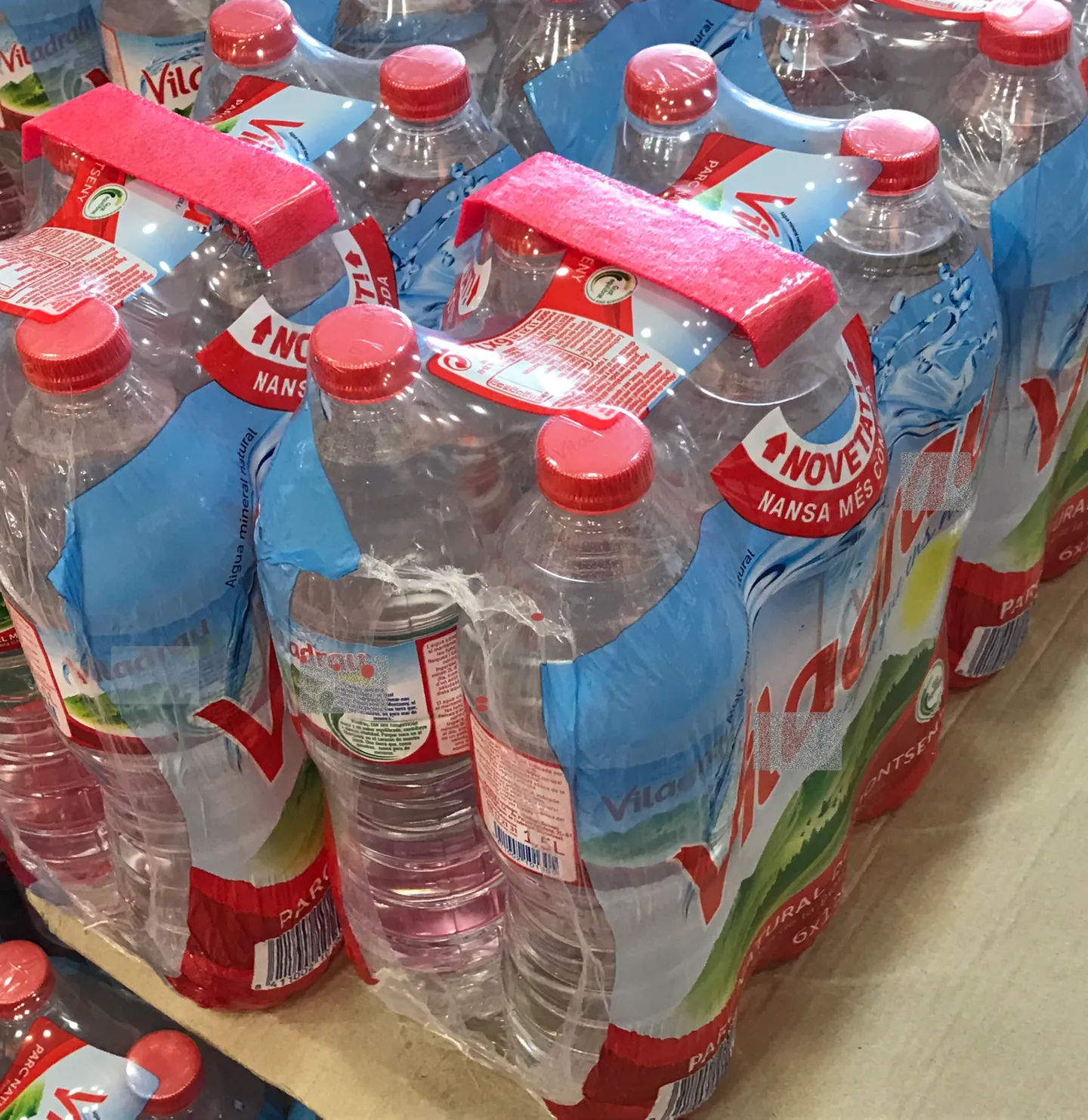
Water bottles with tape handle.png — Rlsheehan; CC BY-SA 4.0. Resized and converted to WebP; source: https://commons.wikimedia.org/wiki/File:Water_bottles_with_tape_handle.png
Confirm where to go and what to bring
Check the water supplier's current incident page or contact it through its established channels. Confirm the collection location, hours, whether water is supplied in sealed bottles or from a designated dispensing point, and whether you need your own container. Information shared earlier in the day may have changed.
The government's water-outage guidance directs households to their provider for incident information and alternative supplies. Save the useful details offline before leaving, particularly if mobile reception is poor.
Check the route rather than relying only on the postcode. A collection site may have a different pedestrian entrance, traffic arrangement or accessible route. Ask whether assistance is available at the point if lifting a pack into a car is difficult. Do not assume staff can accompany you home.
Follow site directions and any collection limits. They help the supplier distribute available water. Avoid sending several household members independently for the same planned supply unless the household actually needs separate collections.
Plan the journey from collection to pouring
Break the route into its awkward parts: lifting from a table, crossing a car park, getting onto a bus, reaching the building entrance, using stairs and placing the water where it will be poured. A container that works for one stage may fail at the next.
Think about the return trip. An empty trolley feels manageable on a slope; a loaded one behaves differently. A large bottle may fit through a car door but be difficult to lift from the boot. Keep the load secure in transit and away from items that could puncture or contaminate it.
Leave a hand available where you need a rail or mobility aid. Do not carry so much that you cannot see the steps. If the route requires an unsafe manoeuvre, arrange smaller loads, another person or a different delivery arrangement.
For flats, confirm that the lift is operating before planning around it. The block-of-flats guide covers communication with the managing agent or factor. Water left at a building entrance is not a complete solution for someone who cannot bring it upstairs.
| Constraint | Practical response |
|---|---|
| Stairs without a lift | Use smaller individually manageable containers and arrange help for the final stage. |
| No private transport | Check walking access, assistance and delivery options before travelling. |
| Limited grip or one usable hand | Choose a manageable cap and pouring arrangement; ask for help with lifting. |
| Care responsibilities | Arrange collection without leaving someone unsupported. |
| Ice, floodwater or unsafe traffic | Do not attempt the hazardous route; report the access problem to the supplier. |
Choose the load for the person
One litre of water weighs approximately one kilogram before adding the container. A ten-litre container therefore means roughly ten kilograms of water, even if the empty container feels light in a shop. Split the required volume into loads the person can handle safely.
There is no household weight that is safe for everyone. The HSE's manual-handling guidance, written for workplaces, emphasises assessing the task and reducing risk rather than relying on a fixed weight limit. The same planning principle is useful at home; it does not turn a domestic collection into a workplace assessment.
Consider distance, fatigue, grip, posture and the number of repetitions. Being able to lift a full container once does not prove that several trips up stairs are sensible. Do not test your maximum capacity during an incident.
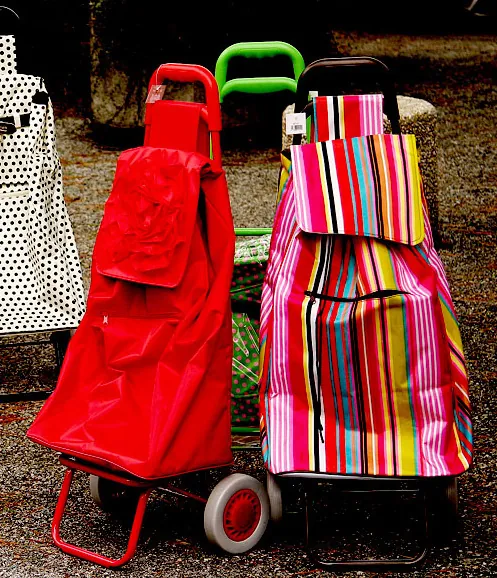
Use a suitable trolley where the route permits, within its stated load rating. Check wheels, handle, stability and how the water will be secured. A wheeled aid reduces some carrying, but it can still require effort on slopes and may not be suitable for stairs.

Full image attribution
Shopping Trolleys (809290640) (cropped).jpg — Martin Burns; CC BY 2.0. Resized and converted to WebP; source: https://commons.wikimedia.org/wiki/File:Shopping_Trolleys_(809290640)_(cropped).jpg
Use containers intended for drinking water
Choose clean, sound containers designed for drinking-water storage or transport. Keep their cleaning and storage instructions. Inspect caps, seals and handles before the incident, when there is still time to replace a damaged part.
Never use a container that previously held fuel, garden chemicals, cleaning products or an unknown liquid. A familiar shape or a thorough rinse does not establish suitability. Avoid open buckets for drinking-water transport, where splashes, dirt and handling can contaminate the contents.
At a designated filling point, follow the operator's instructions and keep hands and dirty surfaces away from the outlet and container opening. Do not put a hose or spout inside your container unless the operator's procedure specifically requires an arrangement it controls.
Close the container promptly and keep its cap with it. If collecting several types of water for different purposes, identify them clearly and keep non-drinking water apart. Do not use the same unlabelled vessels for drinking water and toilet flushing.
Ask for help before the reserve runs out
Tell the supplier what prevents collection and what help is needed. "I cannot carry water up two flights of stairs" is more useful than an unexplained request for priority. Give the address, access details, household needs and a contact method you can use during the outage.
Thames Water's incident preparation advice identifies customers unable to collect water and medically dependent customers among those prioritised for deliveries. It also warns that registration during an incident does not provide immediate support. Check the arrangements of your own supplier, as criteria and delivery processes differ.
Use the Priority Services Register guide to arrange support in advance where eligible. Keep the supplier's records current after a move, change in health or change of telephone number. An electricity support registration does not justify assuming your water needs are already recorded correctly.
If promised assistance has not arrived, contact the supplier again before the situation becomes urgent. State how much suitable water remains and any immediate care concern. Water-dependent medical equipment requires the clinical team's plan, not an improvised substitution with an ordinary bottle.
Organise neighbour help with a clear handover
Offer specific help that you can safely provide, such as collecting two small containers and placing them inside an accessible doorway. Agree what is needed before travelling. Do not collect a large heavy pack for someone who cannot move or open it.
Keep sealed bottles sealed where possible. If supplying water from a designated refill point, explain its source and any instructions given there. Do not promise that a private container has a storage life you cannot establish.
Agree who will be home and how access will work. Avoid leaving water where it blocks an escape route, receives direct heat or can be tampered with. Do not share a neighbour's medical details with a group chat when practical collection instructions are enough.
Keep your own limits realistic. Helping several homes creates repeated lifting and transport demands. Share tasks among willing people and tell the supplier when a voluntary arrangement cannot meet the need.

Full image attribution
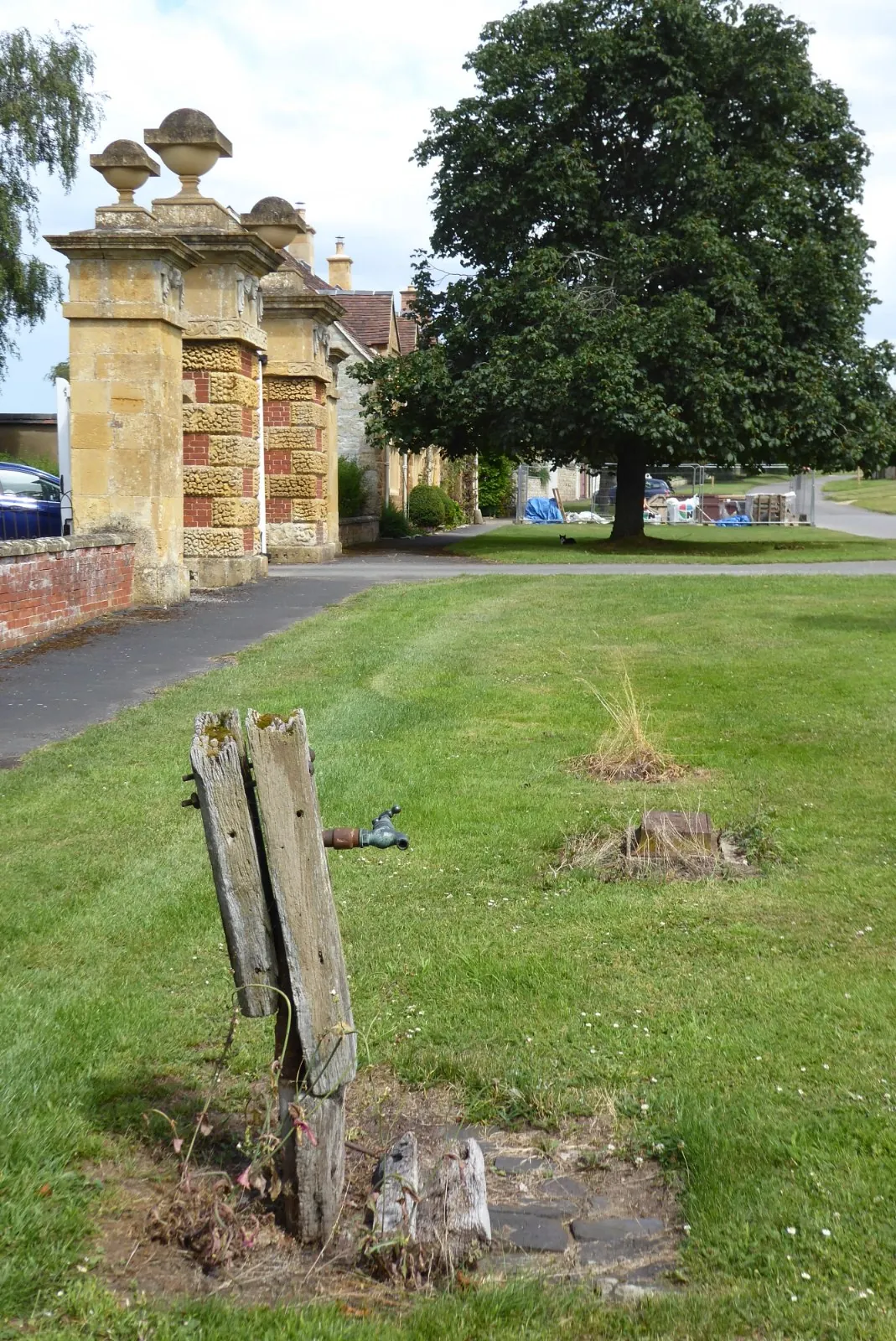
Standpipe in Honington - geograph.org.uk - 7542657.jpg — Philip Halling; CC BY-SA 2.0. Resized and converted to WebP; source: https://commons.wikimedia.org/wiki/File:Standpipe_in_Honington_-_geograph.org.uk_-_7542657.jpg
Make the water usable once it arrives
Put drinking water in a clean, suitable storage place and follow the supplier's and container's instructions. The water-storage guide explains protecting the reserve after collection. Avoid leaving it in a warm car because unloading feels inconvenient.
Test the pouring arrangement while someone can help. A full container that cannot be tipped safely may need a compatible tap or smaller bottles. Do not balance it on an unstable stool to make the outlet high enough.
Keep the drinking supply available to everyone who needs it, including someone who cannot lift a full bottle. Place manageable amounts within reach as appropriate, while keeping containers secure from children and spills.
Separate drinking and food-preparation needs from flushing. The sanitation guide helps preserve safe water without neglecting hand hygiene. Use the filter-claims guide before assuming a domestic jug can replace collection during a contamination notice.
Common collection mistakes
Do not choose a container solely by its maximum capacity. Do not travel on an unverified social-media report of a distribution point. Do not assume collection assistance includes carrying water upstairs at home.
Avoid repeatedly topping up an unlabelled container without following its cleaning and handling instructions. Keep the source and filling details clear when needed. If the incident includes a water-quality restriction, follow that restriction even when normal pressure returns.
Check equipment before you need a collection
On an ordinary day, inspect the container and try its cap and pouring arrangement with a small amount of normal drinking water. Start with an easily manageable amount and do not use the exercise to test lifting limits. Check that a trolley can pass the doorway and turn in the hallway while keeping the exit clear.
Store the equipment where it can be retrieved without shifting heavy boxes. Keep the container instructions with it. If another person may collect on your behalf, tell them which vessels are intended for drinking water and where the clean caps are kept.
Before leaving to collect water
- Confirm the official site, opening arrangements and container requirements.
- Check the whole route, including the final stairs or doorway.
- Choose loads the person can handle without strain or unsafe manoeuvres.
- Inspect suitable drinking-water containers and closures.
- Arrange transport, assistance and a clear handover.
- Contact the supplier early if collection is not possible.
- Prepare a safe storage and pouring position at home.
- Keep any incident instructions with the collected supply.
Sources
Primary sources checked on 2 November 2026. Incident instructions and individual care plans take precedence where relevant.