
On this page
- Understand what you are looking for
- Find it without creating a repair job
- Establish the boundary in flats and shared buildings
- Check operation only when it is safe and understood
- Make access work for the actual household
- Know the first decisions during a leak
- Plan for the water you will temporarily lose
- Common mistakes to remove from the plan
- Leave instructions that another adult can follow
- Complete the stop-tap record
- Sources
When water is spreading across a kitchen floor, a vague memory of a tap behind the washing machine is not much help. Locate the household stop tap on an ordinary day, check that the person expected to use it can reach it and record the details.
This is an identification and preparation guide. It does not teach plumbing repairs, working on communal services or opening pavement chambers. If a leak is already creating an electrical or structural danger, keep people away and seek emergency help rather than approaching a valve through the hazard.

Full image attribution
247 Home Rescue tap sink plumbing water.jpg — 247homerescue; CC0. Resized and converted to WebP; source: https://commons.wikimedia.org/wiki/File:247_Home_Rescue_tap_sink_plumbing_water.jpg
Understand what you are looking for
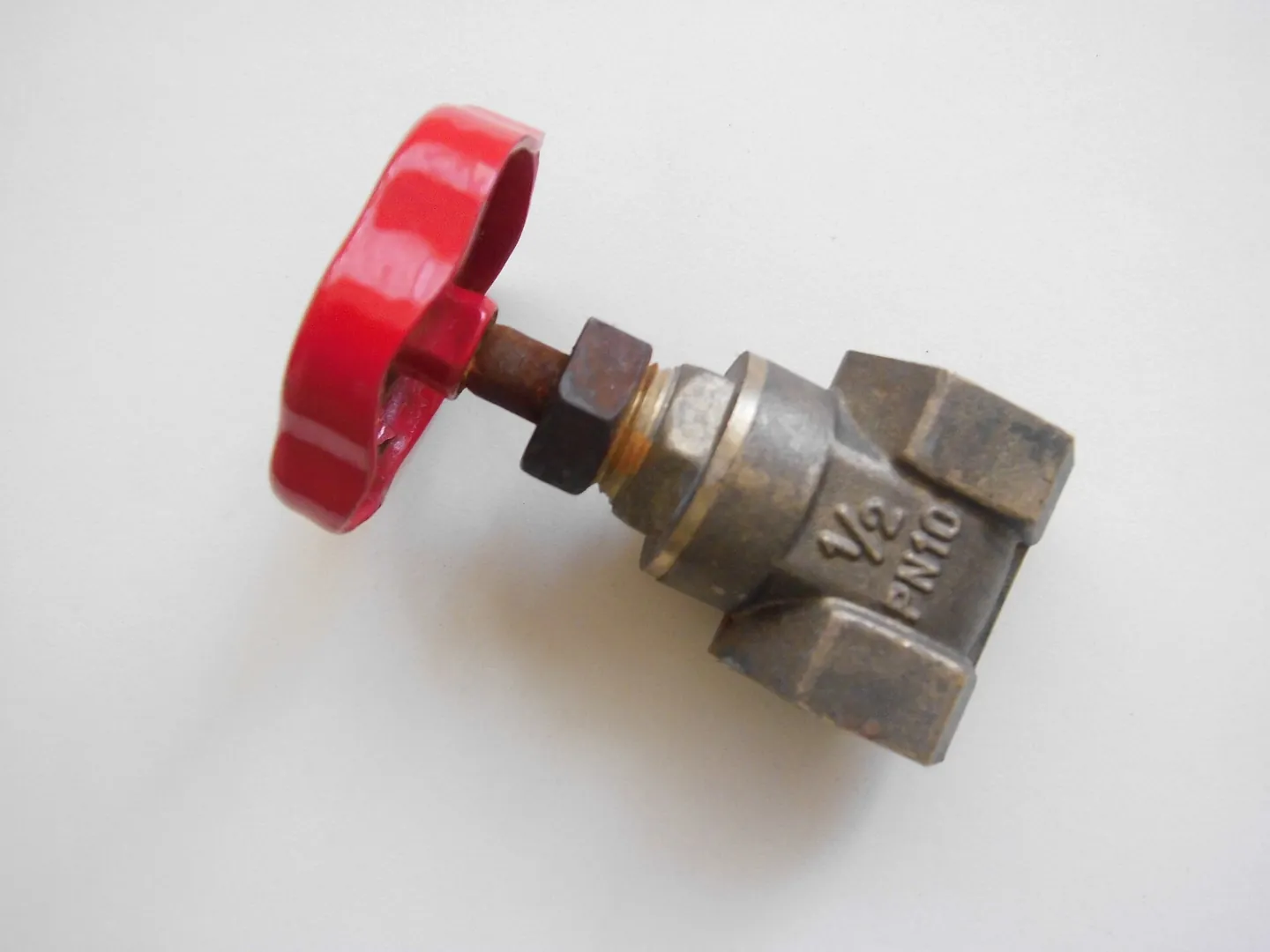
The internal stop tap controls the incoming water supply to your home. It may be described as a stopcock or stop valve. Other valves can isolate a washing machine, a toilet or an individual pipe. Finding a valve is therefore not the same as identifying the household supply control.
WaterSafe's locating guide describes the internal control as a tap-like fitting without a spout or a lever between pipe sections. It lists common locations including kitchen cupboards, utility areas, bathrooms, garages and under-stairs spaces.
Use those locations as starting points, not proof. A gas valve, boiler filling arrangement or heating valve is not an alternative water stop tap. Do not turn an unidentified control to see what happens. Ask the landlord, previous owner or a qualified plumber to identify it.
Water stored in tanks or cylinders may remain after the incoming supply is isolated. Closing the stop tap does not necessarily remove every source of water from a leak. Include that limitation when discussing the system with a plumber.
Find it without creating a repair job
Begin with information you already have. Check handover notes, a survey report, the landlord's information pack or photographs from earlier plumbing work. Ask who last serviced or repaired the supply. A documented answer can save dismantling a cupboard on the wrong side of the house.
Next, inspect accessible locations with a torch. Move ordinary loose items such as cleaning bottles out of the way, keeping them upright and separate from food. Do not pull a heavy appliance across the floor, remove fixed panels or lift floorboards just to investigate.
Look for where the water pipe enters the home if it can be seen safely. In a converted property the route may be less obvious than in a modern house. An old label or neighbour's memory can help your enquiry, but should not replace confirmation of the current arrangement.
Stop if the search would involve a flooded cellar, exposed wiring, unstable access or unknown materials. The task is to establish a safe control point, not to complete a search at any cost. Record the uncertainty and arrange professional identification.
| Detail | Useful record |
|---|---|
| Location | Room, cupboard and exact position, using plain directions. |
| What it controls | Your home only, or a shared arrangement confirmed by the responsible person. |
| How it operates | The instructions for that actual valve, including any accessibility issue. |
| Condition | Any stiffness, corrosion, drips or concern needing repair. |
| Help | Landlord, managing agent, qualified plumber and water supplier contacts. |
Establish the boundary in flats and shared buildings
Thames Water's inside-valve guidance notes that shared supplies may have a communal valve and an additional valve for an individual flat. Ask the managing agent, factor or landlord which control serves your home and who can access the shared equipment.
A locked riser cupboard is not an invitation to obtain a key and operate every valve inside. Ask for the emergency reporting route, including evenings and weekends. Confirm how the responsible person can isolate a leak affecting another floor.
If your flat has no readily accessible individual control, record that as an unresolved building issue and ask what improvement is appropriate. A plan that assumes you can always enter a neighbour's flat will fail when they are away.
Read water outages in a block of flats for the different situation where the whole building loses pressure. A building pump or tank problem needs authorised maintenance, even if the household stop tap is easy to find.

Full image attribution
Leak in rusted pipe side view.jpg — Shamrock Lee; CC BY 4.0. Resized and converted to WebP; source: https://commons.wikimedia.org/wiki/File:Leak_in_rusted_pipe_side_view.jpg
Check operation only when it is safe and understood
Choose a convenient time when there is no active emergency and everyone affected knows about the check. If you do not understand the supply arrangement, or someone depends on uninterrupted water for care or equipment, ask the responsible professional before operating it.
For a conventional screw-type internal stop tap, WaterSafe advises slow, gentle operation and no force. Clockwise closes that type of valve and anticlockwise opens it. Other controls may work differently; follow the instructions for the actual fitting.
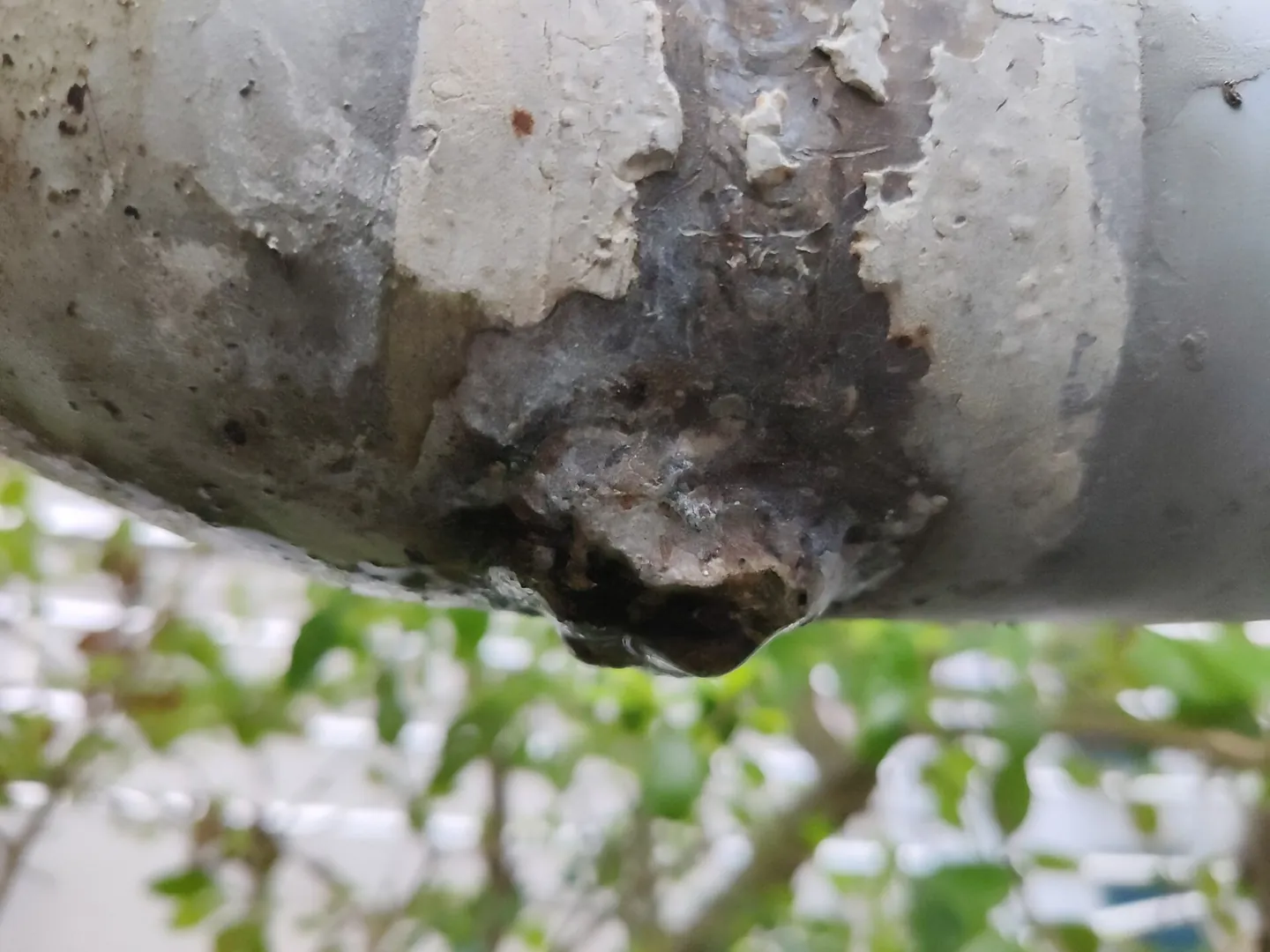
Do not use pliers, a long lever or your body weight to overcome stiffness. WaterSafe's fault advice warns against forcing seized parts and working on fragile or corroded pipework. Arrange repair by a competent plumber.
After an agreed check, make sure the supply is restored as intended and inspect the accessible area for drips. If the control leaks or does not isolate properly, the check has found a fault to fix. Do not treat a label saying "stop tap" as completion of that repair.
Make access work for the actual household
Clear enough space to see and reach the control. Avoid storing sharp tools, heavy containers or leaking chemicals directly in front of it. Keep a nearby torch accessible without electricity. A light that requires moving the same blocked cupboard contents defeats the purpose.
Photograph the location from the room entrance and take a closer photograph of the confirmed valve. Add a short direction such as "kitchen, left cupboard, behind removable loose basket". Store a paper copy with the household plan and an offline copy where appropriate.
If reaching or gripping the valve is difficult, ask a plumber about a suitable accessible control arrangement. Do not assume a family member will always be home to turn it. Test the communication plan with the person who would actually need help.
A simple leak alarm may give earlier warning in an appropriate location, but it does not stop the leak or replace a working isolation control. Consider whether its alarm can be heard or noticed by the household and how its battery will be checked.
Know the first decisions during a leak
Keep people away from water near electrical fittings, appliances or the consumer unit. Do not touch wet switches or walk through water to reach equipment. If someone is in immediate danger, call 999. Otherwise contact the relevant emergency plumber, property manager or supplier promptly from a safe place.
If the known household valve is safely accessible and serviceable, use its established instructions to stop the incoming supply. Do not keep approaching it if conditions have become unsafe. Tell the person responding whether the valve was closed and whether water is still flowing.
Warn affected neighbours or building staff when water may be entering another home, without entering unsafe areas yourself. Give practical observations: where water appears, when it began and which rooms are affected. Avoid guessing the failed pipe or dismantling ceilings to prove a theory.
Keep the water supplier's details available for leaks involving its network or uncertainty over the supply boundary. For a rented home, use the landlord's urgent repair route too. The renters' emergency plan helps organise those contacts.

Full image attribution
Water meter (aka) clip.jpg — Georg Wiora Dr. Schorsch . Author of the original photo is André Karwath aka Aka; CC BY-SA 2.5. Resized and converted to WebP; source: https://commons.wikimedia.org/wiki/File:Water_meter_(aka)_clip.jpg
Plan for the water you will temporarily lose
Once a leak is isolated, the household may need alternative drinking water and a toilet arrangement until repair is complete. Keep a modest reserve following the home water-storage guide. Do not reopen the valve repeatedly to fill a kettle while a leak remains uncontrolled.
If collection is necessary, the water-carrying guide helps plan manageable loads and access. For sanitation, use toilets and hygiene during an outage, which distinguishes loss of incoming water from failure of the drains.
Ask the plumber what checks are needed before normal use resumes. A repaired internal pipe and a wider water-quality notice are different matters. Follow any supplier restrictions until they are explicitly withdrawn.
Common mistakes to remove from the plan
Do not label a valve based only on its appearance. Do not rely on a stop tap behind a fixed appliance that nobody can safely move. Do not practise on a shared valve without the responsible person's agreement.
Most of all, do not leave a known seized control as a note for a future emergency. Arrange the repair and update the household record afterwards. The value of finding the fault now is having time to fix it while the home is dry.
Recheck access after kitchen work, a move or a change in household mobility. A new storage unit or a replacement appliance can make an old emergency instruction unusable without anyone noticing.
Leave instructions that another adult can follow
Ask another adult in the household to find the labelled location using your written directions, without turning anything. If they open the wrong cupboard or mistake another control for the stop tap, improve the photograph and wording. This checks the communication safely without creating an unnecessary interruption.
For a visiting carer or house-sitter, explain the reporting route and any limits on what they should do. They need to know when to call for help, especially if the valve cannot be reached safely or serves more than one property.
Complete the stop-tap record
- Identify the valve serving your own home with reliable confirmation.
- Record its location and what it controls.
- Keep the route clear and a torch available.
- Arrange professional help for stiffness, leaks or inaccessible controls.
- Establish the shared-building emergency route where relevant.
- Show household members the confirmed location without operating unknown valves.
- Keep plumber, landlord and supplier contact details offline.
- Review the record after repairs or changes to the room.
Sources
Primary sources checked on 2 November 2026. Incident instructions and individual care plans take precedence where relevant.