
On this page
- Choose information sources before smoke arrives
- Distinguish sheltering from evacuation
- Make staying indoors more manageable
- Plan around the people most affected
- Write a realistic departure plan
- Avoid driving into the incident
- Reduce avoidable problems before dry weather
- Wait for clear return advice
- Household checklist
- Questions people ask
- Sources
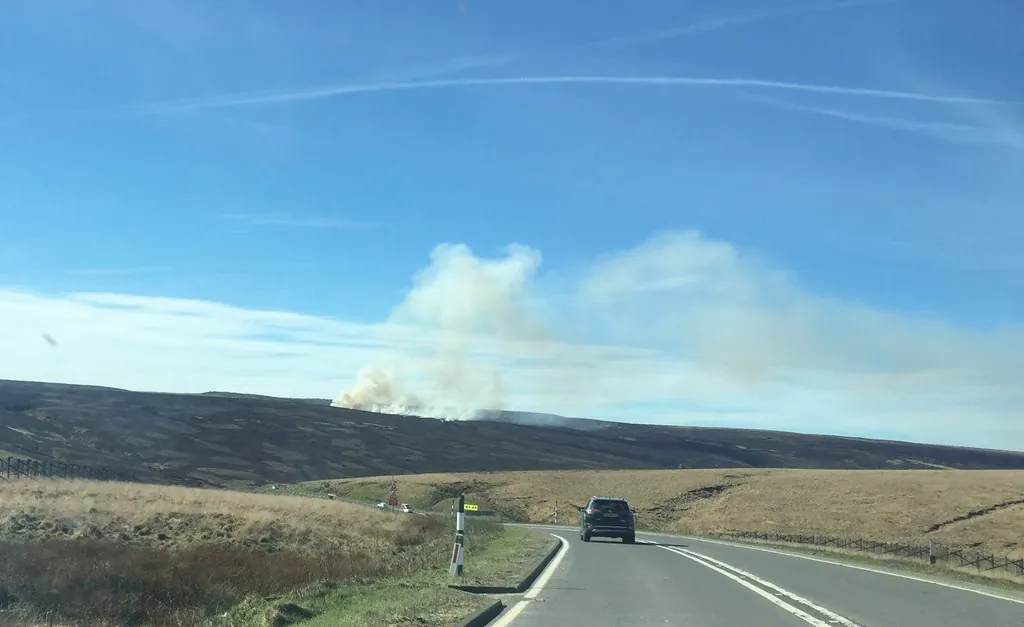
Wildfire preparation is relevant to homes beside grassland, heath, woodland and moorland, and to streets farther away that may receive smoke. You do not need to predict the path of a fire. You need reliable instructions, a way to reduce exposure when staying put is appropriate, and a practical way to leave if it is not.
The distinction matters. Closing windows can help with drifting smoke while you remain safely outside the fire's path. It is not a reason to stay in a building threatened by fire or ignore an evacuation instruction. This plan keeps those two situations separate.

Full image attribution
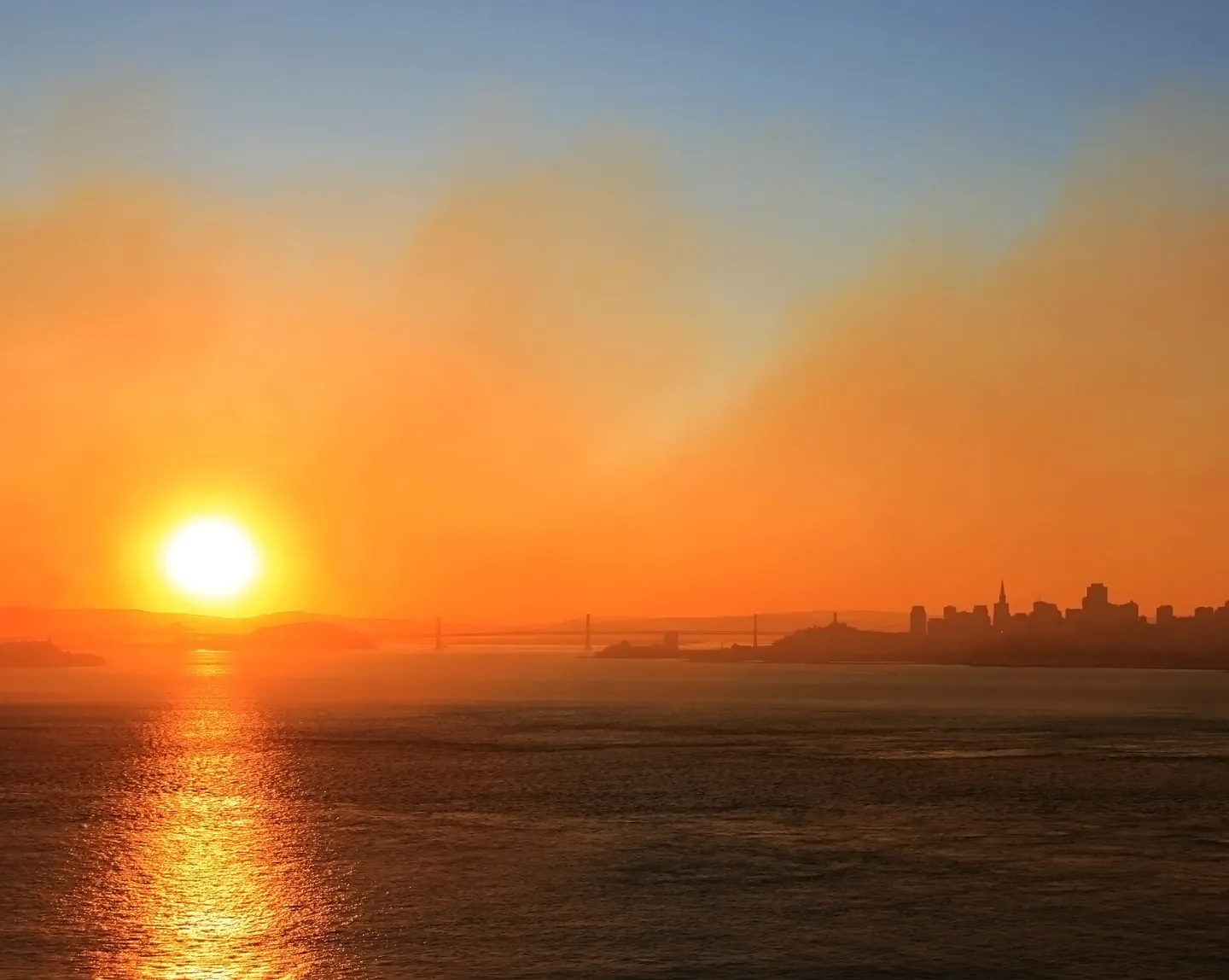
Smoke from wildfire on Angel Island blankets San Franciscon.jpg — Brocken Inaglory; CC BY-SA 3.0. Resized and converted to WebP; source: https://commons.wikimedia.org/wiki/File:Smoke_from_wildfire_on_Angel_Island_blankets_San_Franciscon.jpg
Choose information sources before smoke arrives
Find your local fire and rescue service's incident information, your council's emergency pages and a local radio station. Save the actual links and station details. During an incident, check the date, location and latest update. A report about yesterday's fire in another county can circulate without its original context.
Decide which household member will monitor official updates and who will contact relatives. This avoids several people independently repeating unverified claims. Share the instruction that affects your address, such as keeping windows closed or avoiding a named road. Do not repost a dramatic video as evidence that your own street must evacuate.
Our Emergency Alerts guide explains the phone warning system. Do not wait for a phone alert before following direct instructions from emergency services. A local incident may be communicated through other channels, and a phone may be switched off or unable to receive the message.
Distinguish sheltering from evacuation
| Situation | Useful next action |
|---|---|
| Smoke affects the neighbourhood; authorities advise staying indoors | Close windows and doors, reduce outdoor activity and monitor the next update. |
| Authorities tell your area to evacuate | Use the stated route and destination; take essentials already accessible. |
| You see a previously unreported fire | Move to safety and call 999 for the fire service with a clear location. |
| Someone has severe breathing difficulty or collapses | Call 999 and follow the call handler's instructions. |
| Indoor conditions become too hot or smoky | Seek advice on a safer place and safe travel; do not simply seal the room further. |
Ready Scotland advises moving away from fire, smoke and vegetation, calling 999 once safe and leaving firefighting to the fire service. Do not go towards a fire to judge its size. Describe what you can see from safety and answer the call handler's questions.
If you are instructed to leave, tell responders immediately about anyone who needs assistance. Give concrete details: a person cannot use stairs, needs a wheelchair-accessible vehicle, or cannot hear shouted instructions. Do not assume that being on a utility support register automatically arranges evacuation transport.
Make staying indoors more manageable
Kent Fire and Rescue Service advises people affected by smoke to remain indoors, close doors and windows and listen for further information. Close openings that you can safely operate and bring children and pets inside. Avoid unnecessary trips outside to inspect the view.
Know how your ventilation works before an incident. A kitchen extractor, whole-house ventilation system and portable fan do different jobs. Read the manufacturer's instructions and follow incident-specific advice about outside air intake. Do not block permanent combustion ventilation, alter gas appliances or tape over every vent as a general precaution.
Choose the room that best combines tolerable temperature, access and distance from obvious smoke entry. Keep water and normal medication available. If someone needs electricity for medical equipment, include the support arrangements in the household plan. A closed room is useful only if people can remain comfortable and supported there.
Smoke and heat can occur together. Use the heatwave guide to plan shading and cooler spaces before hot weather. If closing windows makes the home dangerously hot, arrange advice about a safer destination and route. There is no universal instruction to keep a hot flat sealed indefinitely regardless of conditions.
Plan around the people most affected
Kent Fire and Rescue identifies existing breathing, lung and heart conditions among reasons someone may be more affected by smoke. Keep prescribed medication accessible and follow the person's existing treatment plan. Do not change doses or use someone else's inhaler because an online checklist recommends it.
For persistent symptoms, seek medical advice through the appropriate local NHS service or GP. Call 999 for an emergency, including severe breathing difficulty. Tell the clinician about smoke exposure and any existing condition. Move away from the affected air if you can do so safely, but do not delay an emergency call while arranging transport.
A mask is not permission to remain near fire. Different products offer different protection, fit matters, and no ordinary face covering makes a smoky route safe. A household plan should prioritise avoiding exposure and following instructions. It should not depend on buying a particular mask and assuming the problem is solved.


Full image attribution
Closed window at sunset in Pornic.jpg — pterjan; CC BY-SA 2.0. Resized and converted to WebP; source: https://commons.wikimedia.org/wiki/File:Closed_window_at_sunset_in_Pornic.jpg
Write a realistic departure plan
List two possible destinations outside the likely affected area, such as a relative's home and accommodation identified by the council during an incident. Check whether either can accommodate mobility equipment, children and pets. Keep these as options, because the safest destination depends on the fire's location and current road closures.
Agree how you will travel if the usual driver is away. A household with one car should not discover during evacuation that its keys are at work. Where a taxi or accessible transport is needed, investigate arrangements in advance; availability during a major incident cannot be guaranteed.
Put medication, identification, essential documents and chargers where they can be gathered promptly. The grab bag guide provides a fuller packing list. Leave enough room for equipment the person actually uses. A bag full of duplicate camping items is less useful than the right hearing-aid supplies or mobility charger.
Hereford and Worcester Fire and Rescue Service recommends knowing escape routes and planning for pets and livestock. For household pets, keep carriers accessible and practise calm loading during normal life. Livestock arrangements need suitable transport, handlers and local advice before any fire approaches.
Avoid driving into the incident
Check official road information before collecting someone or heading to your planned destination. Tell a school or care provider where you are and follow its arrangements. A well-meant attempt to drive through a closure can delay responders and leave more people needing assistance.
If smoke affects an unavoidable journey, follow local instructions and the vehicle's ventilation controls. Ready Scotland advises closing car windows and vents near wildfire. This reduces entry; it does not make heavy smoke safe to drive through or restore lost visibility. Choose another route or delay if directed.
Consider a realistic example. A household on the edge of a Yorkshire town receives advice to close windows because of a moorland fire. One adult is at work in an unaffected area. The useful action is to confirm that everyone at home is indoors and comfortable, check collection arrangements and monitor the next official update. Driving home urgently to watch the hillside adds little.
If that instruction later changes to evacuation, the plan changes too. The adult at work should go to the agreed safe meeting place, rather than returning through the affected area merely to reunite at home. The household should tell them which destination it has actually used.
Reduce avoidable problems before dry weather
Review access to the property. Can responders read the house number? Does the gate open? Are shared access arrangements understood? Ask the landlord or building manager about vegetation maintenance and emergency procedures where you do not control the grounds.
Fire services advise managing dry vegetation and storing combustible materials appropriately. Seek local advice for your property rather than applying a universal clearance distance to every British garden. Consider boundaries, protected trees, wildlife rules and neighbours before major work. Do maintenance in ordinary conditions, not while smoke is approaching.
Respect countryside fire restrictions. Do not use a disposable barbecue on dry vegetation or create a signal fire. If you want to understand another fast-changing outdoor hazard, read lightning safety. Different hazards need different refuges, so one camping shelter cannot be assumed suitable for everything.

Full image attribution
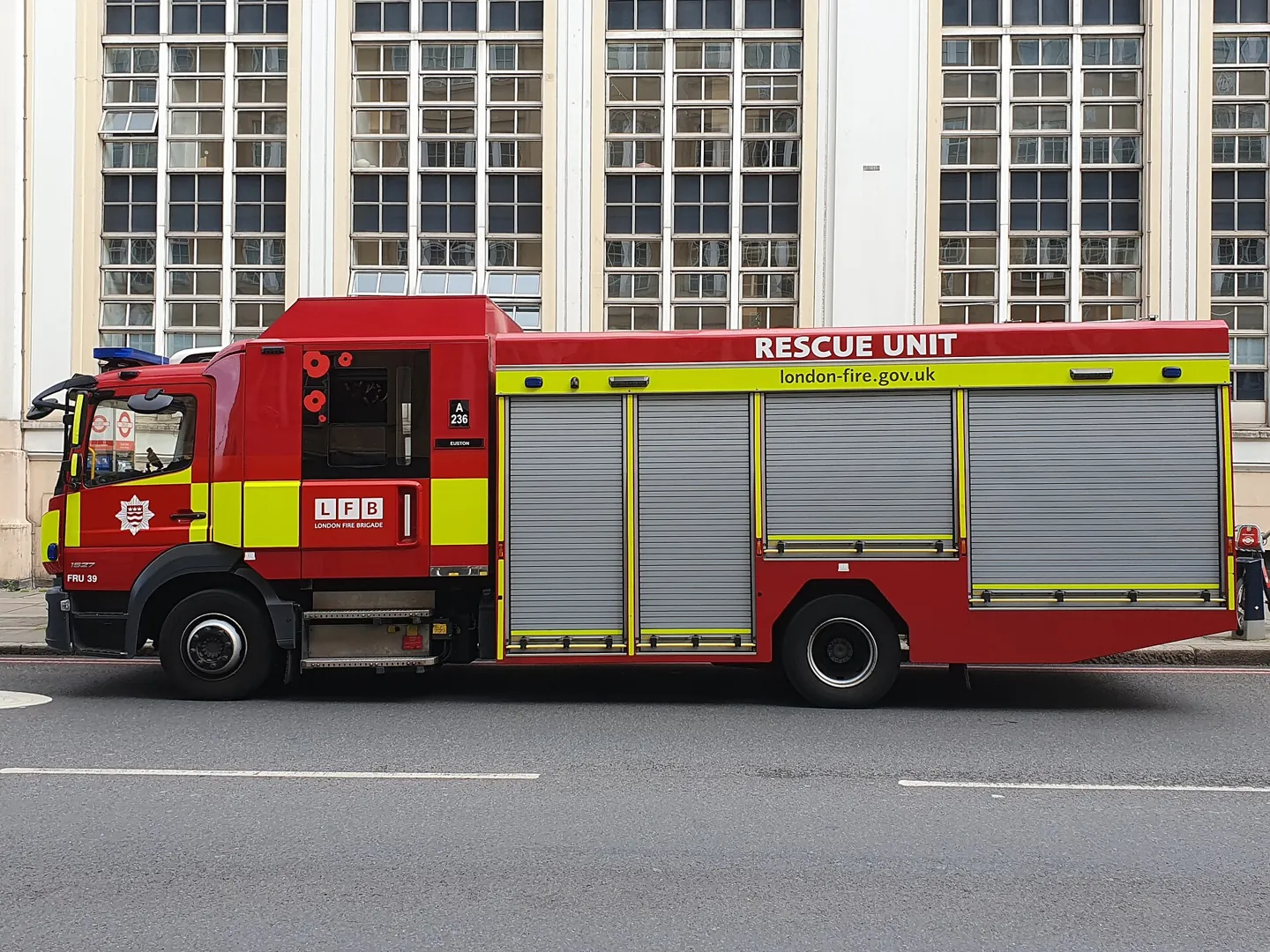
Fire engine, Stamford Street, Waterloo, London, June 2026.jpg — Gazamp; CC BY-SA 4.0. Resized and converted to WebP; source: https://commons.wikimedia.org/wiki/File:Fire_engine,_Stamford_Street,_Waterloo,_London,_June_2026.jpg
Wait for clear return advice
Do not return to a closed area because flames are no longer visible. Ready Scotland warns that fire may continue to smoulder or spread underground. Follow access restrictions and instructions about ash, damaged buildings and utilities. Keep children and animals away from affected ground.
Write down any disruption to medication, care visits or accommodation while it is fresh. If the home has water damage from an associated incident, the recovery checklist explains why apparent dryness does not establish electrical safety. Ask the relevant professionals which checks apply to your building.
Household checklist
- Save fire service, council and local radio information.
- Agree who monitors updates and who contacts relatives.
- Identify accessible departure options and two possible destinations.
- Keep medication, documents and pet carriers easy to collect.
- Understand ventilation controls without modifying safety systems.
- Act on the latest shelter or evacuation instruction.
- Seek medical help for concerning symptoms and call 999 for emergencies.
- Wait for official permission before returning to restricted areas.
Questions people ask
Should I evacuate as soon as I smell smoke?
Check official advice immediately and assess immediate danger. Drifting smoke does not automatically mean your street must evacuate. Equally, do not wait for a generic message if fire threatens you. Call 999 if you are in danger and follow the response instructions.
Can an air purifier replace closing windows?
No single appliance replaces the incident instructions or an evacuation plan. Check any purifier's intended use and maintenance requirements. Do not buy equipment on the assumption that it removes every component of fire smoke or makes a threatened building safe to occupy.
Sources
Research checked on 2 November 2026. These sources support the safety points; examples and planning worksheets are original editorial guidance.