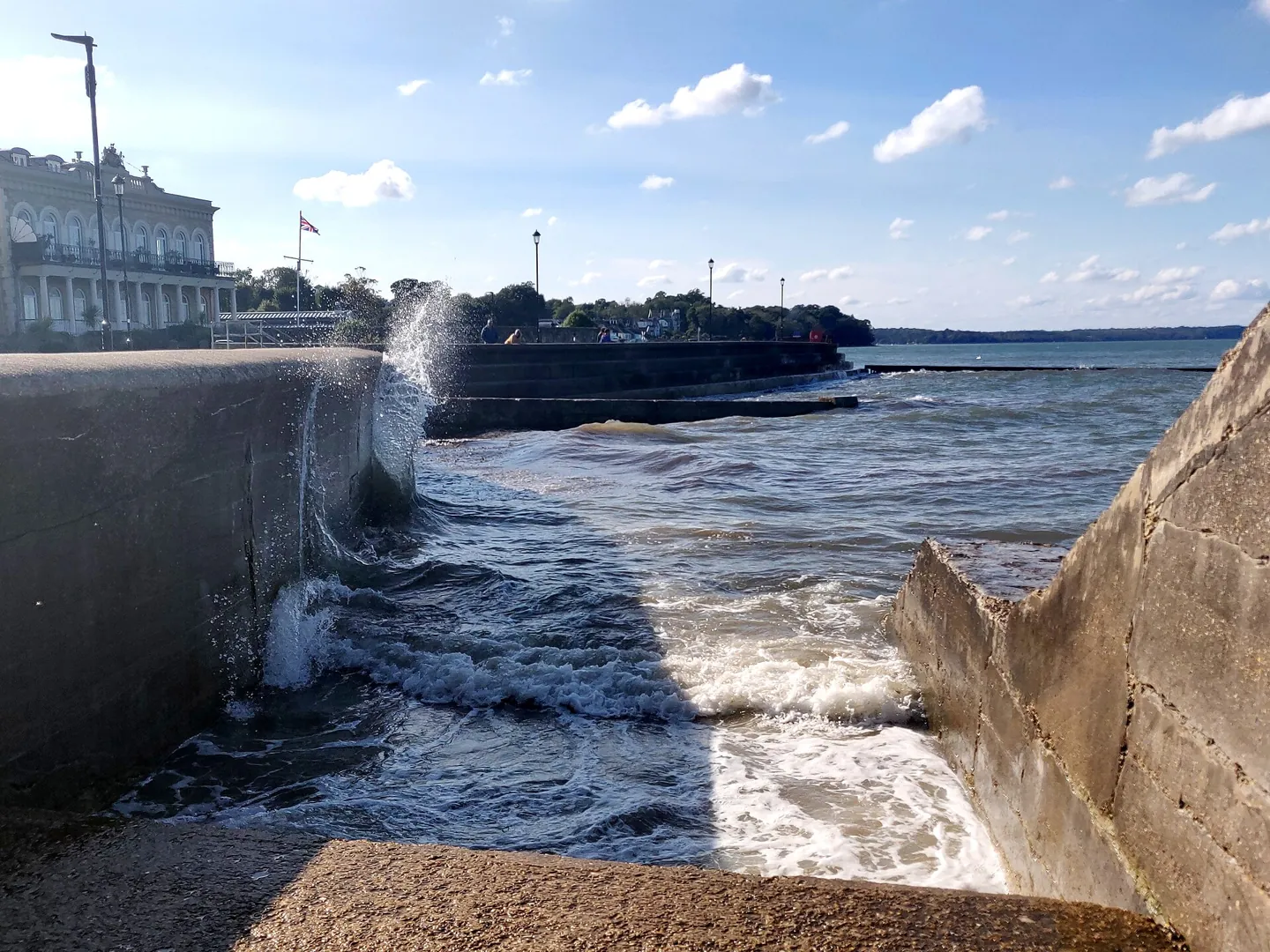

On this page
- Understand what a tide table leaves out
- Use the correct warning service
- Plan the way out while it is dry
- Separate preparation from the decision to leave
- A realistic estuary-side example
- Pack for the person and the destination
- Keep away from the water's edge
- Treat return as a separate decision
- Coastal household checklist
- Questions people ask
- Sources
A coastal flood plan needs to answer a question that a tide table cannot: when will your household stop preparing the building and move to safety? That decision depends on official instructions, transport, the route out and the time needed to help everyone leave. Waiting until water reaches the doorstep may remove the easiest options.
This guide is for households and visitors near the UK coast or tidal estuaries. It does not predict which streets will flood. Use the current local warning and evacuation advice for that. The planning work here is to make those instructions possible to follow.
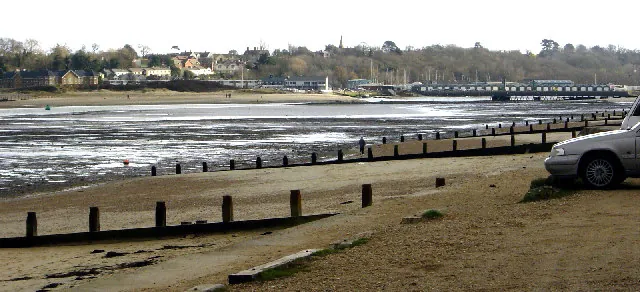

Full image attribution
Tidal estuary, St Helens, Bembridge - geograph.org.uk - 64286.jpg — Crispin Purdye; CC BY-SA 2.0. Resized and converted to WebP; source: https://commons.wikimedia.org/wiki/File:Tidal_estuary,_St_Helens,_Bembridge_-_geograph.org.uk_-_64286.jpg
Understand what a tide table leaves out
The Met Office explains that storm winds push seawater towards the coast, with low pressure also contributing to a rise in sea level. Waves can add further damage and overtopping. The timing of the surge against the tide matters, so a familiar high-water mark is not a reliable ceiling during a storm.
A tide table describes predicted tidal timing and height. It is not a complete flood forecast for your road. Nor is distance from the beach enough to assess risk: tidal rivers and estuaries bring coastal influences inland. Check the relevant flood information for the exact address and access routes.
Do not translate a forecast wind speed into a homemade evacuation threshold. Coastline shape, defences, waves and local conditions complicate the relationship. Your household can set practical preparation triggers, such as arranging transport when a warning is issued, while leaving flood prediction to the responsible agencies.
Use the correct warning service
In England, use Environment Agency flood information; in Wales, Natural Resources Wales; in Scotland, SEPA; and in Northern Ireland, the official flood information linked through nidirect. Save the local council's emergency information too. Services and coverage differ, so check what is actually available for your address rather than assuming every property receives the same text warning.
Our flood alert and warning guide explains the terms. Read the location, expected timing and action text, not just the label. A warning for the coast on one side of an estuary may describe a different area from the place where you live.
Check the weather forecast separately. Wind can affect bridges and exposed roads even before flooding begins. Ask whether your planned route could be closed for either reason. If the route crosses a causeway, follows a waterfront or passes through a low underpass, investigate a suitable alternative in advance.
| Question | Where to look |
|---|---|
| Is flooding expected locally? | National flood agency and its current warning text. |
| Are we told to leave or avoid a road? | Emergency services and local council incident information. |
| Could the journey be disrupted by wind? | Met Office, road authorities and transport operators. |
| When is the tide changing? | Appropriate local tide information, used alongside flood warnings. |
| Where can we stay? | Prearranged contacts or the reception arrangements announced locally. |
Plan the way out while it is dry
Walk through the departure plan on paper with everyone who may need help. Name the exit from the building, the collection point and the onward destination. Include stairs, gates and shared entrances. A ground-floor home may be easy to leave but depend on a low road that becomes unusable early.
Identify a second destination outside the same risk area. Two relatives living along the same waterfront are not independent options. Check whether either destination can accommodate pets, medication storage and mobility equipment. A hotel address written on a list is not a reservation or a guarantee of accessible space.
Arrange support before the warning becomes urgent. If someone cannot transfer into an ordinary car, record the type of transport needed and who can help arrange it. Tell the council or emergency services about that need when an incident threatens the area. Do not assume a neighbour who usually helps will be home.
For renters, ask the landlord or building manager about shared exits, flood doors and responsibility for deploying property measures. Our flood preparation guide covers wider household work. Barriers may reduce damage in some circumstances, but they do not replace evacuation or guarantee safe occupation.
Separate preparation from the decision to leave
Write down tasks that can happen early: charging phones, contacting a host, moving essential documents upstairs and putting a pet carrier by the exit. Then write the instruction that ends those tasks. If emergency services tell you to evacuate, leave using their directions rather than completing the list.
GOV.UK advises leaving when emergency services direct evacuation and never walking, cycling or driving through floodwater. If you cannot leave safely, contact emergency services and explain the location and circumstances. Do not try a flooded route because it is the one printed in your plan.
There is no universal rule to leave a fixed number of hours before high tide. A household needing accessible transport may need much more notice than someone already packed beside a clear inland road. Early coordination gives you options without pretending that a timetable alone can predict flood arrival.
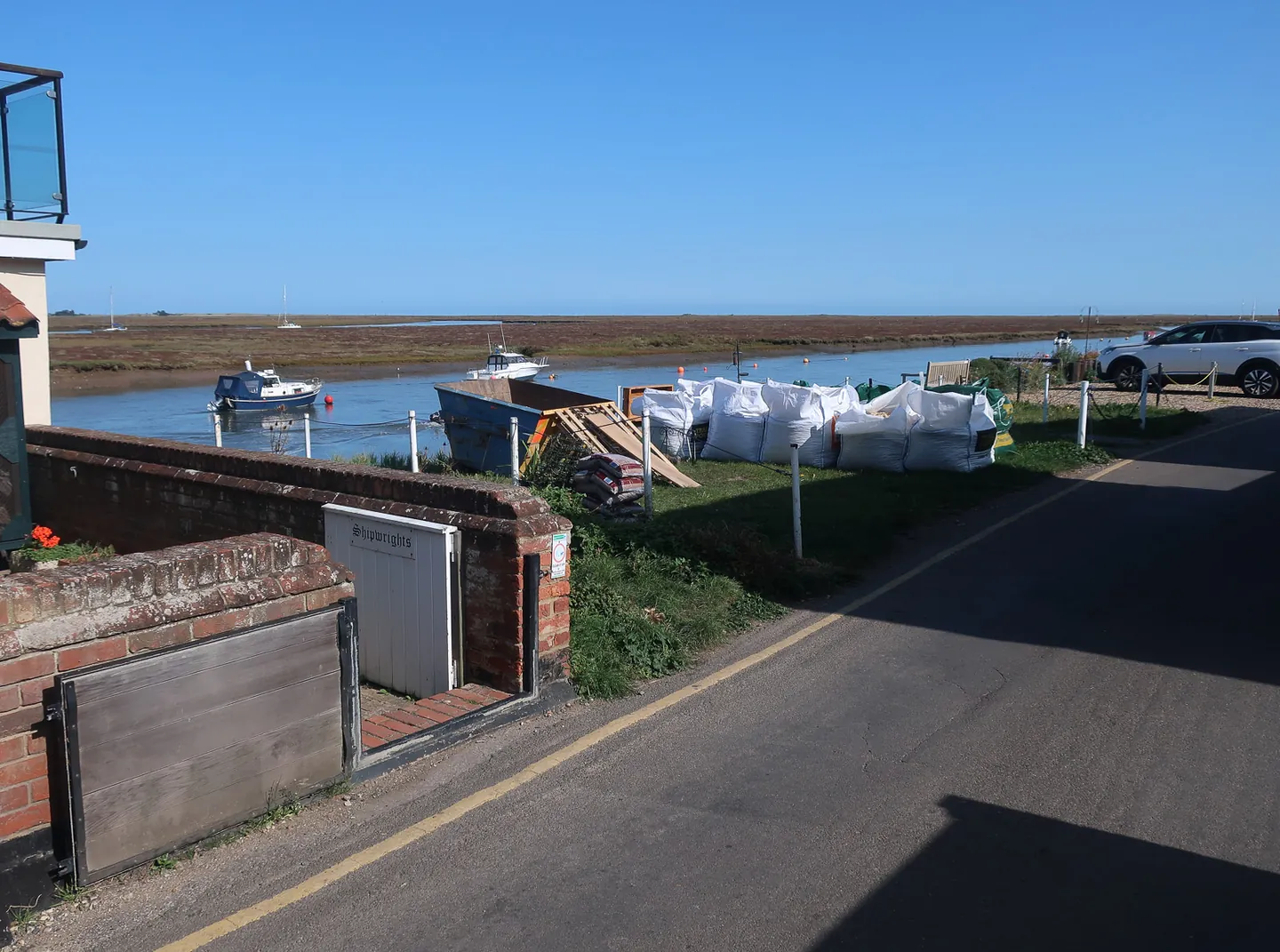

Full image attribution
Flood gate, Wells-next-the-Sea - geograph.org.uk - 6616026.jpg — Hugh Venables; CC BY-SA 2.0. Resized and converted to WebP; source: https://commons.wikimedia.org/wiki/File:Flood_gate,_Wells-next-the-Sea_-_geograph.org.uk_-_6616026.jpg
A realistic estuary-side example
Imagine a couple in an estuary village. Their home is slightly raised, but the usual road passes a low quay and the alternative crosses an exposed bridge. One person uses a walking frame. Their first action on receiving a relevant warning is to check both roads and confirm a stay with family inland.
They move medication, documents and the walking frame's everyday accessories into the departure area. They contact a neighbour about assistance while roads are clear. If local advice tells them to leave, they go promptly. They do not stay simply because the living-room floor is still dry.
If the bridge closes, the plan changes. They check official route instructions rather than asking a satnav to find the shortest diversion through lanes. If both exits are unsafe, they seek help and describe the access problem. This is why recording alternatives is useful, but treating an old alternative as automatically safe is not.
Pack for the person and the destination
Use the grab bag list for a fuller kit, then adapt it to the actual move. Take medication, essential care items, identification, phone and charger, warm clothing and what children or pets need for a short stay. Keep the bag light enough to carry while using the planned exit.
Waterproof protection for documents and electronics is useful. It does not mean the bag should be carried through floodwater. Put a written contact sheet inside so that a flat phone battery does not erase every number. Tell an out-of-area contact where you are going and update them if the destination changes.
A battery radio can provide another information route during disruption. Practise tuning it before an incident and record a suitable local station. The emergency communications guide explains how to combine radio with phone updates without expecting either to provide every local instruction.
Keep away from the water's edge
Do not go to a sea wall, harbour or promenade to see whether the warning looks justified. Watching waves does not improve the household plan. Keep children and dogs away from exposed edges and obey closures, including after the worst weather appears to have passed.
The RNLI's tide guidance stresses understanding local tidal conditions and avoiding routes where you may become cut off. During a storm, do not treat a usual beach shortcut or rock platform as a safe alternative to a closed road.
For an emergency at the coast, call 999 or 112 and ask for the Coastguard. Describe the nearest named access point and the person's position. Do not enter the water to attempt an improvised rescue. Follow the call handler's instructions from a safe place.
Treat return as a separate decision
A falling tide does not establish that a building is safe. Water may remain trapped, roads may be damaged and another high tide may still be relevant. Wait for access instructions and consult the returning home after a flood checklist before switching on utilities or beginning clean-up.
If strong winds accompany the event, consider thunderstorm safety where lightning is also forecast. Do not combine advice carelessly: a low place that seems sheltered from wind may be exposed to flooding. The safest option must account for the hazards actually present.
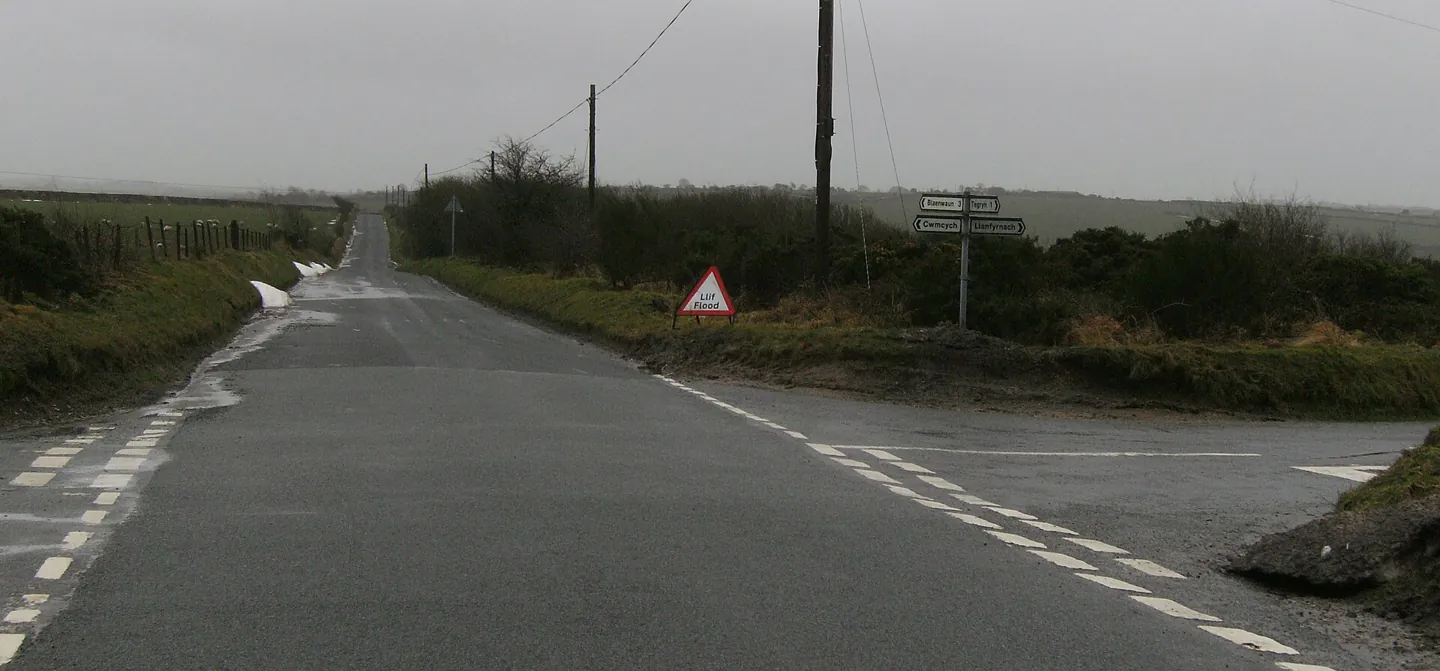

Full image attribution
Flood warning sign - geograph.org.uk - 3315495.jpg — chris whitehouse; CC BY-SA 2.0. Resized and converted to WebP; source: https://commons.wikimedia.org/wiki/File:Flood_warning_sign_-_geograph.org.uk_-_3315495.jpg
Coastal household checklist
- Save the correct national flood service and local incident pages.
- Check the address and both access routes, including tidal rivers.
- Record transport assistance and accessible exit arrangements.
- Choose destinations outside the same flood risk area.
- Keep essential medication, documents and pet supplies ready.
- Act on evacuation instructions before completing property tasks.
- Never cross floodwater to reach a car or retrieve belongings.
- Notify a trusted contact when you reach the actual destination.
- Check return permission and utility safety separately.
Questions people ask
We have a sea wall. Do we still need a plan?
Yes. Defences influence risk but do not remove every possibility of flooding or disruption. Follow the warning for your location and consider access, power and nearby roads as well as water entering the home.
Can I wait upstairs instead of evacuating?
Follow the emergency services' instruction for your situation. Upstairs may be a refuge when escape is unsafe, but it is not a reason to ignore a direction to leave while a safe route is available. If you are trapped or in immediate danger, call 999.
Should visitors register for warnings too?
Check the available local warning options and ask the accommodation provider about evacuation arrangements. Visitors may know less about tidal roads and reception points than residents. Write down the address and access instructions before mobile coverage or power becomes a problem.
Sources
Research checked on 2 November 2026. These sources support the safety points; examples and planning worksheets are original editorial guidance.