
On this page
A burst pipe is easier to manage when the stop tap is reachable and somebody knows which plumber to call. Those two preparations matter more than a cupboard of repair tape. Before cold weather, identify the vulnerable parts of your home and remove the practical obstacles to getting help.
This guide covers ordinary household preparation and limited first steps. Hidden pipework, inaccessible lofts, damaged systems and water near electricity need professional help. Do not dismantle a boiler, open electrical equipment or work at height to follow a checklist.

Full image attribution
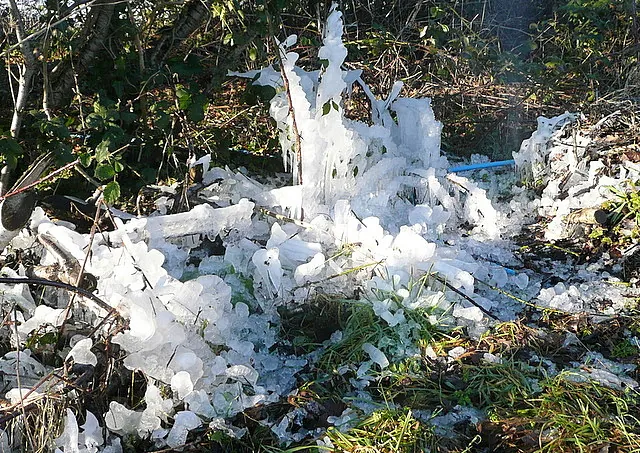
Frozen pipe - geograph.org.uk - 2256312.jpg — Graham Horn; CC BY-SA 2.0. Resized and converted to WebP; source: https://commons.wikimedia.org/wiki/File:Frozen_pipe_-_geograph.org.uk_-_2256312.jpg
Make a winter pipework note
Start with places you can inspect safely: the cupboard under the sink, an unheated utility room, visible garage pipework and an outside tap. Record exposed sections, missing insulation and existing leaks. A photograph taken from a safe position can help a plumber understand the arrangement without you climbing or removing panels.
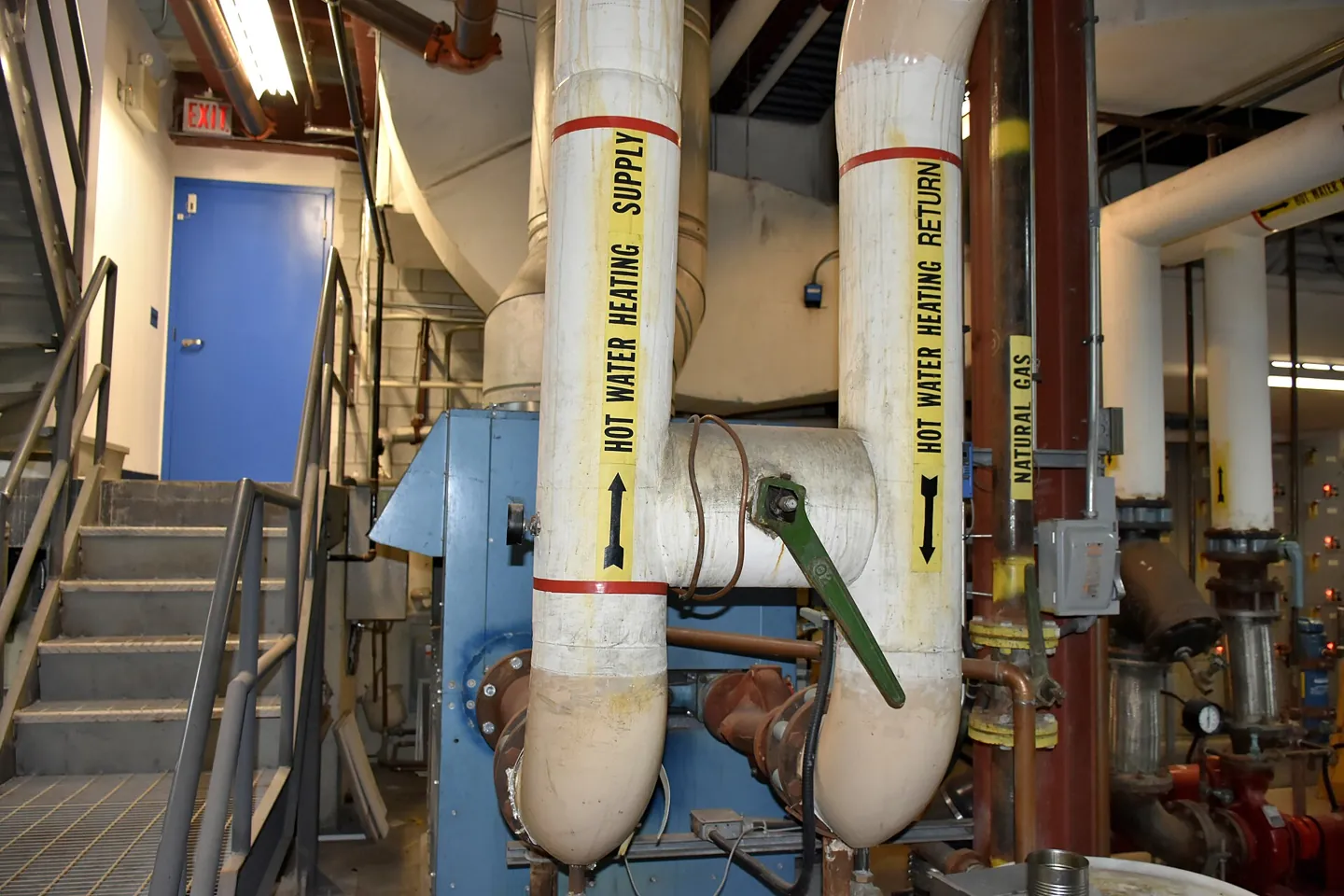
Do not assume every pipe in a cold place carries drinking water. A heating pipe, waste pipe and boiler condensate pipe serve different purposes. If you cannot identify one confidently, label the photograph rather than attaching a treatment instruction to it. Explain the symptoms to the relevant tradesperson.
The Met Office recommends insulating pipes in vulnerable cold areas and keeping a qualified plumber's details to hand. Match insulation to the pipe and location. Outdoor material must suit outdoor exposure; a loose indoor sleeve may not protect a fitting exposed to wind and rain.
If a winter trip takes you away from a coastal home, review the coastal flood departure plan too. A neighbour checking pipes needs to know when local flood advice makes visiting the property inappropriate.
Use the winter storm preparation guide to consider heating, travel and power alongside plumbing. Pipe insulation slows heat loss. It is not a guarantee against freezing through every duration of severe cold, especially if the building loses heat.
Find the right isolation point
Locate the internal stop tap and make sure an adult can reach it without emptying a crowded cupboard. Store cleaning products so they do not block access. Write down the location in ordinary language: under the kitchen sink, left-hand rear corner, behind the removable storage basket.
Our stop tap guide explains identification and safe checks. Do not force a stiff valve or turn unfamiliar shared or street valves. Ask a plumber or landlord to resolve an inaccessible, seized or unclear arrangement before an emergency. In a block of flats, find out who can isolate a shared supply.
Show another household member where the valve is. A label is useful, but it cannot overcome a cabinet that nobody knows how to open. If dexterity or mobility makes the valve difficult, discuss a suitable accessible arrangement with the responsible professional instead of relying on someone who may be away.
Check what has actually failed
| Observation | Next step |
|---|---|
| Several neighbouring homes have no water | Check the water company's incident information before assuming an internal freeze. |
| One cold tap slows during freezing weather | Check accessible pipework and contact a plumber if the cause is unclear. |
| Water escapes from a pipe or ceiling | Isolate the supply if safe and arrange urgent help. |
| Water is near sockets, wiring or the consumer unit | Keep clear; operate isolation only from a safe, dry position. |
| Boiler displays a fault | Use the manufacturer's instructions and qualified help; do not improvise thawing inside the appliance. |
WaterSafe identifies slow or absent flow and frost on exposed pipework as possible signs of freezing. They are clues, not a complete diagnosis. Avoid repeatedly cycling equipment or opening every tap while trying to prove a theory.
Note when the problem began, which taps are affected and whether there is visible water damage. A short factual description helps the water company, landlord or plumber decide the next step. You do not need to identify the exact hidden frozen section before asking for advice.
Keep household thawing within narrow limits
Only consider gentle warming when the pipe is accessible, you are confident what it is, there is no visible damage and the surrounding area is safe. Isolate the supply first. Thames Water recommends a wrapped hot-water bottle or warm towels. Avoid scalding yourself and protect nearby surfaces from water.
Never use a naked flame or blowtorch. Do not apply a heat gun, boiling water or improvised electrical heater to hidden pipework. A fast-looking method can damage materials or start a fire. Do not use an electric appliance where water, damp floors or uncertain wiring make it unsafe.
Opening an appropriate cold outlet can allow water to escape during thawing, but follow advice for your actual system. Hot-water cylinders and other arrangements differ. Do not interpret general online advice to open taps as a universal instruction to drain every hot and cold part of the house.
Do not switch on an immersion heater or boiler as a thawing method. If you cannot identify the pipe, reach it without risk or confirm its condition, stop and call a plumber. Having bought insulation or a hot-water bottle does not oblige you to attempt the repair yourself.

Full image attribution
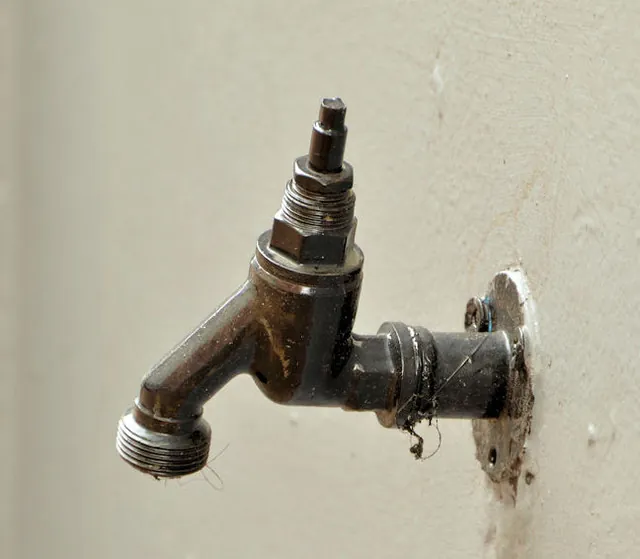
Outside tap, Belfast - geograph.org.uk - 3952550.jpg — Albert Bridge; CC BY-SA 2.0. Resized and converted to WebP; source: https://commons.wikimedia.org/wiki/File:Outside_tap,_Belfast_-_geograph.org.uk_-_3952550.jpg
If water starts escaping
Turn off the internal water supply if you can reach the stop tap safely. Thames Water also advises switching off the heating after a burst. Use only normal controls that you can reach from a dry, safe position; do not approach wet switches or open the boiler. Ask the plumber about any separate water heater and when the system can safely restart. Keep people out of affected rooms where ceilings bulge, floors are unstable or electrical fittings are wet. Do not stand beneath a sagging ceiling to catch the leak in a bucket.
If water has reached electrics, keep clear. Only operate the electrical main switch if you can do so from a safe, dry place without approaching wet equipment. Otherwise obtain professional assistance. Call 999 if there is immediate danger, fire or someone at risk. Do not walk through water to reach a switch.
Contact the landlord or an emergency plumber, then your insurer where relevant. Explain whether the water is still flowing and whether the supply has been isolated. If a leak affects another flat, inform the building manager and neighbour without entering an unsafe area.
Move lightweight belongings only where it is safe. Photograph visible damage from a safe position and keep a record of calls. Do not delay isolation or help to collect insurance evidence. The flood recovery guide discusses wet electrics and recovery decisions that may also be relevant after a substantial internal leak.
Check after thawing and repair
Thames Water advises checking for leaks before restoring the supply and leaving it off if leakage persists. A pipe may have been damaged while frozen even if little water escaped at the time. Treat the thaw as another inspection point, not the end of the incident.
Ask the plumber how the supply should be restored and what to watch afterwards. Do not conceal a repaired section immediately behind stored possessions. Keep access available until the repair has been checked under normal use. If electrical equipment was wet, drying the outside is not permission to switch it on.
A temporary wrap is not a permanent pipe repair. WaterSafe specifically distinguishes temporary binding from proper repair. Record what was done and arrange the lasting work. Otherwise the household may forget the temporary measure once the visible leak stops.
Prepare for an empty home
Before a winter trip, check the heating manufacturer's advice, your tenancy arrangements and any relevant insurance conditions. The right plan depends on the building and system. Do not copy a single thermostat setting from another home and assume every pipe will remain protected.
Ask a trusted person whether they can check the property and give them clear instructions for contacting you and the responsible contractor. Show them the stop tap if appropriate. Agree what to do if they cannot gain access, rather than leaving a vague request to keep an eye on the house.
If the home is going to be unheated or empty for longer, seek professional advice about the system. Draining a property is not a generic DIY task. Tanks, heating circuits and appliances may need different treatment, and an incorrectly drained system can create further damage.
Keep a manageable water reserve
A plumbing problem may leave you without normal water even when the wider network works. Store drinking water safely using the home water storage guide. Keep containers where the people who need them can lift or pour them without strain.
Do not assume water collected from a leak is suitable for drinking or food preparation. If the company issues a water-quality notice, follow that specific instruction. A pipe repair and a drinking-water assurance are different matters. Ask about flushing or other return-to-use steps if the plumber or supplier considers them necessary.
Renters should use the reporting routes in their agreement and keep a written record. The renters' emergency guide helps organise contacts. Do not wait for a routine office opening when there is an active damaging leak; use the emergency repair route provided.

Full image attribution
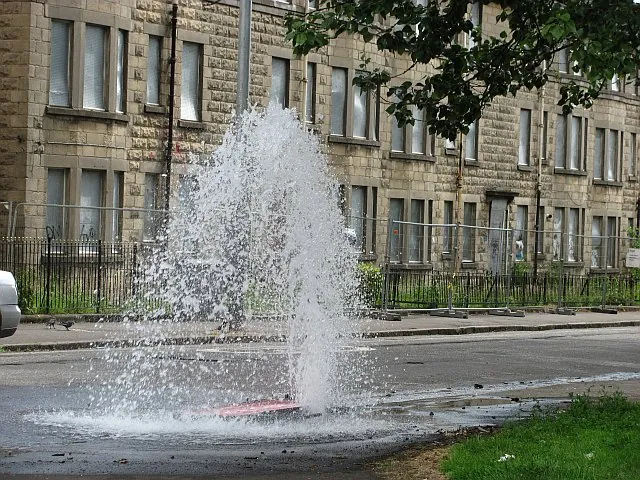
Burst water main (geograph 2646387).jpg — Richard Webb; CC BY-SA 2.0. Resized and converted to WebP; source: https://commons.wikimedia.org/wiki/File:Burst_water_main_(geograph_2646387).jpg
Cold-weather pipe checklist
- Locate and label the accessible internal stop tap.
- Ask a professional to deal with stiffness, poor access or uncertainty.
- Inspect visible vulnerable pipes and arrange suitable insulation.
- Save the water company, landlord and plumber's emergency contacts.
- Record the household's safe electrical isolation boundary.
- Keep drinking water and a battery torch accessible.
- Use only gentle thawing on clearly identified, safe pipework.
- Watch for leaks during the thaw and before restoring supply.
- Arrange permanent repairs and replace damaged insulation.
Questions people ask
Should I leave a tap running all night?
Do not adopt that as a universal winter measure. Follow your water supplier's advice for the local situation and your system. Insulation, suitable heating arrangements and prompt repair of defects are the preparation to discuss with a plumber.
Can I thaw a pipe hidden behind plasterboard?
Not by guessing where to apply heat. Hidden damage, nearby wiring and unknown materials make that a job for appropriate professional assessment. Explain the affected taps and visible symptoms rather than opening the wall yourself during an emergency.
Sources
Research checked on 2 November 2026. These sources support the safety points; examples and planning worksheets are original editorial guidance.