
On this page
A summer shower can change a day out in minutes. The awkward moment is often ordinary: a football match has almost finished, the washing is still outside, or the car is across a large open park. Decide what you will do before that moment. A shelter plan is useful only if everyone can reach the shelter in time.
This guide covers household and everyday outdoor decisions in the UK. It is not a method for making an exposed ridge safe. If thunder is already audible, begin moving to appropriate shelter; do not spend the next few minutes comparing lightning apps.

Full image attribution
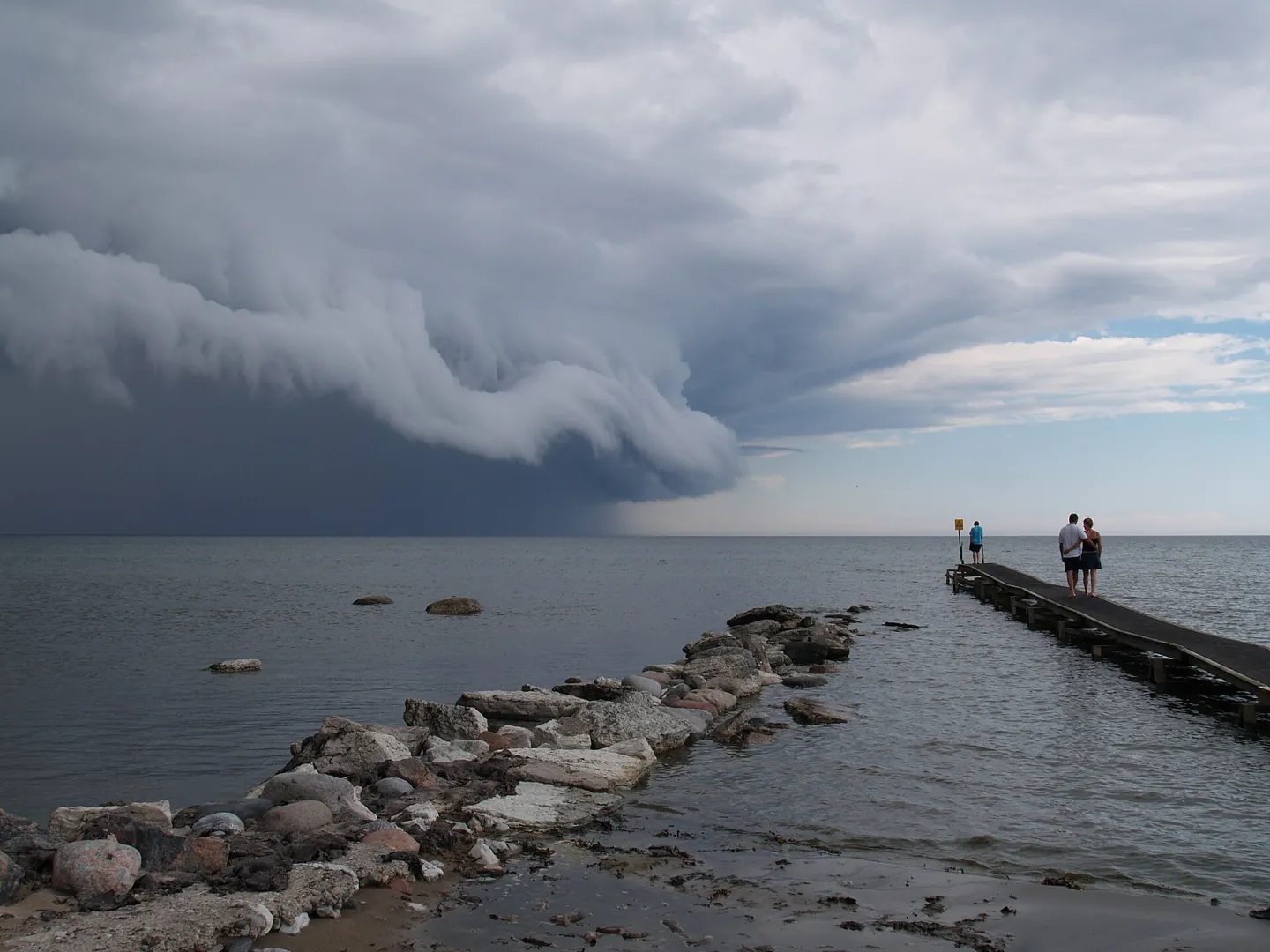
Cloud cumulonimbus at baltic sea(1).jpg — Arnold Paul; CC BY-SA 2.5. Resized and converted to WebP; source: https://commons.wikimedia.org/wiki/File:Cloud_cumulonimbus_at_baltic_sea(1).jpg
Use thunder as an action trigger
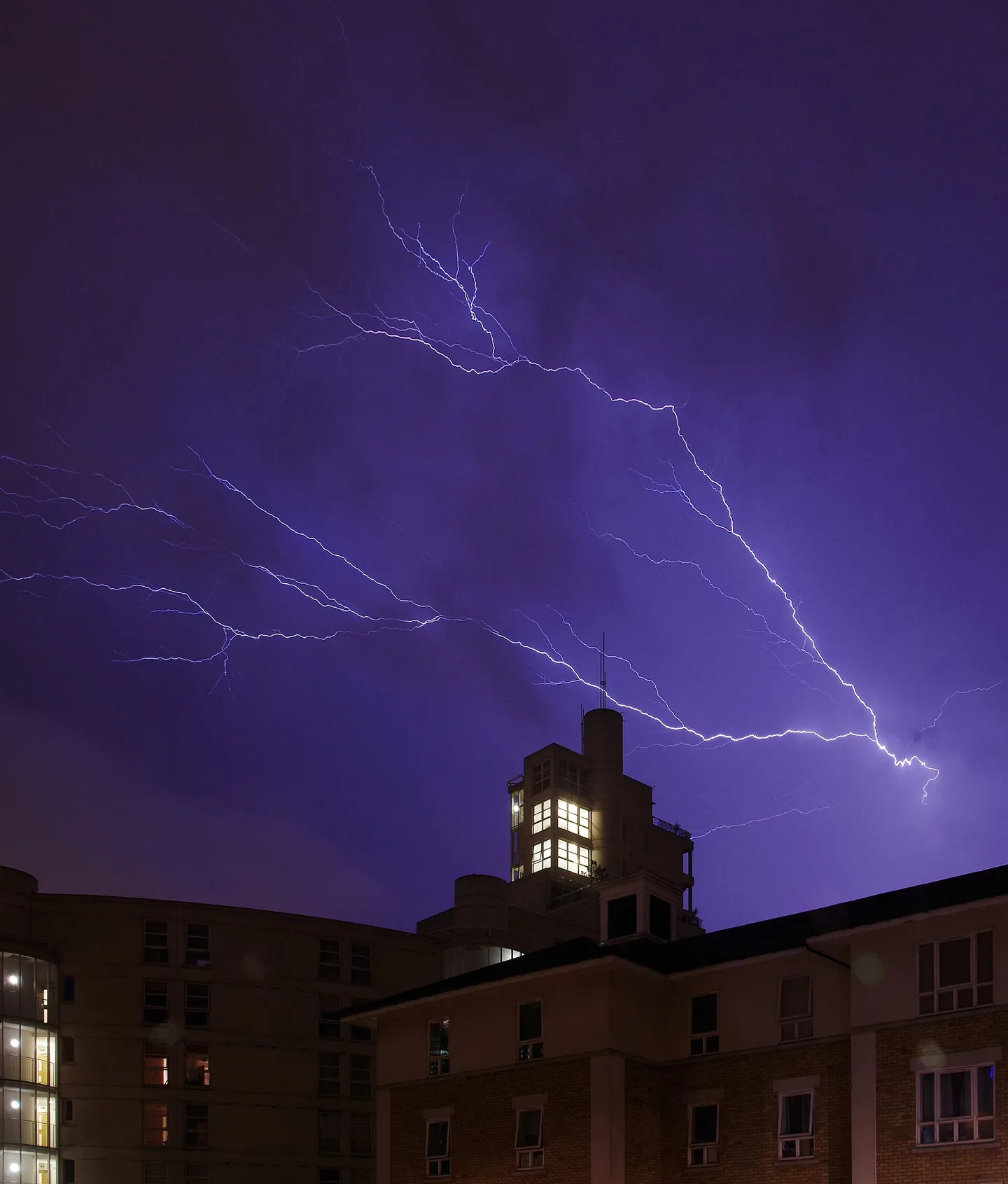
The Met Office says hearing thunder means you are already within reach of a possible ground strike. Rain does not have to be falling where you stand. Counting seconds between a flash and a rumble can be interesting, but it should not become permission to finish a swim or remain on a hill.
Check the forecast before leaving, including the hours when you expect to return. Read the location and timing in a thunderstorm warning. Our weather warning guide explains why a yellow warning can still matter greatly to someone outdoors. A broad warning area does not mean every street will experience the same storm.
For a planned activity, choose a decision time before departure. If thunderstorms are expected during an exposed walk, arrange a lower-risk alternative with access to buildings or postpone it. An earlier start is only helpful if the whole trip, including delays, fits the revised forecast. Do not turn a vague expectation of afternoon storms into a guarantee that the morning is safe.
Choose shelter you can actually enter
| Place | Planning decision |
|---|---|
| Substantial building | Identify an accessible entrance and confirm it will be open. |
| Enclosed metal-roofed car | Keep the keys accessible and allow room for everyone. |
| Tent, gazebo or open pavilion | Find a different refuge before the activity begins. |
| Underpass or basement car park | Consider rapid flooding; choose a safer building above flood-prone ground. |
| Single tree or exposed summit | Do not use it as a waiting place. |
The US National Weather Service confirms that tents and open picnic shelters provide no lightning protection. This physical limitation applies equally to a British campsite. Rain shelter and lightning shelter are different requirements. A waterproof canopy may solve only the first.
Think about locked gates, mobility needs and carrying children. A visitor centre visible across a field may take much longer to reach than you expect. Ask event organisers where participants should go if play stops. If their plan is to gather everyone beneath a marquee, do not assume the marquee provides lightning protection.
Prepare at home before the storm arrives
Charge phones and put a torch where it can be found without searching. Save the relevant warning page and agree who will check updates. If a relative depends on help, establish a contact arrangement before travel becomes difficult. These jobs are easier while the weather is still quiet.
The Met Office advises unplugging non-essential appliances before thunderstorms and avoiding landline use during lightning except in an emergency. Complete any optional disconnection early, while conditions are safe. Once lightning is nearby, leave plugs and cables alone rather than rushing around to protect electronics. Keep clear of damaged equipment and water near electrical fittings.
While lightning is nearby, avoid showers, washing dishes and contact with plumbing, wired appliances and their leads. Stay away from exterior windows and doors. The National Weather Service explains that lightning can travel through a building's wiring and pipes. Being inside a suitable building still requires these precautions.
Choose an indoor place where children can wait comfortably. Have something ordinary to do and explain the change of plan in plain language. A child who understands that the park visit is postponed until the storm has passed is easier to supervise than one who thinks the adults are still debating whether to leave.
If electricity fails, use the storm power cut guide. A blackout does not justify opening an electrical enclosure or bringing outdoor cooking equipment inside. The immediate task is light, communication and care for the people at home.
Make a travel decision before leaving shelter
A metal-roofed enclosed vehicle offers useful lightning protection, with windows closed, according to the Met Office. A soft-top convertible, bicycle or motorcycle is not equivalent. The protection comes from the vehicle structure, not a promise that rubber tyres make every vehicle safe.
Driving still exposes you to poor visibility, hail, gusts and standing water. Leave extra time, reduce speed for the conditions and give vulnerable road users space. If conditions become too poor to continue, find a safe stopping place away from traffic, trees and flood-prone ground. Do not stop in a live lane merely to avoid lightning.
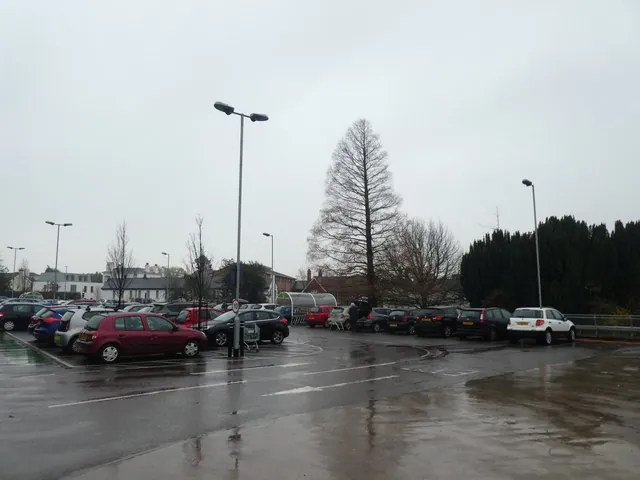
Suppose you are waiting in a supermarket car park while your partner finishes shopping. Staying inside the parked car may be more sensible than crossing the open car park to meet them. Tell them where you are and agree to wait. If the car park begins flooding, that is a separate emergency requiring a different decision and, if necessary, help.
Use the car emergency kit guide for supplies that make a delay manageable. Snacks and a charged phone help with waiting; they do not make a flooded road passable. Cancel an optional journey when you cannot identify a safe route.

Full image attribution
Exeter Waitrose car park in the rain - geograph.org.uk - 5988577.jpg — David Smith; CC BY-SA 2.0. Resized and converted to WebP; source: https://commons.wikimedia.org/wiki/File:Exeter_Waitrose_car_park_in_the_rain_-_geograph.org.uk_-_5988577.jpg
If you are caught outside
Move towards a substantial building or suitable vehicle. Leave water and exposed high ground, avoid isolated trees and keep away from fencing and other conductive objects. The Met Office's outdoor lightning advice prioritises shelter and getting off ridges and peaks.
Do not replace one danger with another. A steep gully, fast stream, cliff edge or flooded hollow is not an acceptable escape simply because it is lower. Use a known, feasible route. For hillwalking, make the weather decision before the exposed section, using the approach in reading changing weather on a walk.
There is no reliably safe outdoor posture. Some emergency advice describes crouching low as a last resort when shelter is impossible; it is not a protective technique to practise instead of leaving. Do not lie flat or remain in an exposed place because you believe a particular stance will protect you. People who cannot crouch should focus on reaching safer shelter and obtaining help, not attempting an unsafe transfer from mobility equipment.
Keep communication simple. Name the destination, count the group and make sure nobody returns for a dropped bottle or picnic blanket. If someone is missing, tell the emergency services what you know rather than sending several people back into danger without coordination.
Allow a proper pause before resuming
As a practical waiting rule, the National Weather Service advises staying sheltered for 30 minutes after the last thunder. Restart that interval if thunder returns. This is a lightning precaution, not a guarantee that roads, rivers or damaged trees are safe.
Use the pause to check fresh forecasts and the time left in the day. A walk planned to finish before dusk may no longer fit. Restarting the original route after a long delay can create a second problem even if the sky clears. Change the outing rather than trying to recover every lost minute.
At the coast, also check the coastal flooding plan before using a seafront road or car park as a waiting place.
Check your route for reported flooding and closures. If water entered a building, apply the separate flood re-entry checks. A quiet sky cannot establish electrical or structural safety inside a wet property.
Respond to injury and damage
Call 999 immediately if someone is struck, seriously injured or unresponsive. Tell the call handler that lightning is involved and give your location. Follow their first-aid instructions, including CPR if directed. Consider continuing lightning danger to helpers while arranging assistance. Do not assume a person who initially responds needs no medical assessment after a strike.
Stay away from fallen wires and broken electrical equipment. Keep others clear and report the hazard. Do not approach to photograph damage or move a branch off a cable. When describing a location, a road name, nearby building and direction of travel are more useful than saying that it is somewhere near the park.

Full image attribution
Rain on a window.jpg — W.carter; CC BY-SA 4.0. Resized and converted to WebP; source: https://commons.wikimedia.org/wiki/File:Rain_on_a_window.jpg
Your thunderstorm checklist
- Read the latest forecast for the destination and return journey.
- Choose a substantial, accessible shelter and check its opening hours.
- Agree who stops the activity and how the group will move.
- Charge a phone and make a torch easy to reach.
- Postpone exposed activities when suitable shelter cannot be reached.
- On hearing thunder, act immediately rather than waiting for rain.
- Keep clear of floodwater, isolated trees and damaged electrical equipment.
- Wait through the appropriate sheltered interval and reassess the remaining day.
Questions people ask
Can I stay in a tent if I avoid touching its poles?
Avoiding poles does not turn a tent into lightning shelter. Campsite planning should identify a suitable building or enclosed metal-roofed vehicle before a storm develops. If none is available, reconsider the trip when thunderstorms are forecast.
Should I finish bringing garden furniture indoors?
Do optional outdoor jobs before the storm. If thunder begins while you are outside, your priority is reaching appropriate shelter. Furniture can wait. Do not make repeated trips across the garden to complete a preparation task after the trigger to stop has occurred.
Does blue sky mean it is safe to start again?
No. Conditions immediately overhead are only part of the picture. Listen for thunder, follow the waiting rule and read current warnings. Also check the route itself, because a nearby downpour may have flooded a road while your street remained dry.
Sources
Research checked on 2 November 2026. These sources support the safety points; examples and planning worksheets are original editorial guidance.