
On this page
- Identify the job of each alarm
- Check the rules for your home and nation
- Buy for compatibility and clear instructions
- Use the instructions for the actual model
- Check the warning with the doors closed
- Keep a small maintenance record
- Know the carbon monoxide response
- Finish with actions, not a shopping list
- Check each device, not just the shopping receipt
- Sources
A smoke alarm and a carbon monoxide alarm do different jobs. Buying one does not make the other unnecessary. A heat alarm has another role, commonly in a kitchen. Before buying, write down what is already fitted, what each device detects and whether the warning reaches people where they sleep. The most expensive model will not fix a missing alarm upstairs or a warning someone cannot hear.
This is a selection and maintenance guide. For a sounding fire alarm, follow your building's fire plan immediately. For a carbon monoxide warning, move outside and seek emergency advice. Do not remain indoors trying to prove that a warning is genuine, and do not use a phone app reading as permission to ignore symptoms or an alarm.

Full image attribution
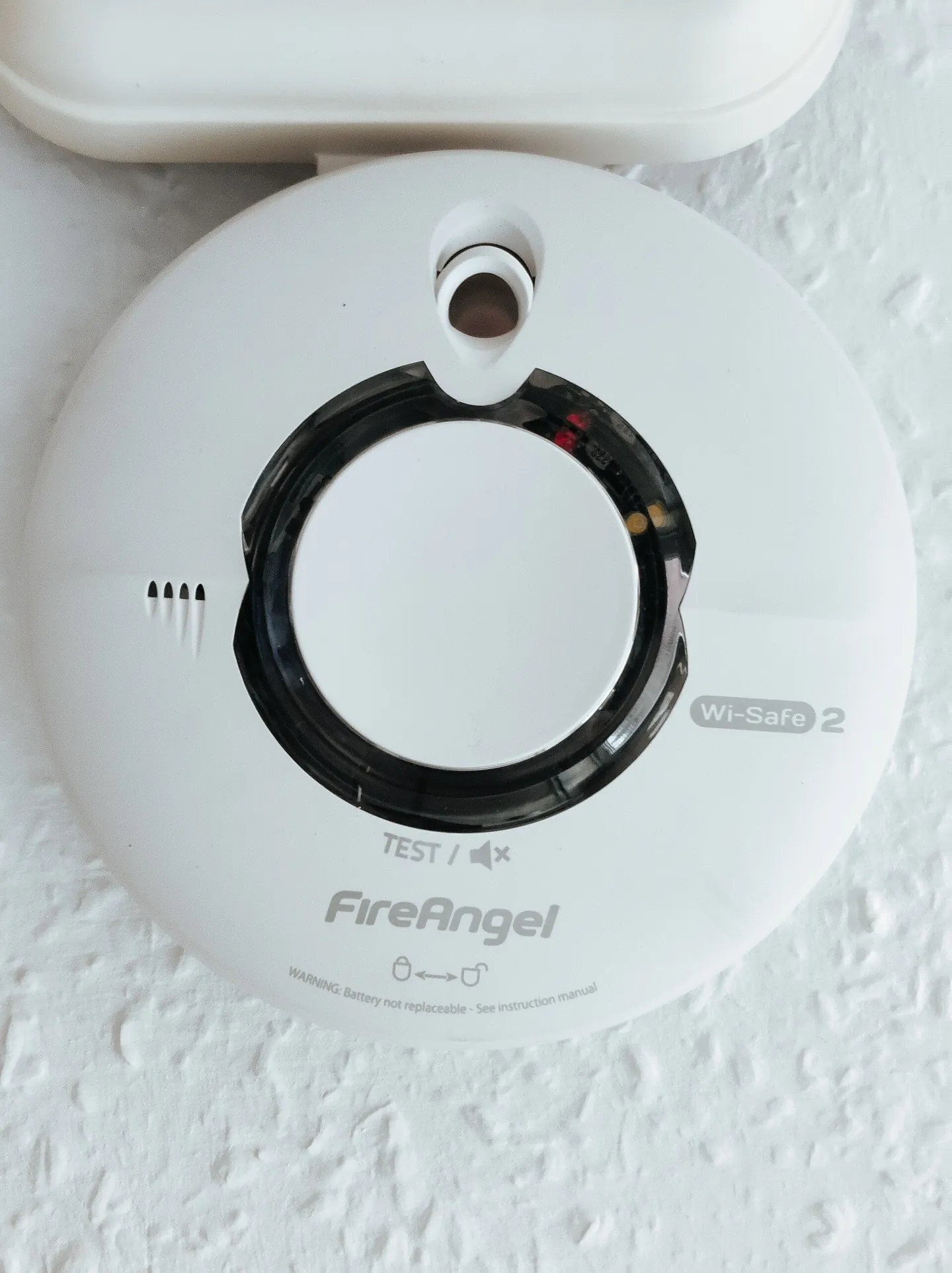
FireAngel smoke detector system - 2021-07-07 - Andy Mabbett - 03.jpg — Andy Mabbett; CC BY-SA 4.0. Resized and converted to WebP; source: https://commons.wikimedia.org/wiki/File:FireAngel_smoke_detector_system_-_2021-07-07_-_Andy_Mabbett_-_03.jpg
Identify the job of each alarm
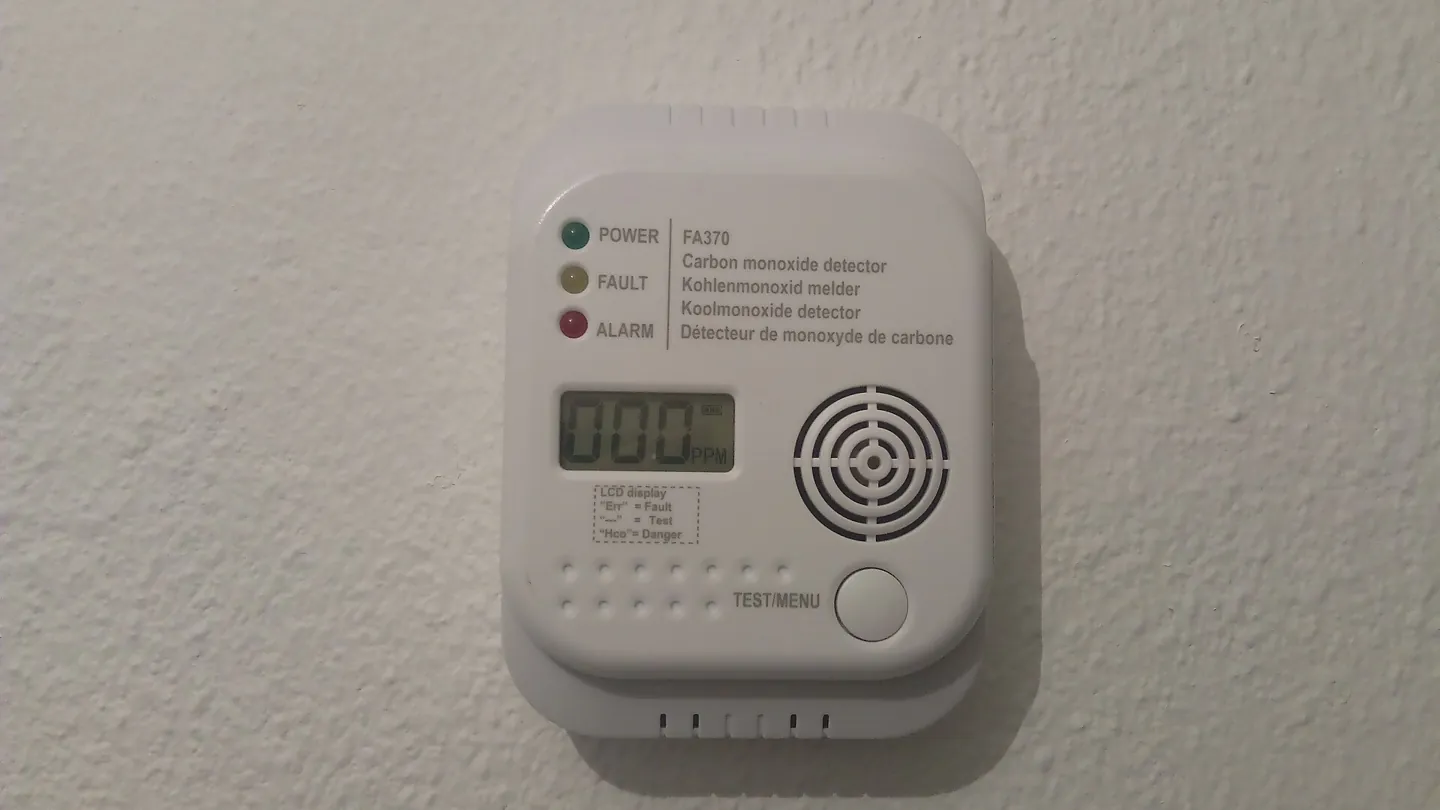
Read the label and model instructions rather than guessing from the shape. Smoke detection warns of smoke; a heat alarm responds to heat; a carbon monoxide alarm detects a poisonous gas produced by fuel-burning equipment. Carbon monoxide has no smell or colour. The smell added to mains gas is not a carbon monoxide warning. NHS guidance explains the exposure risks and symptoms.
A combined device must explicitly provide the detection you need. An air-quality monitor showing carbon dioxide is not a carbon monoxide alarm. Treat vague marketplace descriptions as a reason to investigate the manufacturer's documentation, not as evidence of suitability. If you cannot establish the model, intended use, relevant standard and replacement instructions, choose a product you can verify.
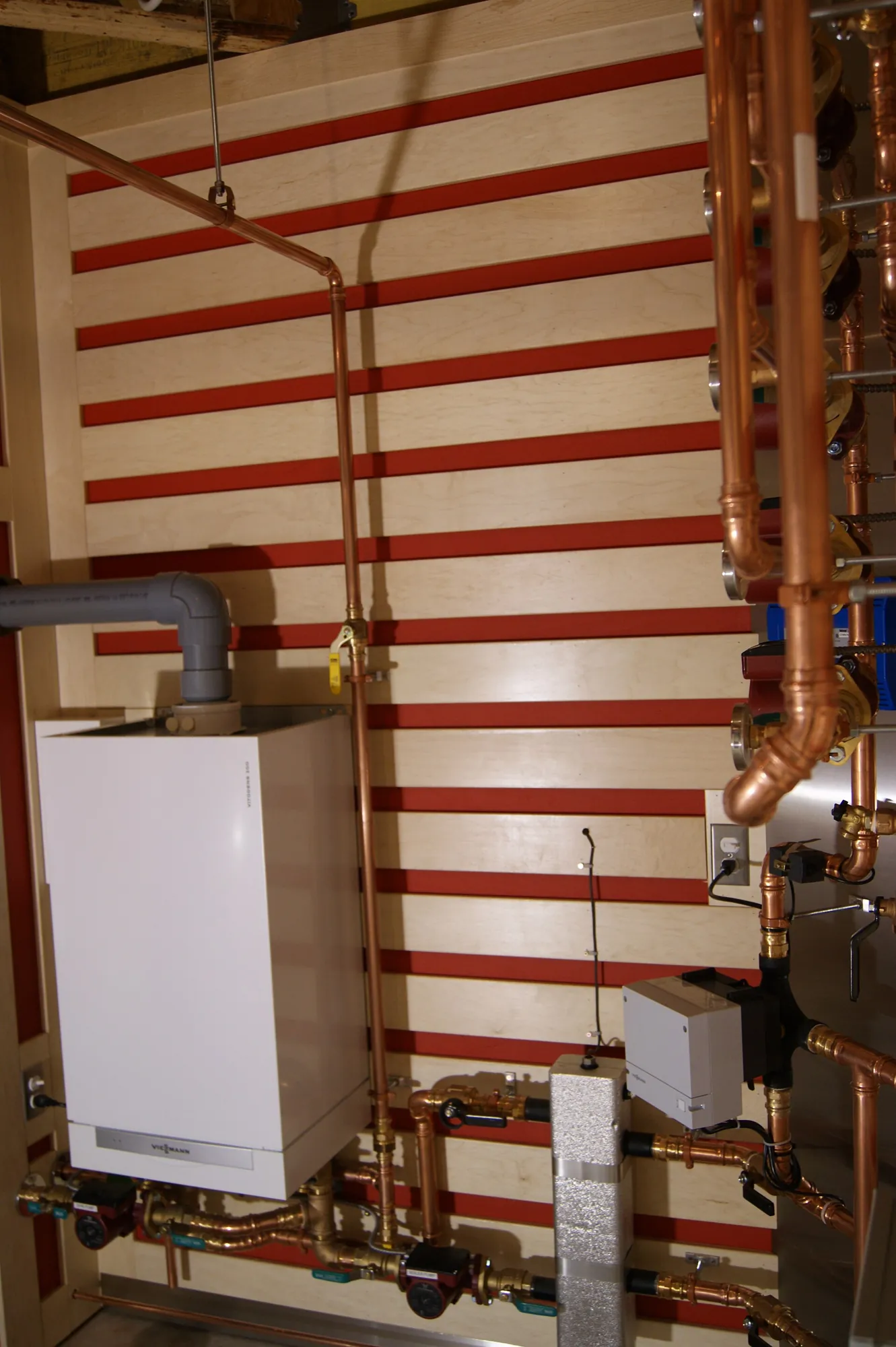
List fuel-burning equipment by room, including boilers, open fires and stoves. Include equipment associated with an attached garage or adjoining property when discussing risks with the fire service. Do not decide an alarm makes a dangerous activity acceptable. Camping stoves, barbecues and outdoor heaters remain unsafe substitutes for indoor heating or cooking.
Check the rules for your home and nation
Alarm requirements depend on location, tenure, building work and sometimes the building's use. A summary cannot certify a particular installation. The table gives starting points for official guidance. Landlords, owner-occupiers and residents in shared buildings should check their own situation, rather than copy the minimum described for a different nation or tenancy.
| Nation | Starting point |
|---|---|
| England | For covered rented homes, government guidance requires smoke alarms on relevant storeys and CO alarms in rooms with fixed combustion appliances, excluding gas cookers. |
| Scotland | Every home must have interlinked fire alarms: smoke detection in the main living room and halls or landings, plus a kitchen heat alarm. Check the separate CO requirements. |
| Wales | Fitness-for-human-habitation guidance explains landlords' smoke and CO alarm duties for occupation contracts, including mains-powered interlinked smoke alarms. |
| Northern Ireland | Private-tenancy regulations set requirements for smoke, heat and CO alarms. Use Department for Communities guidance for the detailed coverage. |
Use the official pages for England, Scotland, Wales and Northern Ireland. A legal exemption from a particular minimum does not mean a household has no risk. Seek fire-service advice about appropriate protection.
Buy for compatibility and clear instructions
Check the exact model against the manufacturer's documentation. Look for the appropriate recognised standard and credible conformity information. Scottish Fire and Rescue Service identifies standards for smoke, heat and CO alarms in its alarm guidance. Follow current local guidance and the product's stated use, rather than relying on a seller's word "approved".
If alarms must interlink, establish that all chosen models work together. Two devices that both use radio signals are not necessarily compatible. Ask what happens when mains power, broadband or a phone connection fails. Distinguish the local warning system from optional remote notifications. Keep the answer in ordinary terms: which alarms will sound inside the home, and which accessories need their own power?
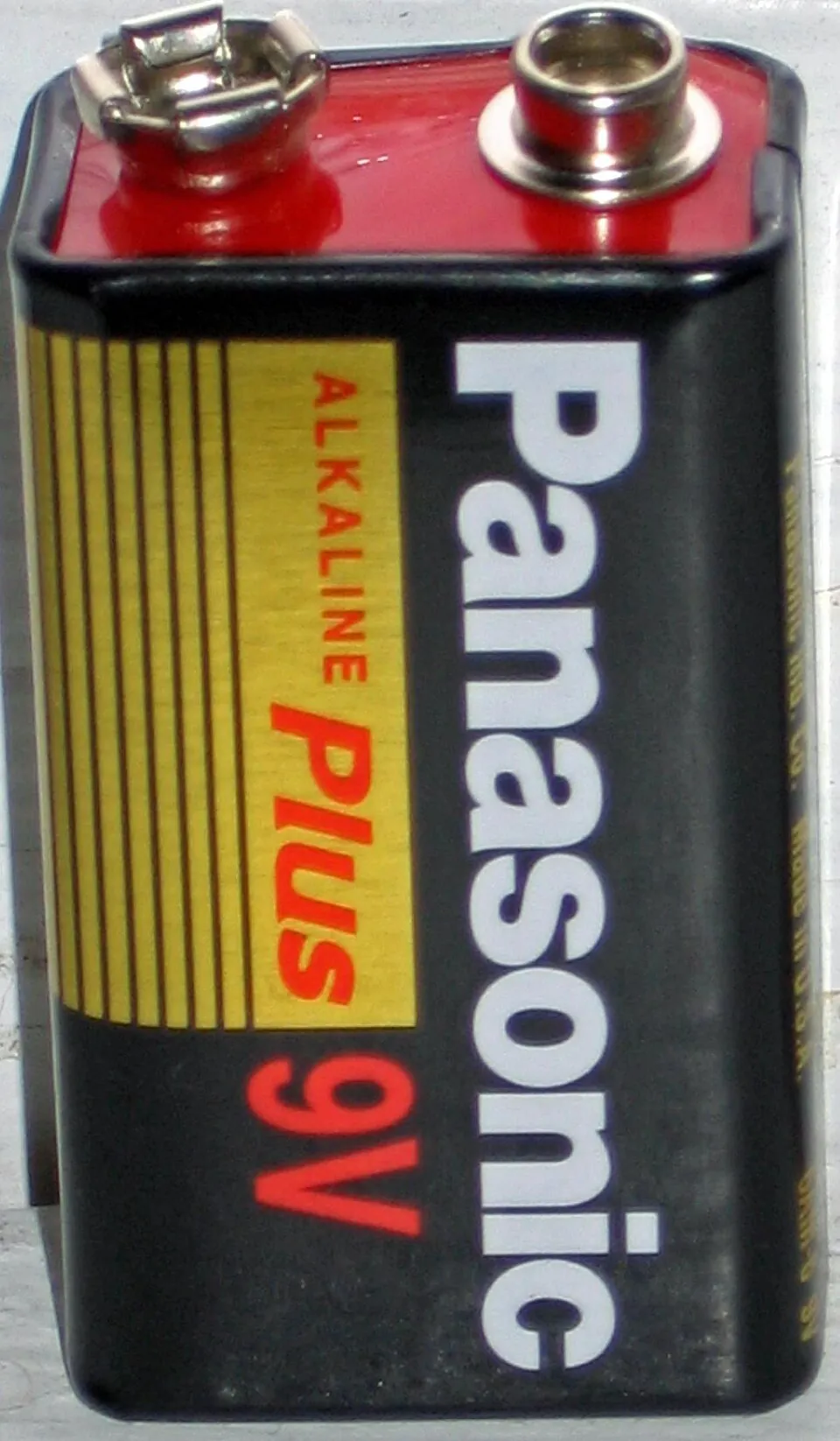
Check service life and installation requirements before ordering a multipack. A sealed battery may remove routine battery changes, but the complete alarm still has a replacement date. A replaceable-battery model needs the specified battery. Mains wiring belongs with a competent installer; do not improvise connections or alter communal systems. Renters should coordinate fitting and repairs with the landlord.


Full image attribution
9V battery.jpg — Rmacker; Public domain. Resized and converted to WebP; source: https://commons.wikimedia.org/wiki/File:9V_battery.jpg
Use the instructions for the actual model
Do not apply a single internet diagram to every detector. Smoke and CO alarms have different placement considerations. Read the supplied instructions for distances from walls, appliances, windows, vents and other obstructions, and combine them with national and building requirements. Ask the manufacturer or a qualified installer about unusual rooms, sloping ceilings or uncertain positions.
Walk through normal life after deciding on a location. Will a cupboard door cover the detector? Is it likely to be painted over during decorating? Could new shelving obstruct it? Can someone reach the test control safely? An alarm placed to make the weekly routine convenient still has to satisfy its detection requirements. Keep furniture and decorations from turning a sensible installation into a hidden one.
Do not climb on a chair to reach a high ceiling. Arrange safe assistance or ask about a compatible remote test control. Where changes require drilling, fixed wiring or alterations to the building, use the correct permission and competent help. The rented-home guide explains keeping a useful fault report and landlord contact record.
Check the warning with the doors closed
During an announced test, establish whether each person can notice the warning in the places they normally use. Consider closed bedroom doors, hearing aids removed at night and people sleeping downstairs. A phone vibrating in another room does not solve an inaudible alarm. Ask about specialist flashing or vibrating warning systems and how they connect to the required detectors.
Tell visitors where alarms are and what to do when they sound. Explain the distinction between an agreed test and a real warning without asking children to diagnose noises. Someone who struggles to understand a sudden sound may need a simple rehearsed instruction and an agreed helper. Review those arrangements when health, sleep or care routines change.
Keep a small maintenance record
Follow the manufacturer's test and cleaning instructions and your local fire service's recommended frequency. Put the recurring task in a calendar and assign someone to it. Testing the button is a normal maintenance task; testing with a flame, smoke from a burning item or vehicle exhaust is not. Never expose people to smoke or gas to check a detector.
Record the installation date, model, power source, test method and replacement date for each device. Save the instructions. A photograph of the label taken before installation can spare a later struggle to read tiny printing overhead. Do not assume a successful button test extends the sensor's stated service life. Replace expired or faulty equipment promptly through the appropriate route.
Learn the model's low-battery, fault and end-of-life signals while it is working normally. Repeated chirping needs action; taking out the battery and forgetting the device removes the warning. If you cannot identify the sound, use the manufacturer or fire service's advice. Treat a possible hazard alarm as a hazard, not as a maintenance puzzle to solve while remaining exposed.

Full image attribution
Vitodens 200 condensing boiler.JPG — Boulderhydronics; CC BY-SA 3.0. Resized and converted to WebP; source: https://commons.wikimedia.org/wiki/File:Vitodens_200_condensing_boiler.JPG
Know the carbon monoxide response
Move everyone outside when carbon monoxide is suspected. Get medical advice promptly if there are symptoms. Call 999 or 112 for breathing difficulty, sudden confusion, collapse, weakness or chest or muscle pain after suspected exposure. Follow NHS guidance and the dispatcher; do not drive yourself. For other possible symptoms, seek urgent healthcare advice through your nation's service.
Report a suspected gas-related CO incident from a safe place using the correct gas emergency number. Great Britain uses 0800 111 999; Northern Ireland uses 0800 002 001. Do not re-enter until advised it is safe or restart suspect equipment because the alarm has stopped. A quiet alarm does not establish that a fault has been repaired.
Finish with actions, not a shopping list
Give missing protection, failed alarms and inaccessible warnings priority. Then check dates, instructions and ownership of routine tasks. Add the record to your household kit review, while keeping alarm testing on its own more frequent schedule. Revisit the arrangement after moving, installing a fuel-burning appliance, changing bedrooms or altering care needs. The useful outcome is a functioning warning and a response everyone understands.
Check each device, not just the shopping receipt
- Identify what the alarm detects and retain the exact model instructions.
- Check the requirements for your nation, tenure and building.
- Confirm any required interlink compatibility before buying replacements.
- Arrange safe installation at the specified location.
- Check that the warning reaches each resident, including at night.
- Record the installation date, expiry date and test schedule.
- Report a failed or missing alarm promptly and follow through on replacement.
- Keep the response instructions beside the household fire plan.
In a shared household, name a primary person for routine checks and someone who can take over during an absence. Agree how a failed test is reported and who contacts the landlord or installer. Otherwise everyone may assume an alarm is someone else's responsibility. The record can be a single dated line for each device; it does not need a separate subscription or app.
After decorating, changing furniture or moving a sleeping space, look again at placement and audibility. An installation that worked for last year's room layout may need professional review after a change. Keep the old model details until you have confirmed the replacement is compatible.
Sources
- NHS: Carbon monoxide poisoning. Checked 2 November 2026.
- Scottish Government: Fire and smoke alarms: the law. Checked 2 November 2026.
- Scottish Fire and Rescue Service: Fire, smoke and heat alarms. Checked 2 November 2026.
- UK Government: Smoke and CO alarm guidance for landlords and tenants. Checked 2 November 2026.
- Welsh Government: Fitness for human habitation guidance. Checked 2 November 2026.
- Department for Communities: Smoke, heat and CO alarms for private tenancies. Checked 2 November 2026.
- SSE Airtricity Gas NI: In an emergency. Checked 2 November 2026.