
On this page
- Establish which instructions apply to your building
- Walk the ordinary route in daylight
- Plan around assistance that actually exists
- Treat fire doors as part of the plan
- Choose an outside meeting point
- Practise with conversation and a calm walk-through
- Keep a short record of decisions
- Check the plan before calling it finished
- Sources
A home fire plan should answer a few urgent questions without requiring a search through a folder. What does the alarm mean here? Which route can we use? Who needs help? Where will we meet, and how will we tell firefighters if somebody is still inside? Write those answers for the actual home, including its shared spaces, sleeping arrangements and locks.
If a fire is happening now, stop planning. Alert others, use a safe escape route and call 999 or 112 as soon as it is safe. Do not investigate the source, fight the fire or collect belongings. If escape is blocked, call from a safer room away from smoke and follow the fire service's instructions. London Fire Brigade explains the immediate actions for houses and converted flats.


Full image attribution
Fire door.jpg — User Interiot on en.wikipedia; Public domain. Resized and converted to WebP; source: https://commons.wikimedia.org/wiki/File:Fire_door.jpg
Establish which instructions apply to your building
Start with the current written fire instructions if you live in a flat. Ask the landlord, housing provider or managing agent for a copy you can understand and use. A notice remembered from a previous address is not evidence about this building. Nor does the word "flat" settle the question. A converted house, purpose-built block and building with temporary fire precautions can have different arrangements.
Under a stay-put strategy, a fire elsewhere in the building does not automatically mean every resident should enter the communal stairwell. Under an evacuation strategy, residents may need to leave. If fire, heat or smoke directly affects your own home, alert everyone and leave by a safe route, closing doors behind you. Call 999 as soon as it is safe. If the route is unsafe, do not enter smoke: close yourself into a safer room, call 999, give your exact location and follow the call handler. London Fire Brigade sets out both strategies and the blocked-route response.
Make a small note of who supplied your instructions and when. Ask how changes will reach residents during building works. If the notice in the lobby and the latest email disagree, request clarification now. Do not resolve the disagreement by taking a vote in the residents' chat. The renters' emergency guide helps organise repair contacts and written reports.
Walk the ordinary route in daylight
Begin at each sleeping space, including a sofa bed used by visitors. Walk to the usual exit without rushing. Look for furniture, drying racks, charging leads, shoes and pushchairs that narrow the route. Notice doors that catch on carpet and locks that require two hands or an unfamiliar sequence. Fix your own storage problems and report building defects through the proper route.
Try the lock normally while the home is safe. Everyone who needs to use it should know how it works. Keep necessary keys in an agreed secure place that occupants can reach quickly, away from the reach of someone outside. A child or guest should not need to discover which of several identical keys opens the door during an alarm. Discuss a safer arrangement with the landlord or locksmith if the current one prevents prompt escape.
Consider an alternative if the ordinary route is unavailable, with advice from the local fire and rescue service. Do not turn an upstairs window into a household rope-escape project. Window height, opening size, ground conditions and people's abilities all matter. The useful preparation is identifying the difficulty and obtaining advice, rather than rehearsing climbing, jumping or carrying someone down stairs.
Plan around assistance that actually exists
List who might not hear an alarm, understand it or reach safety independently. Include temporary situations: an injured leg, pregnancy, illness, a visiting grandparent or a child sleeping in a different room. Ask the person what help works for them. Do not assume a neighbour will be present or that a family member can safely lift another adult.
Contact the local fire and rescue service about a home safety visit. In a block, discuss assistance with the person responsible for the building and ask about a personal evacuation plan. England's residents' fire-safety guide describes building information and personal planning arrangements. Its legal provisions apply to England; ask the relevant service about arrangements in Scotland, Wales or Northern Ireland.
Record the practical limits honestly. "Needs help on stairs" is useful; "family will manage" hides the problem. Consider night-time staffing, hearing aids removed for sleep, communication aids and the effect of a lift being unavailable. An ordinary passenger lift is not a substitute for an agreed fire evacuation arrangement. Do not use it during a fire; any specialist evacuation lift arrangement must come from the building's plan.

Full image attribution
Castle House staircase 02.jpg — Chemical Engineer; CC BY-SA 4.0. Resized and converted to WebP; source: https://commons.wikimedia.org/wiki/File:Castle_House_staircase_02.jpg
Treat fire doors as part of the plan
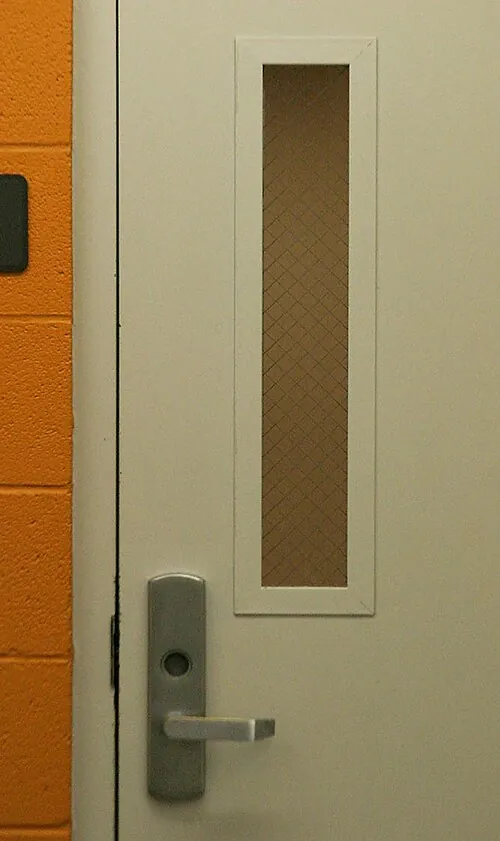
Keep communal routes clear and fire doors able to close. Report a missing closer, damaged door or obstruction with the location and date. A photograph taken safely during ordinary conditions can explain the fault. Do not wedge a fire door open for deliveries, remove its closer or adjust it yourself. If a door makes daily access difficult, request a suitable solution without defeating its fire protection.
In your own home, make door closing part of the agreed bedtime routine. Look at the space around a bedroom door as well as the door itself. A laundry pile that prevents it closing can undermine an otherwise sensible arrangement. Keep the route usable when the home is in its normal evening state, not only after a special tidy-up before visitors.
Alarms and escape routes belong in the same conversation. Read the alarm selection and upkeep guide to check audibility, replacement dates and suitable warning equipment. A connected phone notification should not be the only way a sleeping person is warned. Ask for specialist alarm advice if sound alone is insufficient.
Choose an outside meeting point
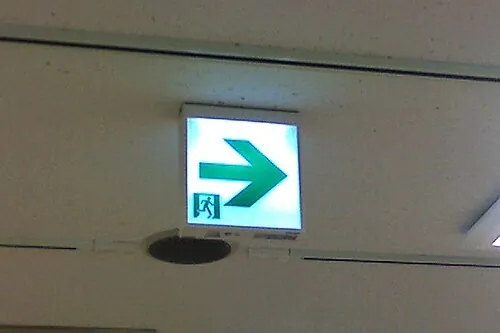
Agree a recognisable place safely away from the building, traffic and emergency access. It should be easy to describe in darkness and usable by everyone. A particular neighbour's gate may be clearer than "somewhere across the road", but do not choose a point that could itself be affected by the fire. Have a second place if emergency crews direct you away from the first.
Once outside, check who is with you and tell firefighters about anyone missing, their likely location and any assistance needs. Never re-enter to search. Include pets in the information you provide; do not let a search for an animal send a person back into danger. A meeting point helps avoid the frightening situation in which somebody is safe round the corner while others believe they are still inside.
Keep the full address, flat number, floor and usual entrance description on the household contact sheet. Large developments may have several entrances with similar names. Explain the entrance that reaches your home, but follow any access directions from emergency services. A postcode helps locate an area; it does not always identify the correct staircase.
Practise with conversation and a calm walk-through
Tell everyone in advance that you are practising. Read the building instructions together, then ask each person to describe their next step. Walk the clear route in normal light. Check whether a guest can identify the exit and meeting point. Keep this short enough to repeat after a move, a change of room or a change in mobility.
Do not create smoke, switch off the power, blindfold anyone or spring a night-time alarm on children. Do not practise dangerous carrying or climbing techniques. The purpose is to discover confusing instructions and awkward access before an emergency. If someone cannot complete a task safely during a calm practice, seek a better arrangement rather than expecting adrenaline to solve it.


Full image attribution
Exit sign.jpg — Pieria(Uploader and Photographer); Public domain. Resized and converted to WebP; source: https://commons.wikimedia.org/wiki/File:Exit_sign.jpg
Keep a short record of decisions
| Question | What to record |
|---|---|
| What is our building strategy? | Current written instructions, source and date received. |
| How do we leave safely? | Usual route, any agreed alternative and known access problems. |
| Who needs assistance? | Agreed support and contact for specialist planning. |
| Where do we meet? | A clear location away from the building and emergency access. |
| What remains unresolved? | Specific fault, person responsible and follow-up date. |
Keep the record where residents can read it, while protecting private health details. Put reporting contacts with your emergency documents. Add alarm checks and route clutter to your household review, without waiting six months to deal with an obstruction or failed alarm.
A fire departure is different from a precautionary evacuation with warning. The home security evacuation guide covers optional tasks when time and official advice allow them. None belongs ahead of escaping a fire. Leave the bag, paperwork and security checks behind when they would delay getting people out.
Check the plan before calling it finished
- Get the current written building strategy and resolve conflicting instructions with the responsible person.
- Walk each sleeping-room route and remove your own obstructions.
- Check that occupants can operate exit locks without searching for keys.
- Report damaged fire doors and shared-route problems with a specific location.
- Arrange individual advice where someone cannot hear the warning or leave independently.
- Agree an outside meeting point and the information to give firefighters.
- Show overnight visitors the arrangements before they go to bed.
After the walk-through, write down one task that still needs outside help and who will follow it up. A request for a door repair or an accessible alarm may remain open longer than a household tidy-up. Keep it visible until the responsible person confirms the action, rather than marking the entire plan complete because the discussion took place.
Sources
- London Fire Brigade: Escape plan for houses and converted flats. Checked 2 November 2026.
- London Fire Brigade: Escape plan for flats. Checked 2 November 2026.
- UK Government: Residents' guide to fire safety in blocks of flats. Checked 2 November 2026.