
On this page
- Keep the right numbers on paper
- If you smell gas, avoid ignition and get help
- Carbon monoxide may give no smell warning
- Keep away from damaged electrical equipment
- Learn locations while the home is safe
- Separate loss of supply from an active hazard
- Tell responders what loss of supply means for you
- Do not restart equipment because the smell has faded
- Prepare the household contact sheet
- Sources
A smell of gas, an arcing cable and a routine power cut need different responses. The common mistake is to turn them all into a search for the correct switch. Your first task is to protect people and report the hazard from safety. Isolation may be part of professional advice, but it is never a reason to walk into smoke, floodwater or a gas-filled cellar.
If there is fire, someone is injured or life is threatened, call 999 or 112. Give the address and say that gas or electricity is involved. Do not wait for a landlord, energy supplier or neighbour to confirm that the situation is serious. Emergency network calls and emergency-service calls serve different purposes; one does not replace the other.

Full image attribution
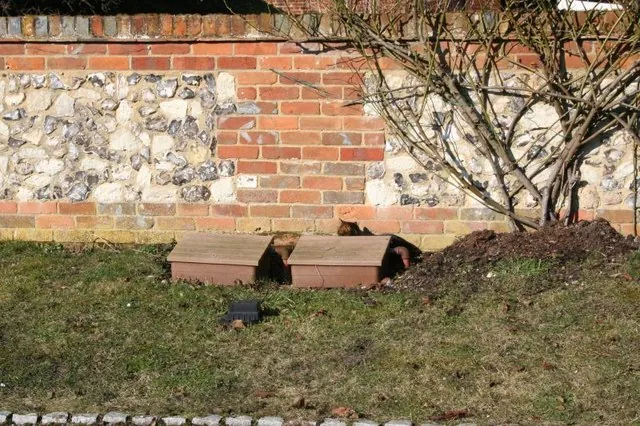
Cat behind the gas meter - geograph.org.uk - 1180628.jpg — Bill Nicholls; CC BY-SA 2.0. Resized and converted to WebP; source: https://commons.wikimedia.org/wiki/File:Cat_behind_the_gas_meter_-_geograph.org.uk_-_1180628.jpg
Keep the right numbers on paper
| Problem | England, Scotland and Wales | Northern Ireland |
|---|---|---|
| Mains gas emergency | 0800 111 999 | 0800 002 001 |
| Electricity network hazard or power cut | 105 | 03457 643 643 |
| Fire, serious injury or immediate threat to life | 999 or 112 | 999 or 112 |
The gas numbers are confirmed by Northern Gas Networks and SSE Airtricity Gas NI. The electricity contacts appear in the Energy Networks Association's homeowner safety guidance. Write the nation beside the number so a relative does not confuse the two systems.
For LPG cylinders or a bulk LPG installation, keep the supplier's own emergency contact and instructions. Do not assume every gas supply uses the mains-gas reporting arrangements. If you move home or change fuel, update the sheet. The company taking your energy payments may not operate the local network, so save both the ordinary account contact and the emergency route with clear labels.
If you smell gas, avoid ignition and get help
Move away from the affected area and call the gas emergency service from a safe place outside. Do not smoke, vape, strike matches or operate electrical switches, plugs or door-entry equipment in the affected area. Switching something off can also create a spark. Do not go looking for the leak with a flame, and do not switch on an extractor fan to clear it.
Follow the emergency operator's instructions about ventilation, appliances and any accessible emergency control. Do not delay leaving or calling to work through a household checklist. Northern Gas Networks specifically says not to enter a cellar or basement where gas is leaking, and places restrictions on residents attempting meter shutoff in blocks of flats and multi-storey buildings. This is why a universal instruction to turn every gas meter lever is unsuitable.
Describe what you noticed without guessing a diagnosis. Useful details include the address, where the smell is strongest, whether the property has a cellar and whether anyone feels unwell. Tell the operator if you cannot safely reach a control, cannot leave without assistance or cannot hear spoken instructions clearly. Those facts help them advise you; they are not reasons to postpone the call.
Carbon monoxide may give no smell warning
Carbon monoxide is a different hazard from the smell associated with a mains-gas leak. Faulty fuel-burning equipment can produce it, and you cannot detect it by smell. If an alarm sounds or exposure is suspected, go outside. Seek urgent medical advice for symptoms, and do not return until advised it is safe. The NHS carbon monoxide page explains the immediate response.
Call 999 or 112 for suspected exposure with breathing difficulty, sudden confusion, unconsciousness, weakness, or chest or muscle pain. Explain the suspected carbon monoxide exposure. Other possible symptoms also need prompt healthcare advice. Do not drive yourself when unwell. If another person remains inside, tell emergency services their likely location; do not become a second casualty by entering a dangerous space.
Keep a working carbon monoxide alarm and arrange appropriate servicing of fuel-burning equipment. Neither an alarm nor an open window makes it safe to run outdoor equipment inside. During an outage, use the indoor combustion safety guide before considering unfamiliar alternatives for heat or cooking.


Full image attribution
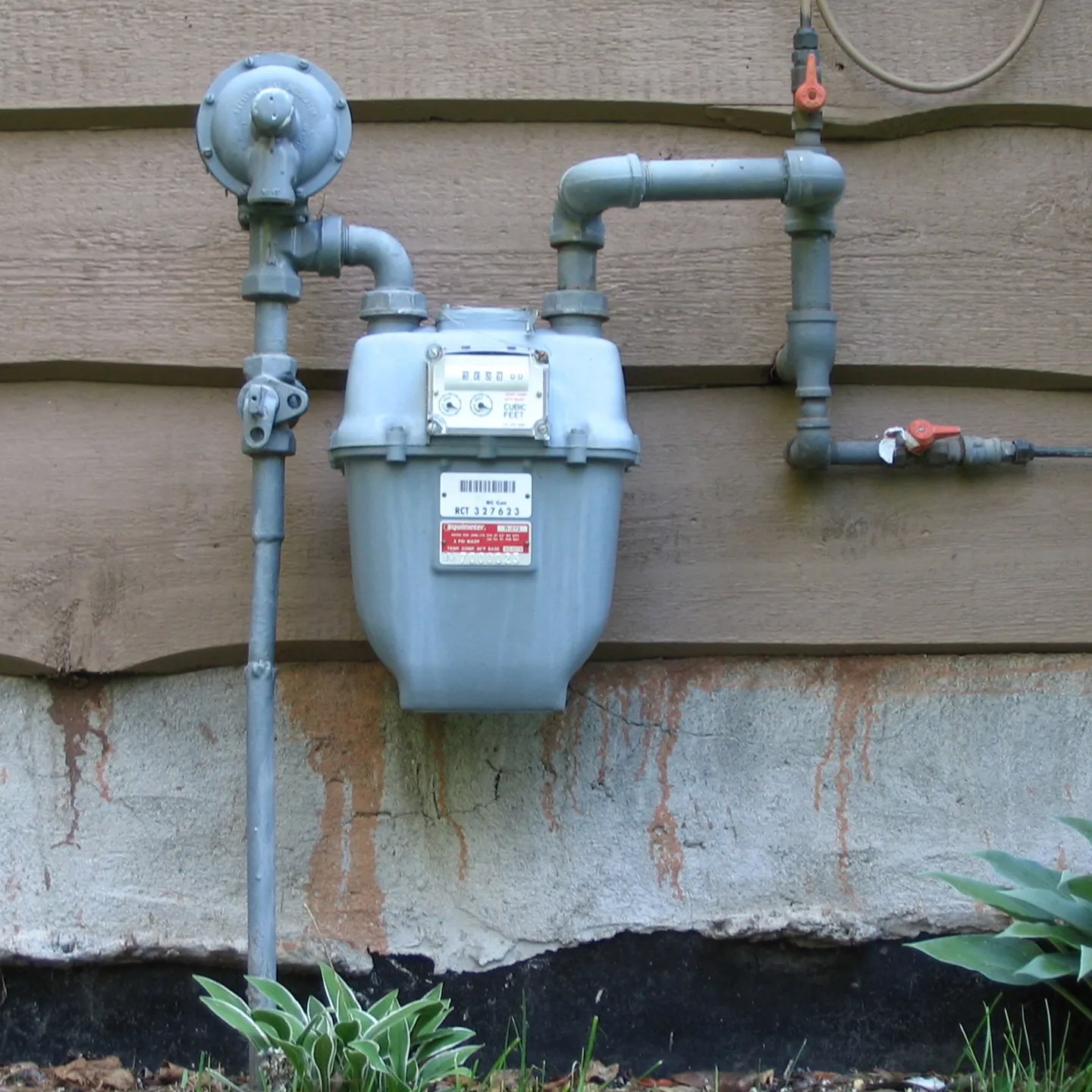
Gas meter.JPG — RadRafe; Public domain. Resized and converted to WebP; source: https://commons.wikimedia.org/wiki/File:Gas_meter.JPG
Keep away from damaged electrical equipment
Do not touch a fallen wire, damaged supply cable or anything in contact with it. A line can remain live or become live again automatically. Keep other people away and call the electricity network. Energy Networks Association guidance advises keeping at least 10 metres away where possible. Do not approach to measure that distance or move a branch, fence or vehicle touching the cable.
Arcing, burning, smoke or an electrical injury needs urgent action. Call 999 or 112 when there is fire or danger to life, and report the network hazard. Do not throw water on electrical equipment. Do not touch a person who may still be in contact with a live source; tell the dispatcher and follow their instructions. No household object should be treated as guaranteed electrical protection.
Water near electrical fittings creates another boundary. Do not step into water to reach a consumer unit or unplug an appliance. Do not touch wet switches or equipment. Report the danger and leave access to qualified responders. A main switch being off does not prove that all equipment is dead, especially where solar panels, batteries or other supplies are present.
Learn locations while the home is safe
Ask a competent professional, landlord or network representative to identify the controls relevant to your property. Record their location and the advice you are expected to follow. In shared buildings, establish whether a cupboard serves several homes and who is authorised to access it. A label written by a previous occupier is a starting question, not permission to manipulate an unfamiliar valve.
Keep ordinary access clear without dismantling covers, breaking seals or opening service equipment. Do not remove a supply fuse, interfere with a meter or attempt a wiring repair. Do not practise by turning utilities off unexpectedly. A household may rely on medical equipment, alarms, refrigeration or remote care services that other residents have not mentioned.
If a control is difficult to reach, solve the planning problem beforehand. Ask whether it can be made accessible or what alternative reporting arrangement applies. "I know where it is but cannot safely use it" is a perfectly useful fact to record. It is better than making an emergency plan depend on climbing, moving heavy furniture or entering a locked communal plant room.
Separate loss of supply from an active hazard
If the lights go out without smoke, damage or another danger sign, follow the power-cut guide and contact the network for information. Do not automatically treat every outage as a gas emergency. Conversely, a neighbourhood power cut does not make damaged wires safe. Restoration may happen without warning, so keep away from faulty equipment throughout.
If a protective device repeatedly trips, leave the affected equipment out of use and obtain competent advice. Repeated resetting is not a repair. Explain the pattern to the electrician or landlord rather than opening sockets to investigate. The role of this guide is recognising the boundary between ordinary household controls and work that needs expertise, not teaching electrical fault-finding.

Full image attribution
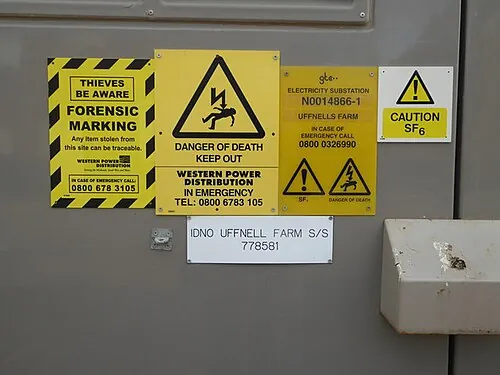
Warning notices Uffnells Farm substation, Worcester - geograph.org.uk - 5651444.jpg — Chris Allen; CC BY-SA 2.0. Resized and converted to WebP; source: https://commons.wikimedia.org/wiki/File:Warning_notices_Uffnells_Farm_substation,_Worcester_-_geograph.org.uk_-_5651444.jpg
Tell responders what loss of supply means for you
Explain if someone depends on powered medical equipment, has limited mobility or cannot keep warm safely. Your Priority Services Register entry can help providers understand support needs, but it does not guarantee an uninterrupted supply or an immediate repair. Keep an individual backup plan for clinical equipment with the prescribing team and supplier.
Choose a safe waiting place before an incident if you can. Consider accessible transport, pets, warm clothing and a trusted contact. Take essentials only when immediately available without delaying escape. In a flat, follow the building's fire arrangements when fire is involved; a generic utility checklist must not override the specific fire escape plan.
Do not restart equipment because the smell has faded
Ask the attending professional what has been made safe and what still needs repair. A network engineer's attendance may isolate a problem without repairing an appliance or internal installation. Record any warning label and the instructions you receive. Arrange the appropriate registered gas engineer or qualified electrician through the landlord or your own approved route.
Keep a short incident note once people are safe: time, reported symptoms or damage, numbers called, reference numbers and restrictions on use. Share it with the person arranging repairs so they do not accidentally undo the safe isolation. The decision to restore gas or electricity to suspect equipment belongs with competent professionals, even when the household urgently wants heat, light or a meal.
Prepare the household contact sheet
- Write the correct gas and electricity network numbers for your nation.
- Add the address, flat number and entrance description.
- Keep the LPG supplier's emergency details separately if relevant.
- Record control locations identified by a competent person without opening or altering equipment.
- Note access, communication and clinical-equipment needs to explain when calling.
- Tell other adults where the paper sheet is kept.
- Review it after moving, changing fuel or changing care arrangements.
Use a calm discussion to check the distinction between reporting a supply failure and reporting immediate danger. Ask who would call if the usual account holder were away. Nobody needs the energy account holder's permission to report a dangerous cable, gas smell or fire. Keep the exercise verbal; do not operate switches, release gas or create a fault to test the plan.
Sources
- Northern Gas Networks: Smell gas. Checked 2 November 2026.
- SSE Airtricity Gas NI: In an emergency. Checked 2 November 2026.
- Energy Networks Association: Electrical safety guidance for homeowners and occupiers. Checked 2 November 2026.
- NHS: Carbon monoxide poisoning. Checked 2 November 2026.