
On this page
A rota cut is a contingency for a national electricity shortage, not a forecast. If one were needed, the rota would be published after cuts were approved. Knowing your block letter helps you understand the plan.
What a rota power cut is
The Electricity Supply Emergency Code (ESEC) is the government’s plan for sharing electricity if there is not enough supply for everyone. It describes scheduled rota disconnections. It does not cover ordinary faults or storm damage. The published code describes the process; rota cuts are an exceptional measure, not a forecast.
Network operators describe emergency rota disconnections as temporary and typically around three hours for a slot. Each area takes turns under a published plan. For an ordinary outage, use the steps for a local power cut.
What happens before any cuts
The system operator and government would work through the ESEC process before network operators disconnect homes. The code says NESO normally advises government of the following day’s rota plan by 14:00, and government confirms the indicative plan by 15:00. Public messaging and appeals to reduce electricity use form part of the response. A published rota would mean cuts had been approved. No current rota is implied by this guide.
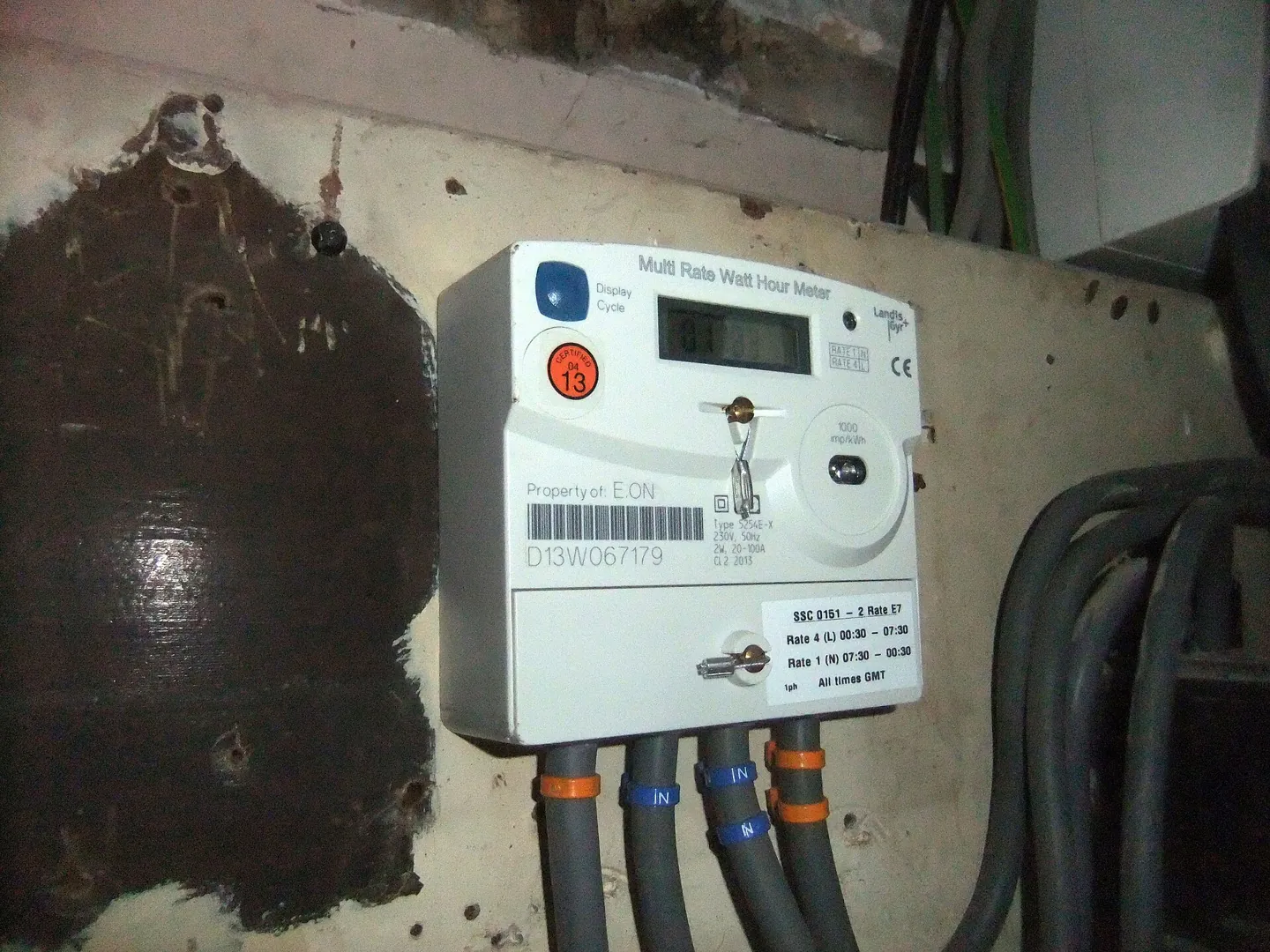

Full image attribution
Electric meter -Broomfield Road, Coventry, England-16Jan2014.jpg — Gwydion M. Williams from Peterborough, Great Britain; CC BY 2.0. Resized and converted to WebP; source: https://commons.wikimedia.org/wiki/File:Electric_meter_-Broomfield_Road,_Coventry,_England-16Jan2014.jpg
Find your block letter
Look on the first page of your electricity bill near the supply address. SP Energy Networks says the letter appears in a small square on the top half. You can also enter your postcode on Powercut105’s block-letter page. If you cannot find it, call 105 in Great Britain. In Northern Ireland, check NIE Networks’ Block Map and emergency power-cut information. Write the letter in your household plan. Open the household plan tool.
How the rota works
ESEC divides each distribution network into 18 load blocks of about 5% of demand, labelled A to U. SP Energy Networks says F, I and O are not used in its block allocation. Northern Ireland has a separate code and block information from NIE Networks. A block letter relates to the network connection, not a street-wide promise that every home has the same local wiring.
The code sets nominal three-hour disconnection periods, with eight periods in 24 hours. At higher shortage levels, more blocks can be disconnected at once. The rota can change during an event as NESO and government review supply and demand. SP Energy Networks says the rota day starts at 00:30 and supply can go off or return around 30 minutes either side of the published time. A changeover at a higher level can take longer.
| Rota detail | What it tells you |
|---|---|
| Block letter | Your group in the distribution network plan. |
| Time slot | When your block is scheduled to be without supply. |
| Shortage level | How many blocks may be off during each period. |
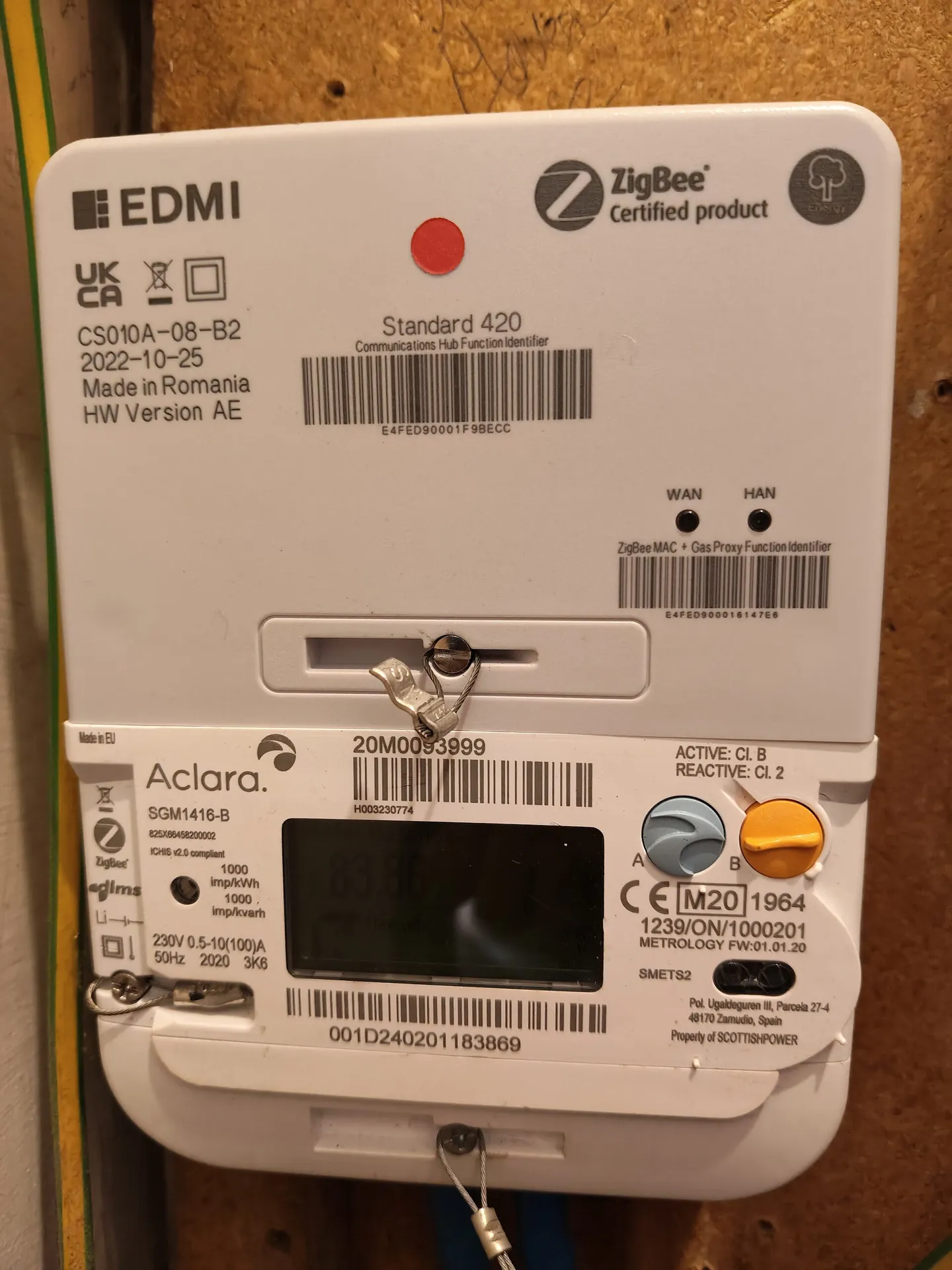

Full image attribution
Smart prepayment meter.jpg — SpicyPhoto; CC0. Resized and converted to WebP; source: https://commons.wikimedia.org/wiki/File:Smart_prepayment_meter.jpg
When and where the rota is published
ESEC says the indicative and implementation rota plans would be made public through Powercut105 if the code were enacted. Network guidance says the rota is published only after emergency cuts are approved. Check the official page and reliable news updates if that happens. Do not treat an old timetable, an unverified social post or a planned-maintenance notice as a live rota.
Protected sites and the Priority Services Register
Some sites, including certain hospitals, can be on a Protected Sites List and remain supplied during rota disconnections. A home cannot be made a protected site. The Priority Services Register can help your network operator provide relevant information and support, but it does not remove a home from a rota. Read how the Priority Services Register works and plan for medical equipment that needs power.
Plan around a three-hour slot
Before a published slot, charge phones and power banks, fill a flask if you use one, and put a torch where everyone can find it. If you use backup power, check the maker’s instructions and what a power station can actually run. Some electric cars can supply selected appliances through vehicle-to-load; read the V2L limits and safety rules. To compare station capacity and output for your devices, use the portable power station guide. Amazon links in this guide are affiliate links. As an Amazon Associate I earn from qualifying purchases. Read our affiliate disclosure. Keep a charged power bank for essential phone use.
During the slot, keep the fridge and freezer doors shut. See how long food keeps in the fridge and freezer. Boilers, hobs, heat pumps, broadband and many landlines may also need electricity. Read how your landline and broadband behave in a power cut.
Never connect a portable generator to home wiring unless an authorised person has installed a proper connection. Read generator safety for home use. Keep fuel-burning stoves outdoors, not in a home or enclosed space. See why camping stoves and heaters stay outdoors. For warmth, see ways to keep warm without heating. When power returns, follow the safe checks after a power cut.

Full image attribution
Terraced houses on Alma Terrace - geograph.org.uk - 5919086.jpg — Evelyn Simak; CC BY-SA 2.0. Resized and converted to WebP; source: https://commons.wikimedia.org/wiki/File:Terraced_houses_on_Alma_Terrace_-_geograph.org.uk_-_5919086.jpg
Rota cut or ordinary fault?
If your power goes off outside a published slot, treat it as an ordinary fault. Call 105 in Great Britain or check the outage map for your network. Maps include UK Power Networks, National Grid Electricity Distribution, SSEN, Northern Powergrid, SP Energy Networks, Electricity North West and NIE Networks. Read what to do in an ordinary power cut or how storm power cuts differ. Network staff carry identification. Call 105 to check if you are unsure.
Common questions
Where do I find my block letter?
In Great Britain, check the first page of your electricity bill near the supply address or enter your postcode on Powercut105. In Northern Ireland, use the NIE Networks Block Map. Call 105 in Great Britain if you cannot find your letter.
How long would a rota power cut last?
A normal slot is about three hours. A network operator says supply can go off or return around 30 minutes either side of the published time, and the code allows longer changeovers at higher shortage levels.
Can I get my home taken off the rota?
No. Homes are not Protected Sites. The Priority Services Register can provide relevant support and information, but does not remove a home from a rota.
Does my block letter change?
Your block is assigned to the network connection. If you move, check the new address with your network operator or the official postcode service.
Related guides
Sources
- GOV.UK: Electricity Supply Emergency Code, updated 13 April 2026.
- Powercut105: find my block letter.
- Powercut105: types of power cut.
- Powercut105.
- Energy Networks Association: what happens in an energy shortage.
- SP Energy Networks: emergency power cuts and rota load disconnections.
- NIE Networks: emergency power cuts.
Sources checked 5 November 2026.