
On this page
- Name the job before considering an engine
- Decide whether there is a genuinely suitable outdoor site
- Plan for the weather that causes the outage
- Keep electricity supply arrangements separate from guesswork
- Check more than the running wattage
- Resolve fuel storage before buying the generator
- Know what carbon monoxide means for the household
- Count the work of ownership
- Before-you-buy checklist
- Sources
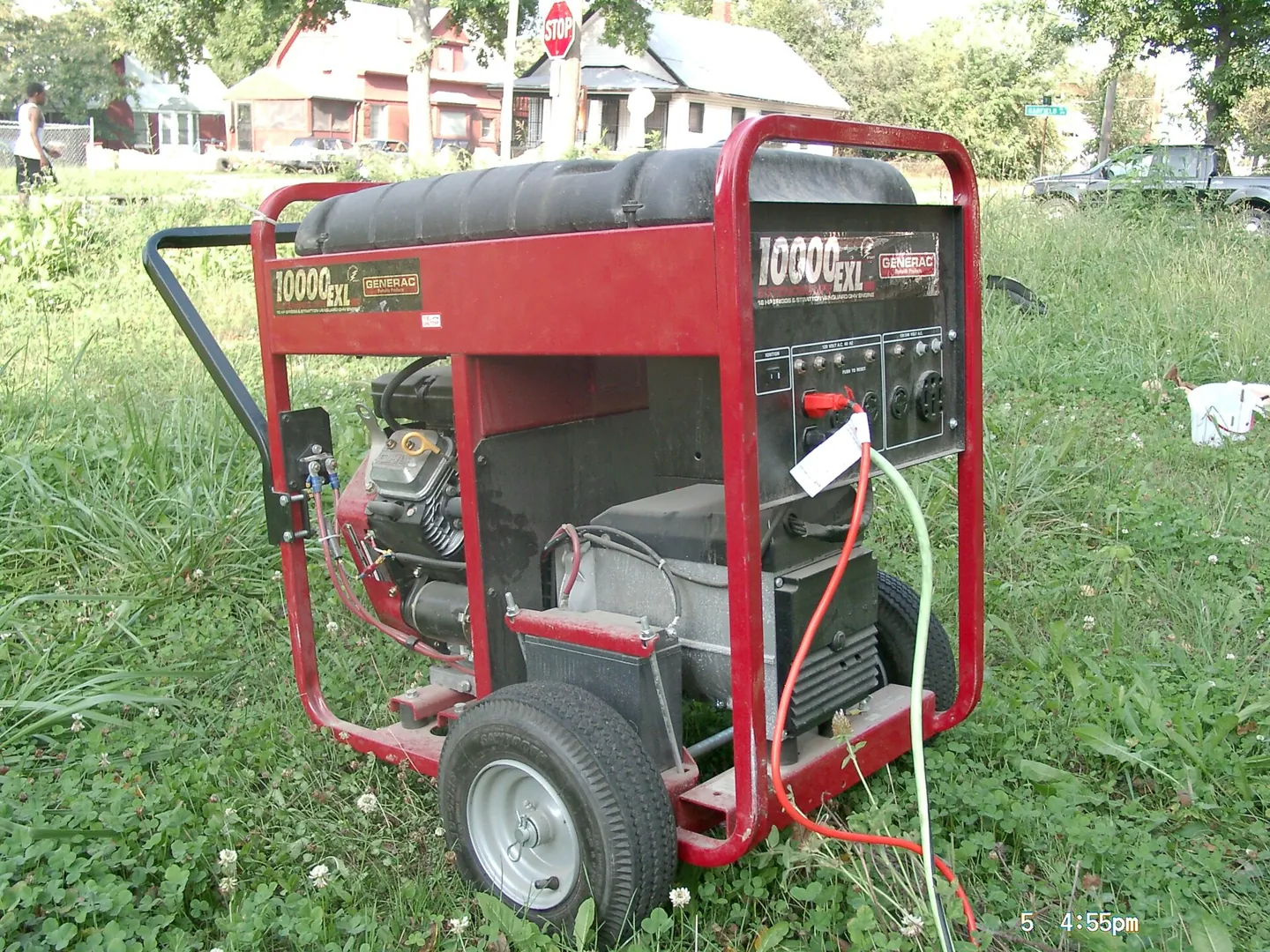
A portable fuel-powered generator can supply electricity during an outage, but it also introduces exhaust, hot surfaces, flammable fuel and electrical hazards. Before comparing output ratings, decide whether your property can accommodate those risks safely. For many flats and closely enclosed gardens, the answer may be no.
This is a buying and planning guide, not an installation manual. It does not explain wiring, earthing, transfer switches or generator repairs. Any supply to a home's fixed installation requires a properly designed arrangement installed by a registered electrician with the relevant competence.

Full image attribution
FA370 Carbon monoxide detector, The Hague (2019) 04.jpg — Donald Trung Quoc Don (Chữ Hán: 徵國單) - Wikimedia Commons - © CC BY-SA 4.0 International . ( Want to use this image? ) Original publication 📤: -- Donald Trung 『徵國單』 ( No Fake News 💬 ) ( WikiProject Numismatics 💴) ( Articles 📚 ) 16:32, 6 June 2019 (UTC); CC BY-SA 4.0. Resized and converted to WebP; source: https://commons.wikimedia.org/wiki/File:FA370_Carbon_monoxide_detector,_The_Hague_(2019)_04.jpg
Name the job before considering an engine
Write the equipment you want to run and why. Phone charging and modest lighting create a different requirement from refrigeration, a pump or a whole-house supply. Do not begin with a generator size and then invent uses for the spare output.
Separate convenience from essential health needs. If someone relies on medical equipment, speak to the clinical team and equipment supplier about an approved continuity plan. An engine that somebody must start, refuel and supervise is not automatically a suitable backup for that person.
Use the medical-equipment power-cut guide for those discussions. Include the likely availability of the operator, who may be absent or unwell when the outage occurs. A device can be technically capable of producing power yet unsuitable for the household's care arrangements.
Consider whether existing charged batteries, a suitable portable power station or an agreed alternative location can meet the need. Those options have limits too, but they avoid engine exhaust at the property. Do not buy a combustion generator simply because its advertised wattage looks cheaper.
Decide whether there is a genuinely suitable outdoor site
HSENI's generator safety advice says never to operate a generator indoors or in partially enclosed spaces, including garages. An open garage door, a fan or a partly open shed does not make an indoor site acceptable.
Think about every nearby opening: your windows and doors, air vents, neighbours' openings and access to shared spaces. Exhaust must not enter occupied buildings. A small courtyard can look open from above while still trapping fumes or directing them towards a doorway.
HSE explains that generator fumes must disperse without gathering or drifting into building openings. Follow the manufacturer's siting requirements and obtain competent advice if the location is uncertain. There is no single distance in this guide that certifies every garden as safe.
Do not use a balcony, porch, conservatory, tent or communal access area as a workaround. If your only possible site is near openings or in a partly enclosed space, reject the generator option until a competent assessment establishes a suitable arrangement. A carbon monoxide alarm cannot make an unsafe site safe.
Plan for the weather that causes the outage
A generator must be kept away from rain and standing water as its instructions require. Yet enclosing it to keep it dry can create a carbon monoxide and overheating hazard. Resolve both requirements before buying; do not improvise a tarpaulin enclosure during a storm.
Ask the supplier what manufacturer-approved weather protection is suitable for operation, how exhaust and cooling remain unobstructed and how the site stays dry. A storage cover is not necessarily an operating cover. Never run equipment wrapped in its protective bag.
Consider the route to the generator. Can the operator reach it safely in darkness, heavy rain or icy conditions? Will cables cross a footpath, stairs or a door needed for escape? If normal use depends on entering floodwater or balancing equipment on an unstable platform, the plan is unsuitable.
Keep the generator on the stable surface required by its manual. Do not hang it, place it where vibration could move it towards an edge or let children and pets approach hot parts. Security arrangements must not obstruct ventilation or make safe stopping impossible.
| Decision | Evidence to obtain | Reason to pause |
|---|---|---|
| Outdoor site | Manufacturer requirements and competent assessment where needed | Only enclosed or near-opening locations available |
| Weather protection | Approved operating arrangement | Reliance on an improvised cover |
| Electrical use | Suitable loads, cables and protective arrangements confirmed | Unclear earthing or household-connection plan |
| Fuel | Suitable storage, container and refuelling routine | No safe lawful storage location |
| Operator | Someone able to follow the manual and attend safely | Plan depends on an unavailable or unsupported person |

Full image attribution
Cable reel extension cord.jpg — Fumikas Sagisavas; CC0. Resized and converted to WebP; source: https://commons.wikimedia.org/wiki/File:Cable_reel_extension_cord.jpg
Keep electricity supply arrangements separate from guesswork
Never plug a generator into a household wall socket to energise the home. This can make wiring and the network dangerous, including to people working on the supply. Do not use a cable with exposed live pins or a homemade connection.
For portable appliances, ask the generator supplier or a competent electrician which equipment can be connected and which protective arrangements are required. Generator earthing and fault protection depend on the design and intended use. A generic extension lead or plug-in protective device cannot be assumed to resolve every case.
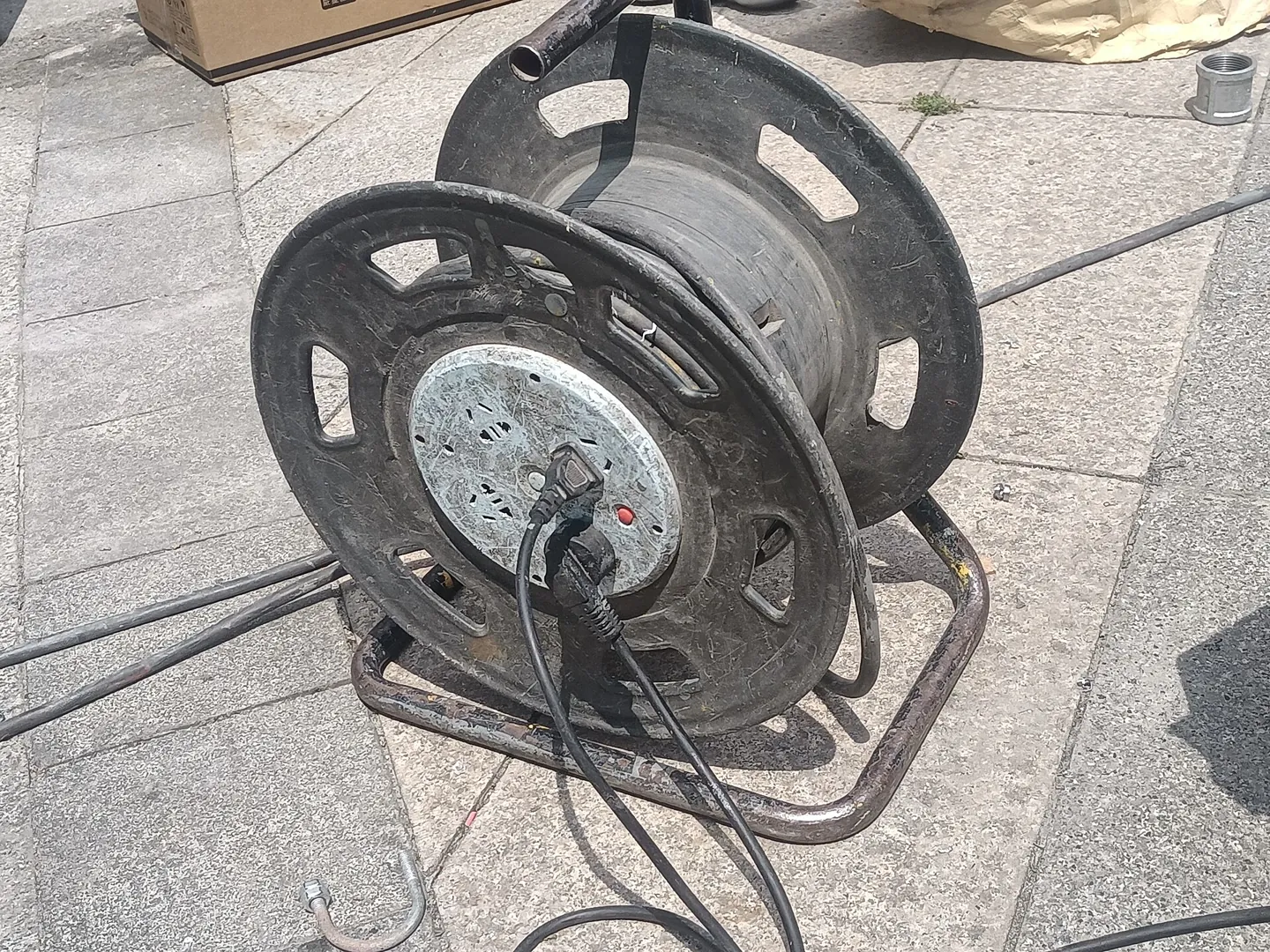
Follow the confirmed arrangement and generator manual, including cable ratings, outdoor suitability and maximum load. Keep connections dry and inspect cables before use. Do not chain a collection of household adaptors together to reach the kitchen.
A connection to fixed wiring is a separate professional project. It must address safe separation from the mains and all applicable electrical requirements. This guide deliberately provides no wiring sequence, component list or switch instructions. Ask the installer for documentation and a clear user procedure.
Check more than the running wattage
Some equipment needs a brief starting demand above its ordinary running demand. Ask for compatibility with the exact appliance, including motors, compressors and sensitive controls. A generator's headline peak output is not a promise that it can run any appliance with a smaller label.
List which loads would be used together and which could wait. Keep this list with the generator so another authorised operator does not add a kettle or heater without understanding the limit. If the device overloads or repeatedly stops, investigate through the supplier rather than defeating protection.
Decide what happens when the generator is off for refuelling, maintenance or a fault. A fridge can be managed using the food-safety outage plan; a health-critical device needs its professionally agreed continuity arrangement. Never assume engine operation will be continuous.
Resolve fuel storage before buying the generator
Fuel brings its own storage, transport and fire-safety requirements. Ask the supplier and the relevant local authority or fire service about the fuel and quantity you intend to keep. Property restrictions and insurance conditions may also matter. Do not assume a spare container can live under the stairs.
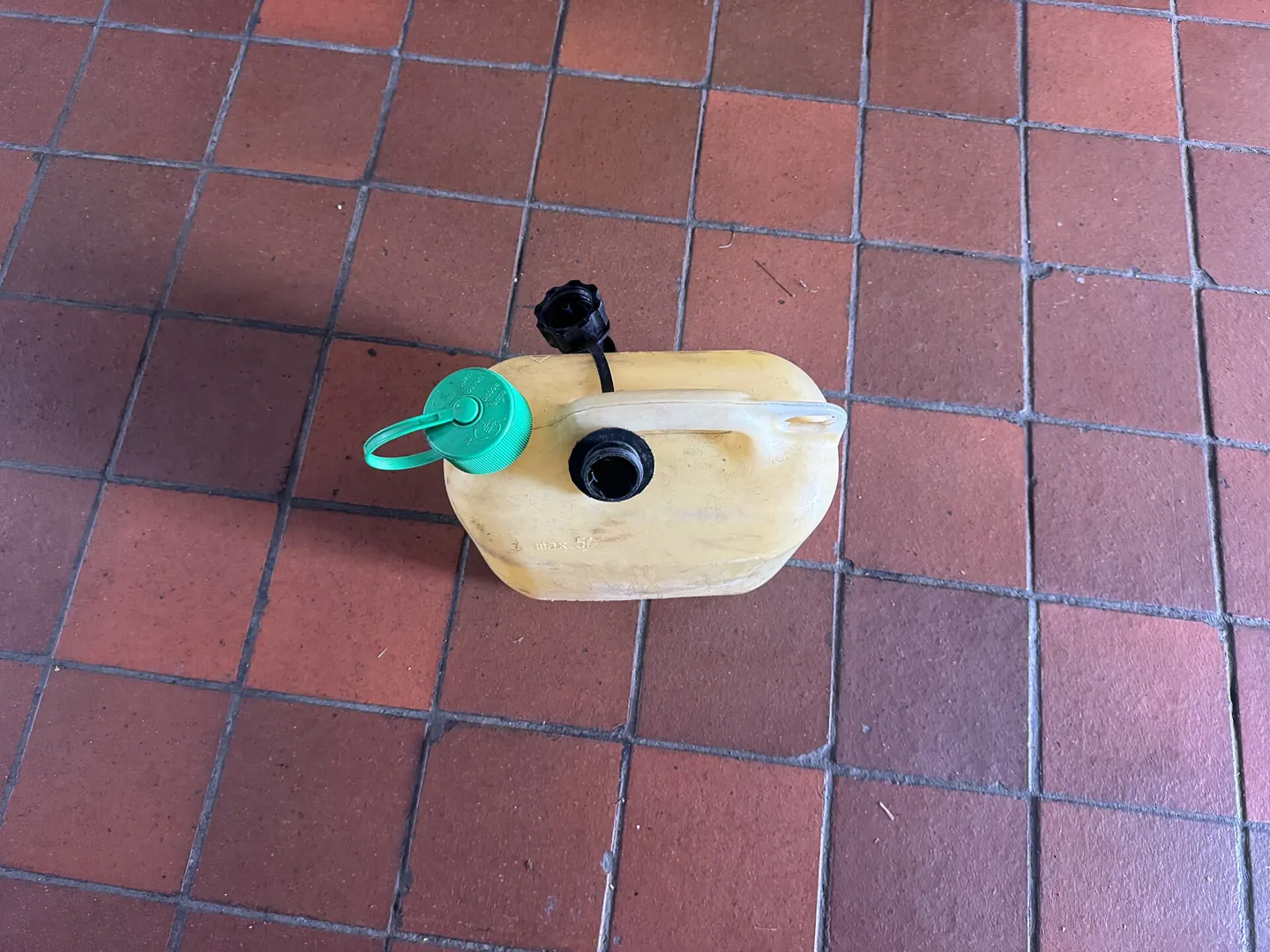
Use suitable, properly labelled containers and follow the fuel and engine instructions. Keep fuel outside living areas and away from ignition sources. Store only what the lawful, safe arrangement allows, and keep it secure from children.
HSENI advises stopping the generator and allowing it to cool before refuelling. Refuel outdoors through the prescribed procedure. Spilling fuel on hot engine parts can cause a fire; refuelling a running generator to avoid an interruption is not an acceptable shortcut.
Plan how old fuel and contaminated material will be handled through an appropriate service. Do not pour fuel into drains, transfer it into drinks bottles or rely on a smell test to decide whether it is fit for use. Follow the manufacturer's storage and maintenance schedule.
Know what carbon monoxide means for the household
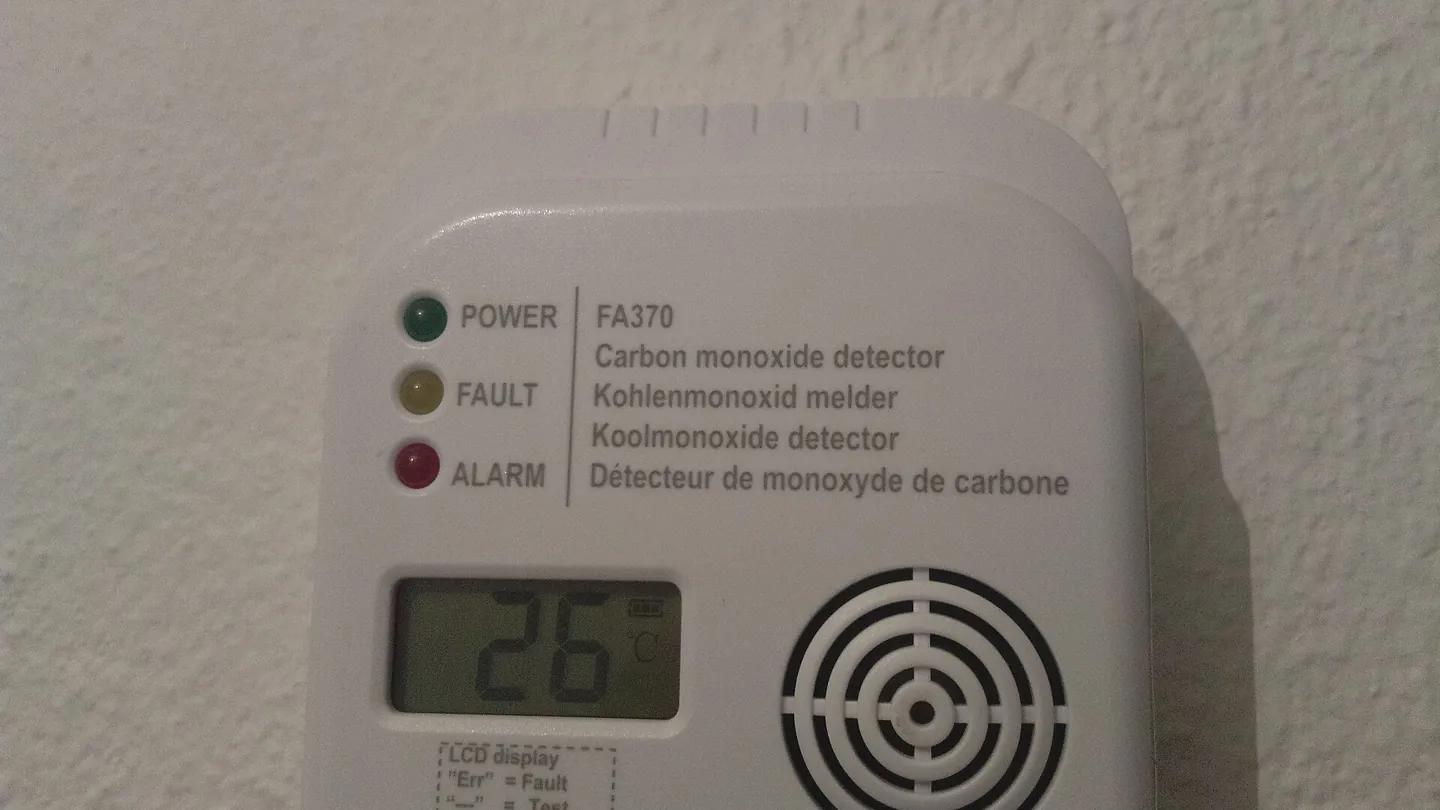
Carbon monoxide cannot be detected reliably by human senses. The NHS lists symptoms including headache, dizziness, sickness, confusion and breathing difficulty. Do not dismiss several people feeling unwell during generator use as a coincidence.
If carbon monoxide is suspected, move outside into fresh air and seek medical advice promptly. Do not re-enter the affected building until advised it is safe. Call 999 for serious symptoms, including breathing difficulty, sudden confusion, loss of consciousness, weakness or chest or muscle pain after suspected exposure, as described by the NHS.
Fit and maintain appropriate carbon monoxide alarms according to their instructions and the requirements for your home. They provide a warning layer; they do not remove the need for safe siting. Respond to an alarm by getting to safety, not by carrying the alarm elsewhere to silence it.
Keep the indoor combustion safety guide with the wider outage plan so nobody replaces a stopped generator with another unsafe fuel-burning arrangement indoors.

Full image attribution
Fuel can.jpg — Eunosfire986; CC0. Resized and converted to WebP; source: https://commons.wikimedia.org/wiki/File:Fuel_can.jpg
Count the work of ownership
Read the maintenance schedule before purchase. Ask about servicing, consumables, replacement parts, storage and safe movement. A unit too heavy for the household to position safely is not a usable emergency resource.
Check noise and neighbour implications, particularly for close housing and overnight use. Permission to store equipment does not necessarily mean permission to operate it in a shared area. Discuss the proposed arrangement before it becomes a dispute during an outage.
Keep a written user procedure from the supplier or installer and arrange familiarisation in suitable conditions. Do not make the first attempt during dangerous weather. After grid power returns, follow the approved shutdown procedure and the restoration safety guide.
For smaller loads, compare the practical limits of portable solar charging and stored battery power. The useful choice is the one the household can operate safely when tired and under pressure.
Before-you-buy checklist
- Define the equipment and duration you need to support.
- Confirm a fully outdoor site where fumes cannot enter buildings.
- Resolve rain protection without enclosing the running engine.
- Obtain competent advice on loads, cables and electrical protection.
- Reject any proposal to feed a household socket.
- Confirm safe lawful fuel storage and cooling before refuelling.
- Plan alarms, emergency action, maintenance and an available operator.
- Choose another solution if a required safety condition cannot be met.
Sources
Sources checked on 2 November 2026. Worked examples and household worksheets are illustrative planning aids.
- Health and Safety Executive for Northern Ireland: Safety Tips: Using a portable generator in an emergency. Verified 2 November 2026.
- Health and Safety Executive: Construction hazardous substances: Carbon monoxide. Verified 2 November 2026.
- NHS: Carbon monoxide poisoning. Verified 2 November 2026.