
On this page
A portable power station suits small, steady loads for hours better than large heating loads for minutes. Check the appliance’s input and the station’s continuous output before you connect anything.
Watts, watt-hours and surge
Watts (W) describe how much power an appliance draws at once. Watt-hours (Wh) describe the energy stored in a battery. A rough estimate is hours ≈ (battery Wh × 0.85) ÷ appliance W. The 0.85 is our runtime tool’s default allowance for losses, not a maker figure. Work it out with our runtime calculator.
Check continuous or rated output, not only a peak figure. Jackery lists the Explorer 1000 v2 at 1,500 W rated and 3,000 W surge peak. EcoFlow lists the DELTA 3 Plus at 1,800 W and 3,600 W surge. Fridges, freezers and pumps can draw more briefly when their motors start. Check the appliance manual or ask its maker.
Use an appliance’s input or power-consumption figure. A microwave’s cooking output is not the same number. The Samsung MS23K3513AK is listed with 800 W output and 1,150 W consumption.

Full image attribution
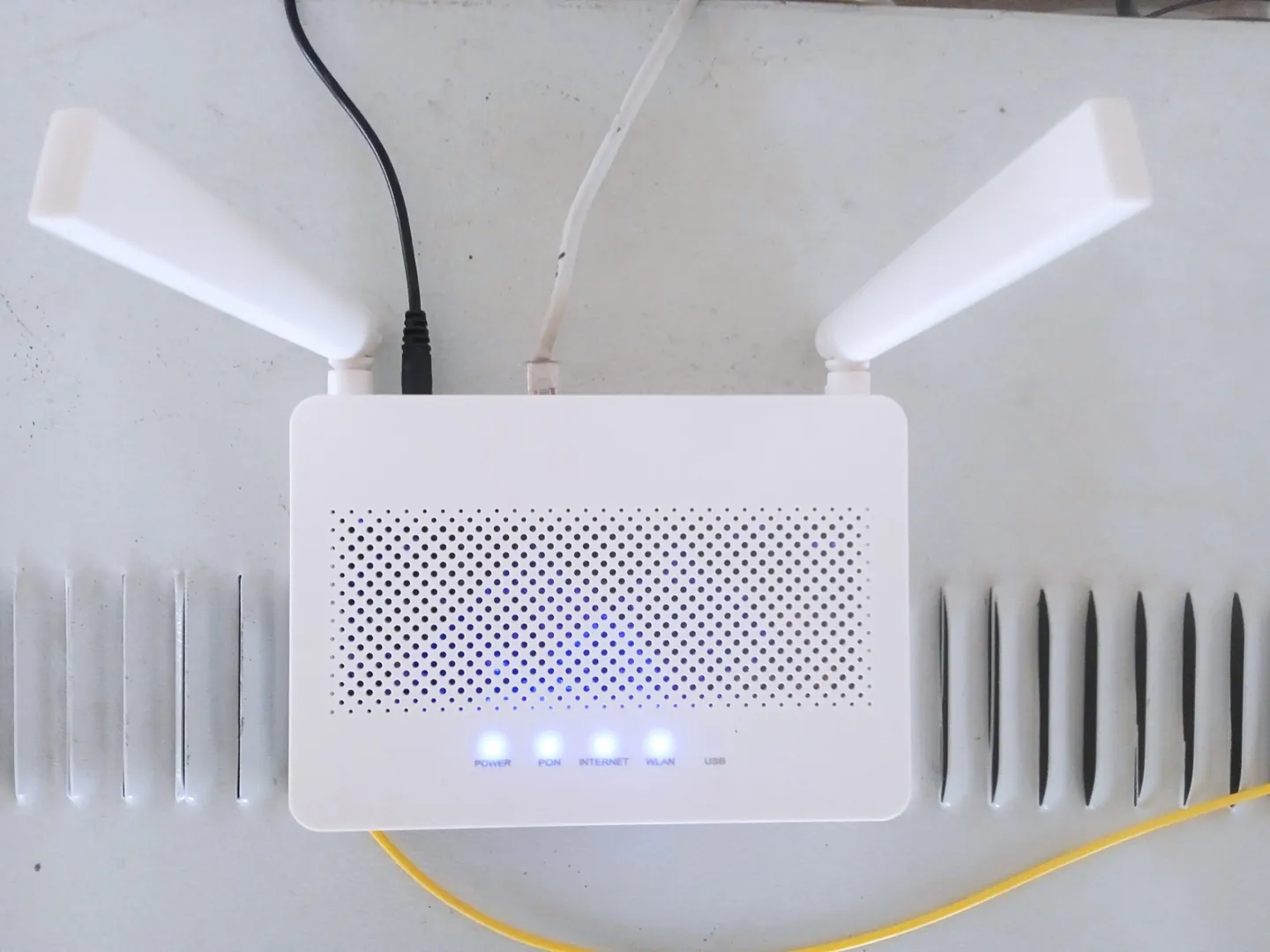
Wi-fi router.jpg — Solijon Solayev; CC BY-SA 4.0. Resized and converted to WebP; source: https://commons.wikimedia.org/wiki/File:Wi-fi_router.jpg
What common appliances can run?
| Appliance | Where to find its figure | Example | What that means, by our maths |
|---|---|---|---|
| Fridge freezer | Annual kWh on its energy label. | Samsung RB34C632ESA: 254 kWh a year. | About 696 Wh a day. A 245 Wh station stores less than that. With about 910 usable Wh from a 1,070 Wh battery at 85%, the arithmetic is about a day before start-up surges. Real use varies with door opening and room temperature. |
| Freezer | Annual kWh on its energy label. | Use your own appliance label. | Divide annual kWh by 365 for an average daily figure, then compare it with usable Wh. This is our arithmetic, not a promised runtime. |
| Washing machine | kWh per 100 cycles on the energy label. | Bosch WGG04409GB: 46 kWh per 100 Eco 40–60 cycles; 2,300 W connection rating. | About 460 Wh per cycle. Its 2,300 W connection rating exceeds both stations’ rated output. It is not suitable for these examples. |
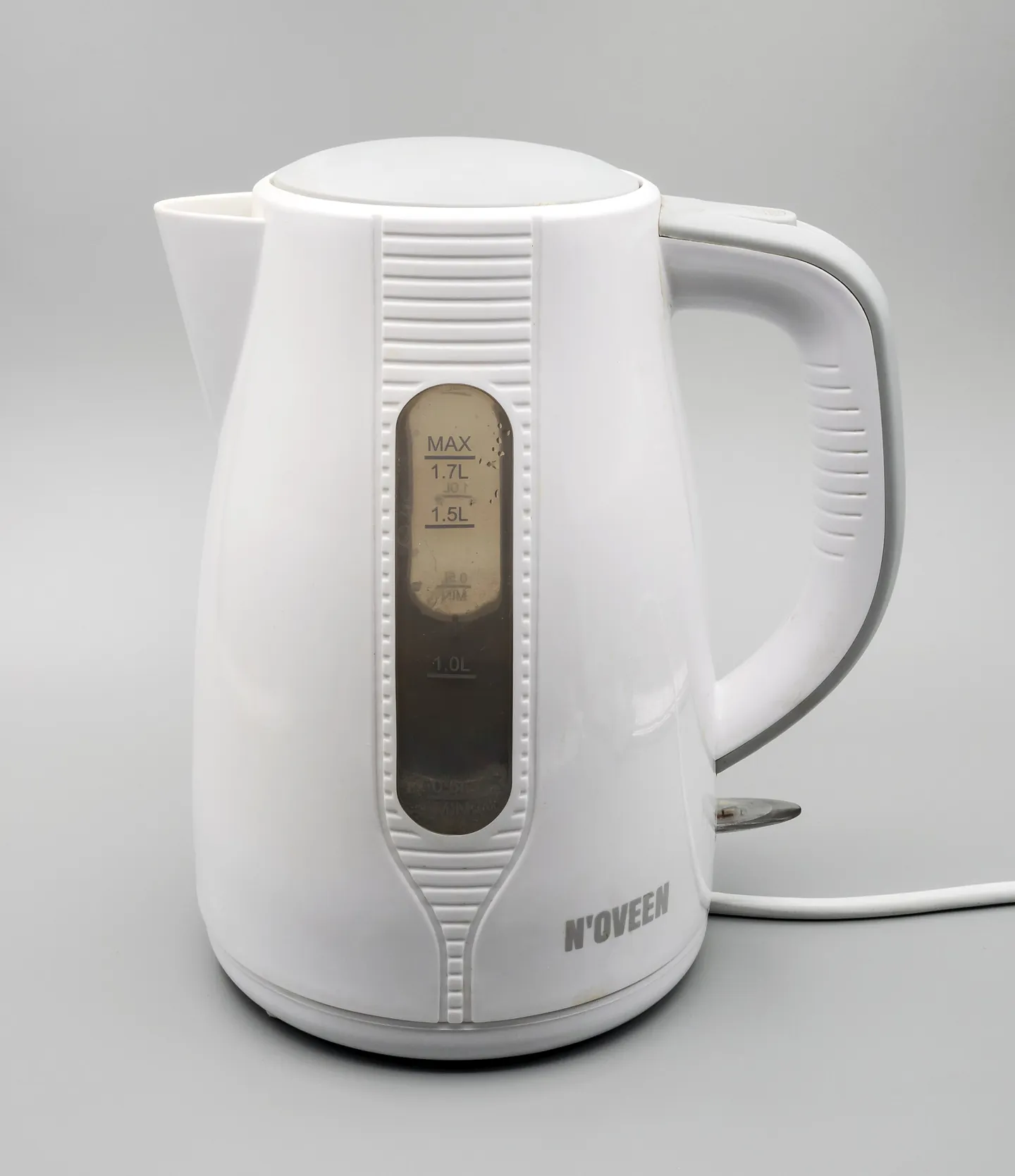
| Kettle | Rating on the base. | Russell Hobbs Quiet Kettle 26300: 3,000 W. | Above both stations’ rated output. Boil water outdoors on a suitable stove or fill a flask before a planned cut. See outdoor stove choices. |
| Microwave | Power consumption on the specification plate. | Samsung MS23K3513AK: 1,150 W consumption and 800 W cooking output. | Within 1,500–1,800 W rated output. Three minutes at 1,150 W is about 58 Wh. It exceeds a 300 W station’s rated output. |
| CPAP | User guide and supplier advice. | ResMed AirSense 11 UK/EU guide: typical 56.1 W, peak 73.2 W. | An eight-hour night is about 449–586 Wh. Ask your equipment supplier or clinical team before relying on a battery. ResMed sells a 12/24 V DC converter for this model. |
| Wi-Fi router | Output on the adaptor label. | Read your own adaptor. | Do not assume a generic wattage. See keeping broadband and your landline going. |
| TV | kWh per 1,000 hours on the energy label. | Citizens Advice gives 50 kWh per 1,000 hours as an example. | That is 50 W average while on. Three hours is about 150 Wh. |
For heaters and boilers, read our separate guide to heaters and boilers. Do not improvise a connection to fixed wiring. Some EVs can power selected appliances through a vehicle-to-load outlet; see how V2L works and its limits.
Why kettles and heaters drain a battery fast
High-watt heating loads can exceed a station’s rated output or use stored energy quickly. For example, a 3,000 W kettle is above the 1,500 W and 1,800 W ratings above. The same arithmetic applies to a heater: usable Wh divided by its input W gives a rough estimate, before other losses or changes in load. Check the label and instructions.

Full image attribution
2023 Czajnik elektryczny N'OVEEN.jpg — Jacek Halicki; CC BY-SA 4.0. Resized and converted to WebP; source: https://commons.wikimedia.org/wiki/File:2023_Czajnik_elektryczny_N%27OVEEN.jpg
Measure your own appliance
A plug-in energy monitor can show how much a plug-in appliance draws over time. Use it only as its maker directs and check the monitor’s rating against the appliance. Read Energy Saving Trust advice on home appliances to find energy-label information.
Amazon links in this guide are affiliate links. As an Amazon Associate I earn from qualifying purchases. Read our affiliate disclosure.
Make the battery last
- Run only the devices you need.
- Switch AC outputs off when idle. Jackery lists 18 W standby power consumption for the Explorer 1000 v2; this is a maker figure, not a runtime estimate.
- Use USB or DC outputs for compatible phones and lights.
- Charge the station fully before a planned cut. Read how rota power cuts work.
Jackery lists a UPS switchover of 20 ms or less; EcoFlow lists under 10 ms for the DELTA 3 Plus. Those are maker figures. They do not prove a particular device will stay on during a switch.
Which size might suit?
- Small loads such as a router, lights and phones: EcoFlow RIVER 3 (245 Wh, 300 W rated).
- About 1 kWh: Jackery Explorer 1000 v2 (1,070 Wh, 1,500 W rated) or EcoFlow DELTA 3 Plus (1,024 Wh, 1,800 W rated).
Compare models in our best portable power stations guide and Jackery vs EcoFlow. For other models, see portable power stations. These are retailer category searches, and results can include other brands and models. Check the exact model and specifications on the listing.
Kit that helps you measure your own appliances: plug-in energy monitors. A power bank keeps phones off the station’s AC outlets.

Full image attribution
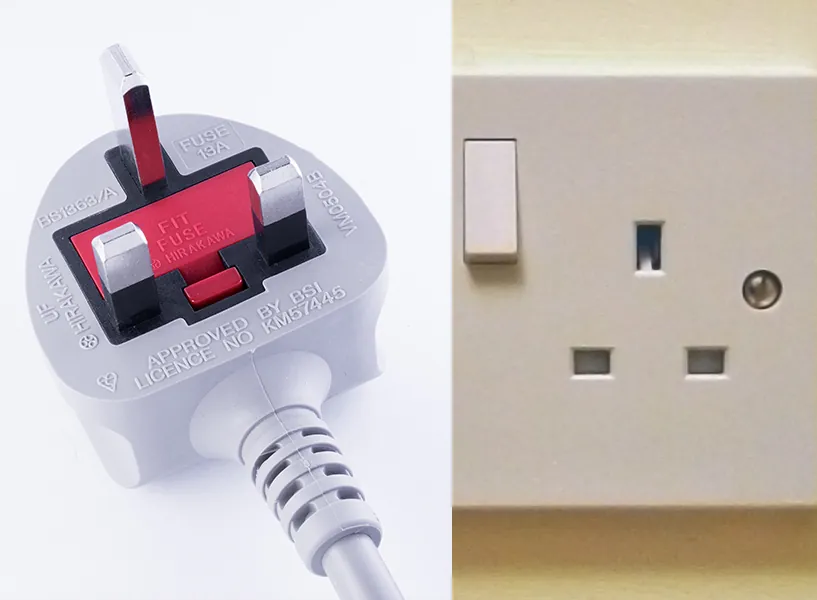
UK BS 1363 plug and socket (IEC Type G).png — Ukpluggerrr; CC BY-SA 4.0. Resized and converted to WebP; source: https://commons.wikimedia.org/wiki/File:UK_BS_1363_plug_and_socket_(IEC_Type_G).png
Common questions
Will a power station run a fridge?
It can if the appliance’s running and start-up demands fit the station’s output. Use the energy label to estimate daily use. In our Samsung example, a 1,070 Wh station with an 85% allowance gives about a day by our maths, before surges and real-world variation.
Can a power station run a kettle?
Most 1–1.8 kW stations cannot supply a 3,000 W kettle. These retailer links are category searches, so results may include other models. Check the rated output and the kettle label.
Can I run a CPAP from a power station?
Use the figures in your device guide and ask your equipment supplier or clinical team before relying on a battery. The AirSense 11 example uses 56.1 W typical and 73.2 W peak in the cited guide.
What is the difference between surge and rated watts?
Rated watts describe the stated continuous output. Surge or peak watts describe a higher short-duration output under the maker’s stated conditions. Check both manuals for your exact appliance and station.
How do I work out how long it will last?
As a rough estimate, divide battery watt-hours multiplied by 0.85 by appliance watts. The 0.85 is our tool’s allowance for losses. Use the runtime calculator and do not treat the result as a promise.
Related guides
Sources
- Jackery Explorer 1000 v2 specifications.
- EcoFlow DELTA 3 series specifications.
- EcoFlow RIVER 3 specifications.
- Samsung RB34C632ESA energy fiche.
- Bosch WGG04409GB specification sheet.
- Russell Hobbs Quiet Kettle 26300.
- Samsung MS23K3513AK specifications.
- ResMed AirSense 11 user guide, UK/EU edition.
- ResMed AirSense 11 converter.
- Energy Saving Trust: home appliances.
- Citizens Advice: energy labels.
Sources checked 5 November 2026. Appliance and power-station figures are makers’ published figures, not our tests. Our arithmetic is labelled as such.