

On this page
- Make the medicine list precise
- Work backwards from the normal supply date
- Record ordinary and urgent routes separately
- Know what emergency supply can and cannot do
- Ask for help before choosing a substitute
- Plan storage around the actual product
- Prepare for leaving home
- Make the plan workable for a helper
- Medicine continuity checklist
- Keep it current without building surplus
- Sources
A prescription plan should help you continue established treatment through a delayed delivery, closed pharmacy, evacuation or power cut. It should not change that treatment. Do not build a private stockpile by repeatedly ordering early, share prescription medicines or alter doses to make a supply last. Agree practical arrangements with the pharmacist or prescriber who can assess the actual medicines involved.
Start before a disruption with a current list, the right contact numbers and a normal ordering routine. If you are already at risk of missing an essential medicine, seek professional advice promptly. If someone is seriously ill, call 999 or 112. Searching for replacement tablets is not an alternative to emergency care for severe symptoms.
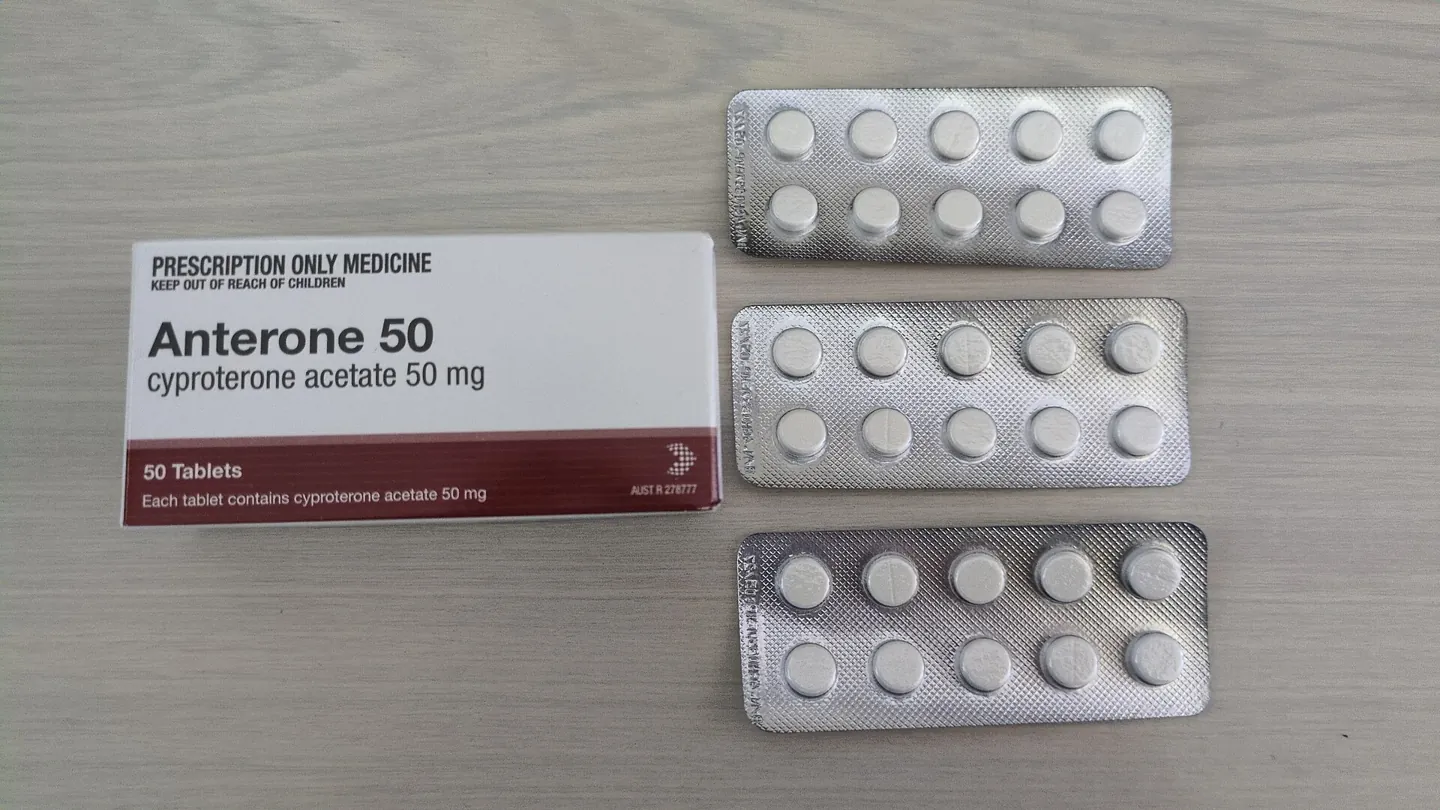

Full image attribution
Anterone (cyproterone acetate) tablets in Australia, with three blister packs.jpg — BlankEclair; CC BY-SA 4.0. Resized and converted to WebP; source: https://commons.wikimedia.org/wiki/File:Anterone_(cyproterone_acetate)_tablets_in_Australia,_with_three_blister_packs.jpg
Make the medicine list precise
For each person, record the medicine name, strength, form and prescribed directions. Include relevant allergies and the date the list was checked. A tablet, liquid, inhaler or modified-release preparation with a similar name may not be interchangeable. Copy details from current dispensing labels and confirm any discrepancy with the pharmacist.
Record medicines supplied by different services, including hospital clinics, homecare suppliers or specialist teams. A repeat list from the GP may not contain every item. Include the correct contact for each supply route and any agreed monitoring appointments. Keep over-the-counter products and supplements visible to the pharmacist where relevant to safe treatment.
Separate the current list from old discharge letters or superseded prescriptions. Keep historic documents if needed, but label them clearly so a helper does not follow outdated directions. Ask before changing another adult's record or sharing it. The emergency document guide explains keeping a concise care sheet without exposing unrelated private information.
Work backwards from the normal supply date
Ask your practice and pharmacy how much time to allow for routine repeats, including weekends and bank holidays. NHS England's emergency prescription guidance says to usually allow five working days to request and obtain repeat medicine. Your local arrangements or specialist supply may take longer, so confirm the timetable that applies to you.
Keep a reminder early enough to deal with a missing item or review request. Check what is actually left rather than ordering everything automatically. If a medicine is no longer taken, ask how to remove it from the repeat process. A cupboard full of unused boxes can hide that the one item still needed has nearly run out.
Distinguish prescription approval, dispensing and collection. A request sent through an app does not mean the medicine is ready. Confirm how the pharmacy notifies you and who can collect if the usual person is unavailable. Agree consent and identification arrangements in advance rather than asking a neighbour to solve them at the counter during a disruption.
Record ordinary and urgent routes separately
| Contact | What to establish |
|---|---|
| Usual pharmacy | Telephone, opening hours, ordering or collection arrangements. |
| GP or prescriber | Repeat request method and urgent contact when an item is missing. |
| Specialist or homecare service | Which medicines it supplies and its disruption contact. |
| Out-of-hours service | The correct route in the UK nation where you will be. |
| Agreed helper | Consent, collection ability and how to share essential information. |
Keep the list on paper as well as in a protected digital record. A phone with a flat battery should not remove access to the pharmacy number. If you use online repeat requests, learn the practice's alternative when the service is unavailable. Do not set up duplicate requests through several channels without explaining what has already been sent.
Know what emergency supply can and cannot do
In England, the NHS describes pharmacy, GP and urgent-care routes. Its online emergency prescription service is for people who have completely run out of a repeat medicine; a pharmacy referral may follow. Some supplies can require payment and some medicines cannot be supplied this way. Contact the pharmacy or prescriber before reaching that point when you can.
In Wales, Aneurin Bevan University Health Board explains emergency pharmacy supply. The pharmacist assesses the medicine, immediate need, previous prescriber and dose. Bring a repeat slip or labelled packaging if available. Legal restrictions apply, and the pharmacist may need to direct you elsewhere. An emergency request is not a promise of a particular quantity.
In Scotland, NHS Fife advises contacting another community pharmacy if the usual one is closed and explains that an urgent supply may be possible. For urgent out-of-hours healthcare advice use NHS 24 on 111. Check the arrangements where you are staying rather than assuming an English app referral follows you automatically.
In Northern Ireland, use the usual pharmacy or GP and the local GP out-of-hours service when urgent medical care cannot wait. That service is not for routine repeat prescriptions; seek pharmacy advice about a supply problem and explain any immediate clinical risk. nidirect lists pharmacy services and links to out-of-hours rotas. Do not present 111 as a single universal prescription route across all four nations.


Full image attribution
Assistant Pharmacist.jpg — M Joko Apriyo Putro; CC BY-SA 4.0. Resized and converted to WebP; source: https://commons.wikimedia.org/wiki/File:Assistant_Pharmacist.jpg
Ask for help before choosing a substitute
If an item is unavailable, tell the pharmacist when the next dose is due and how much remains. Explain any missed doses and symptoms. Ask what happens next, who will contact the prescriber and when you should call again. Write the agreed action down so two helpers do not each assume the other is following it up.
Do not switch strength, formulation, route or brand where the prescription requires a particular product without professional agreement. Do not borrow another person's supply or buy prescription medicine from an unverified seller. A familiar-looking package is not evidence that it is suitable or genuine. A pharmacist can explain the lawful options for the actual medicine.
Missed-dose instructions are medicine-specific. Use the patient leaflet and seek pharmacist or prescriber advice when uncertain. Do not apply a general rule to double the next dose, skip several doses or stop treatment. If a medicine has an individual emergency plan, keep that plan with the supply and make sure an agreed carer knows where to find it.
Plan storage around the actual product
Read the dispensing label and patient leaflet for storage instructions, including after opening. Keep medicines in their labelled original packaging unless the pharmacy has provided an agreed alternative. Protect them from children, pets and unauthorised access. Consider whether a bathroom, sunny windowsill or hot vehicle actually meets the instructions.
For refrigerated medicine, ask the pharmacist what to do if the fridge fails or the power stops. There is no universal household rule saying every medicine remains usable for a fixed number of hours. Record the exact product and the information the professional asks for. United Lincolnshire Hospitals' storage guidance directs patients to product-specific advice and the pharmacy or manufacturer after a power cut.
Do not freeze medicine, put it directly against ice packs or transfer it into improvised cooling equipment unless the specific instructions permit it. A cool bag's marketing claim does not establish that it holds the required temperature. Ask about suitable transport and temperature monitoring before buying equipment, and what to do if the required conditions cannot be maintained.
Prepare for leaving home
Keep a ready list of medicines and administration items needed for a planned departure. Some may normally live in secure storage or a fridge rather than a permanently packed bag. Note their location and any transport instructions. Take them when safely accessible, but do not delay leaving immediate danger or re-enter to retrieve them.
If a supply is lost or inaccessible after evacuation, give the pharmacy or clinician the current list and explain the circumstances. Photographs of labels can help identify the treatment but do not guarantee a replacement. Use the grab-bag guide to avoid separating a medicine from a required device or other item in the person's established plan.
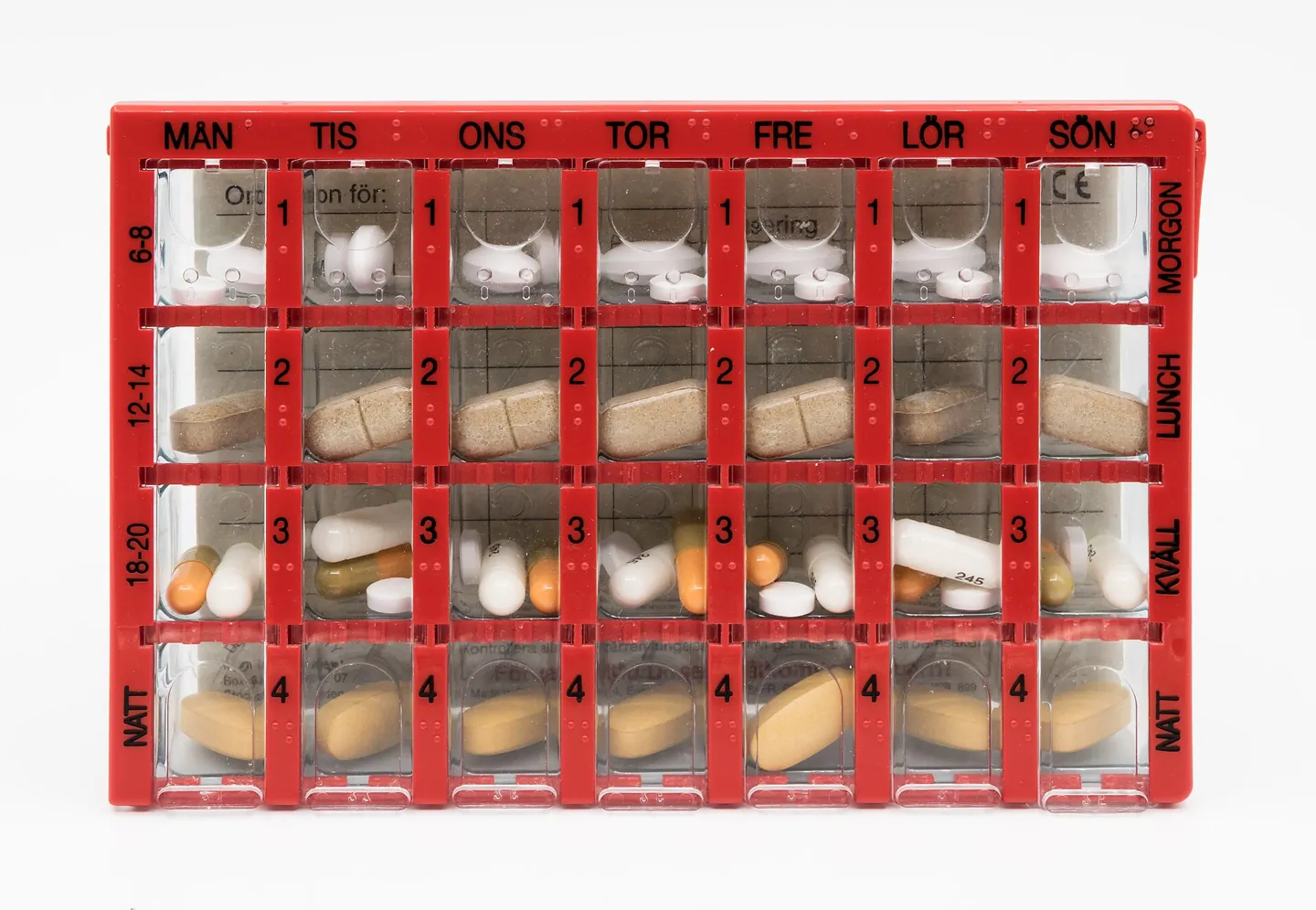

Full image attribution
2023 Kasetka z lekami.jpg — Jacek Halicki; CC BY-SA 4.0. Resized and converted to WebP; source: https://commons.wikimedia.org/wiki/File:2023_Kasetka_z_lekami.jpg
Make the plan workable for a helper
Ask a helper to find the pharmacy contact and current list using the access you have agreed. Check that the print is readable and the record identifies the right person. If someone needs reminders, accessible labels or assistance opening packaging, discuss that with the pharmacy. Do not simply remove child-resistant packaging or mix tablets into an unlabelled container.
For powered clinical equipment, use the medical equipment outage guide alongside the medicine plan. A Priority Services Register entry may support communication but does not guarantee supply, medicine delivery or clinical care. The care team should define the safe response to loss of essential treatment or equipment.
Medicine continuity checklist
- Check the current medicine list against labels and professional instructions.
- Record the normal repeat-order timetable and a reminder.
- Save pharmacy, prescriber and specialist supply contacts on paper.
- Agree an authorised collection helper and a backup contact.
- Ask for product-specific storage and power-cut advice where needed.
- Keep the correct urgent-care route for the nation you are in.
- Review expiry dates and return unwanted medicines to a pharmacy.
- Update the record after every treatment change.
Keep it current without building surplus
Add the contact and storage check to the household review, while updating treatment changes immediately. Ask the pharmacist how to dispose of medicines no longer needed; nidirect advises returning unwanted or expired medicines to a pharmacy. Do not leave them as an informal emergency supply for someone else.
For seasonal planning, use the heat illness guide and hypothermia guide to recognise emergencies. Neither article changes a prescription. The finished medicine plan should make it easy to obtain individual professional advice and continue agreed treatment, even when the ordinary routine is interrupted.
Sources
- NHS: Emergency prescriptions. Checked 2 November 2026.
- Aneurin Bevan University Health Board: Emergency supply of medication. Checked 2 November 2026.
- NHS Fife: Making the best use of your pharmacy. Checked 2 November 2026.
- nidirect: Community pharmacists. Checked 2 November 2026.
- nidirect: GP out of hours service. Checked 2 November 2026.
- United Lincolnshire Hospitals NHS Trust: Storing medicines at home. Checked 2 November 2026.
- NHS: When to use NHS 111 online or call 111. Checked 2 November 2026.