

On this page
- Find evidence for your address
- Write down what the household needs to keep doing
- Compare consequences without pretending to know the odds
- Choose the first actions by what they prevent
- Look for several plans depending on one thing
- Keep a short record you will revisit
- Review changes, not just the calendar
- Common mistakes that distort priorities
- Your finished assessment checklist
- Sources
A family in a ground-floor flat beside a river has different priorities from someone on the fifth floor who relies on a lift. Both may lose electricity, but the consequences differ. Buying the same emergency bundle for each home will leave important problems unanswered.
Allow an unhurried hour for a first assessment. You need the address, a notebook and the people who understand the household's daily routines. If everyone cannot join at once, gather their answers separately. This is a planning exercise, not a professional assessment of a building, an electrical installation or someone's health.
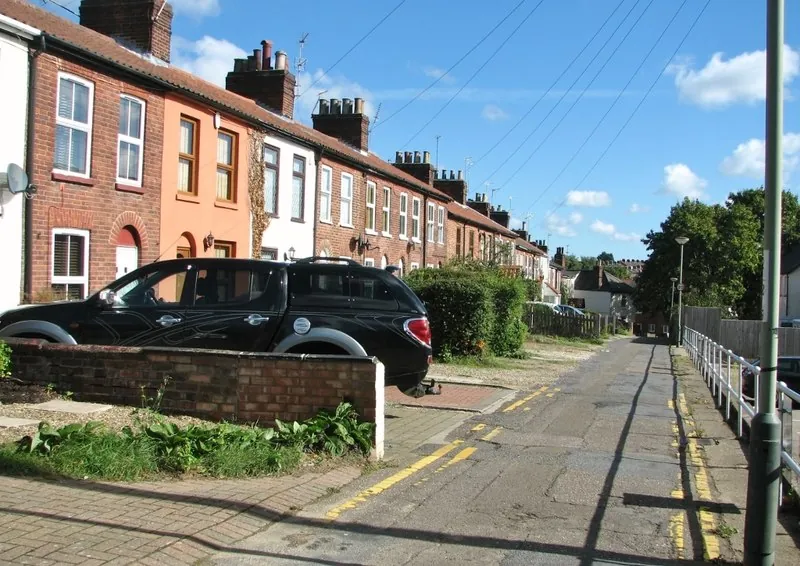

Full image attribution
Terraced houses on Alma Terrace - geograph.org.uk - 5919086.jpg — Evelyn Simak; CC BY-SA 2.0. Resized and converted to WebP; source: https://commons.wikimedia.org/wiki/File:Terraced_houses_on_Alma_Terrace_-_geograph.org.uk_-_5919086.jpg
Find evidence for your address
Begin with your council's emergency planning pages and the public risk information for your area. In England and Wales, local resilience arrangements commonly publish a community risk register. The government's local risks guidance explains how to find this information. Scotland and Northern Ireland have their own resilience arrangements, so follow your council and national government's links rather than assuming every area uses the same organisation.
Read the short public summary before a lengthy technical register. Note hazards that have a plausible connection to the home or a regular journey: flooding, severe weather, loss of essential services and disruption to transport. A regional industrial hazard matters more if official public information places your address within an affected area. Do not invent an evacuation radius from a map.
Keep the name of the source, its web address and the date you checked it. Write a one-sentence finding in your own words. If a page is several years old, see whether its publisher provides a replacement. An old document can help explain local history without being the current instruction during an incident.
Check flood information for the correct nation. England's long-term flood-risk service covers several flood sources but does not predict whether an individual property will flood. A low category is not a guarantee against blocked drains, burst pipes or an inaccessible road. Read the explanation accompanying the map, not just its colour.
Write down what the household needs to keep doing
List routines before possessions. Examples include taking prescribed medicine, receiving a care visit, preparing a safe feed, getting to the toilet, keeping warm, contacting help and collecting children. Ask each person what would become difficult if electricity, water, transport or internet access stopped. Someone else's answer may reveal a dependency you have never noticed.
For every essential routine, trace the service behind it. A gas boiler may still need electricity. A flat's water supply may depend on a pump. A telephone may depend on the broadband router. An electric door-entry system may affect a visiting carer even when the resident can leave normally. Record an uncertainty as a question for the provider, landlord or manufacturer.
Include people who are present only sometimes. A grandparent who stays at weekends needs usable sleeping arrangements and access to help. A child with shared care may have supplies at the other home. A dog walker holding a key may be the only person likely to visit on a weekday. Do not turn those connections into duties without asking.
Describe support in practical language. "Cannot carry a full water container upstairs" points to an action. "Vulnerable household" does not explain what help would work. Our accessible emergency planning guide develops this part of the assessment without reducing people to a diagnosis.
Compare consequences without pretending to know the odds
You do not need a numerical probability for every event. A household usually lacks enough evidence to calculate one honestly. Use broad judgements such as "documented locally", "possible at this address" and "uncertain, ask the responsible organisation". Keep those separate from how serious the consequences would be.
| Disruption | Evidence or dependency | Consequence | Useful next action |
|---|---|---|---|
| Evening power cut | Only light available is a phone | Unsafe movement to the bathroom | Find and check an accessible torch |
| Water interruption | Resident cannot carry heavy shopping | Cannot collect a large water delivery | Ask water company about support and agree carrying help |
| Rail disruption | Usual collector commutes by train | School collection delayed | Confirm an authorised local backup |
| Flooded access road | Official map identifies nearby risk | Normal route unavailable | Find official warnings and review a safe alternative before an incident |
These examples illustrate the method; they are not claims about a particular street. Your assessment may put a care interruption above every item in the table. Where failure could immediately threaten health, involve the relevant clinical or care team. A household worksheet cannot establish how long medical equipment can safely stop.
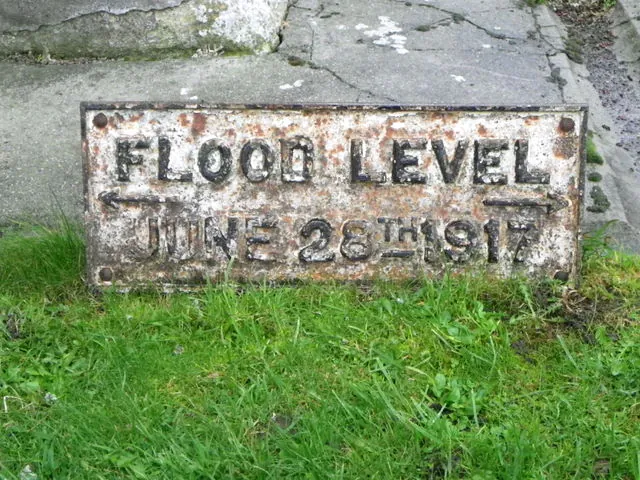

Full image attribution
Flood level marker, Bruton (geograph 2156859).jpg — Maigheach-gheal; CC BY-SA 2.0. Resized and converted to WebP; source: https://commons.wikimedia.org/wiki/File:Flood_level_marker,_Bruton_(geograph_2156859).jpg
Choose the first actions by what they prevent
Separate an immediate danger from a preparation gap. A damaged socket, blocked fire exit or active leak needs the appropriate repair or emergency response now. It should not sit on a six-month shopping list. A missing printed phone number can usually be fixed during the assessment itself.
Next, look for gaps with serious consequences and no workable alternative. If your only way to request help depends on one powered device, resolving that deserves attention before adding spare comfort items. Ask the service provider what support exists, then document what still needs another arrangement.
Some actions help across several risks. A current contact sheet, a reliable light and an agreed nearby helper can be useful during a storm, water outage or unexpected evacuation. They deserve priority when affordable and suitable, but a general benefit does not replace a specific medical or access plan.
Limit the first action list to what you can realistically complete. Give each task a named person and a date. "Check whether the front door releases during an outage with the building manager by Friday" is better than "improve home security". If nobody can complete a task, record the barrier instead of marking it done.
Keep spending within ordinary household means. The budget preparation guide helps distinguish useful purchases from equipment that merely looks reassuring. A free conversation about school collection may close a more serious gap than an expensive device.
Look for several plans depending on one thing
A backup is weak if it shares the same point of failure as the original arrangement. A contact list stored only in a cloud account may disappear when the phone and broadband are unavailable. A second collector who uses the same disrupted train line may offer little additional help that afternoon.
Draw simple arrows on paper. "Power cut" points to "router off", which points to "digital telephone unavailable". Another arrow might lead to "door entry unavailable", then "care visit cannot get in". This makes the hidden dependencies visible without technical diagrams or software.
Check the alternative in ordinary conditions. Can the helper actually reach the home? Can you read the printed details without your usual screen? Does the spare cable fit? Do not test a theory by cutting essential services or disconnecting care equipment. Use discussion, the equipment manual and provider confirmation.
Put relevant decisions into the appropriate plan. Use the household power-cut guide for outage actions and offline document guidance for information you must recover without a connection. The risk assessment should point to those arrangements rather than repeat them.
Keep a short record you will revisit
For each priority, record five things: the problem, the evidence, the consequence, the agreed action and the date for checking it again. Add the person responsible and where the detailed instructions are kept. A page that fits in a document wallet is often easier to maintain than a complex spreadsheet.
Use clear status words. "Asked", "awaiting reply", "agreed" and "checked" show different stages. Do not mark a support arrangement complete just because an application form was submitted. Save any confirmation that describes what the provider will actually do.
Keep private information separate from copies shared with neighbours. A neighbour may need a preferred contact method and permission to knock, while a clinician needs much more detail. Record consent for sharing and remove outdated copies when circumstances change.
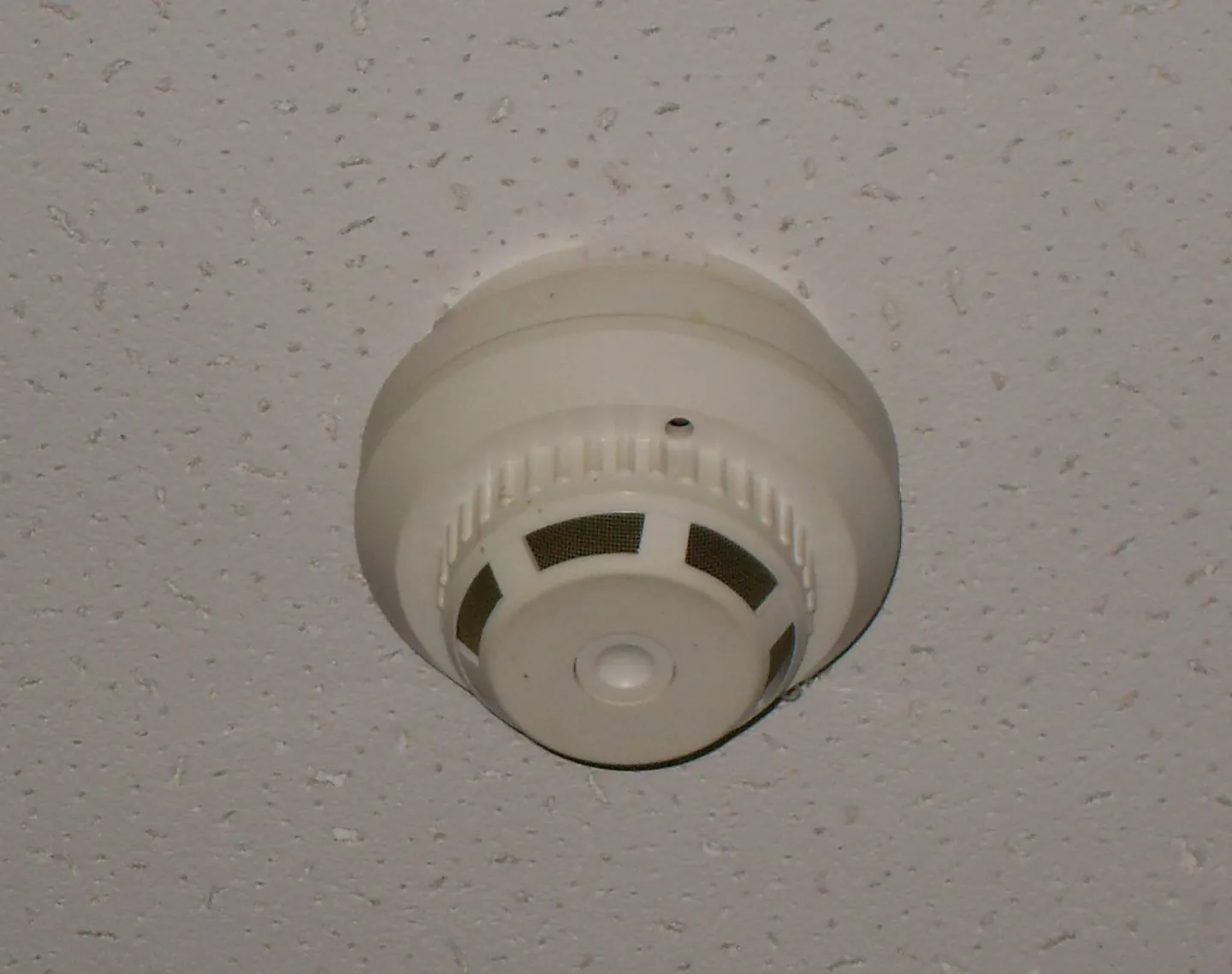


Full image attribution
Smoke detector (1).JPG — Georg Pik; Public domain. Resized and converted to WebP; source: https://commons.wikimedia.org/wiki/File:Smoke_detector_(1).JPG
Review changes, not just the calendar
A move, new treatment, changed working hours, new baby or loss of a regular helper can alter the assessment immediately. A winter review also catches daylight and travel problems that were less obvious in summer. Give the sheet a next-review date, but update it earlier when a dependency changes.
After a real disruption, note what failed and what worked. A torch that was bright enough but impossible to find suggests a storage problem. A missed message suggests a communications problem. Buying a replacement item will not necessarily fix either one.
Try a calm household planning exercise once the first actions are complete. Ask someone who did not write the plan to explain it back. Their questions can expose unclear wording before it matters.
Common mistakes that distort priorities
Do not copy the most dramatic scenario from the news and make it the whole plan. News coverage describes an event elsewhere, while your household's daily dependencies remain. Equally, "it has never happened here" is not evidence that a service cannot fail.
Avoid scoring everything as equally urgent. If twenty tasks all carry the highest label, the labels cannot help you decide. Choose the next few actions and explain the consequences they address. Revisit the rest when those are complete.
Do not count equipment you cannot use, help nobody has agreed to provide, or a destination you cannot reach. Those are proposed solutions. Keeping them visibly unconfirmed is a useful result of the assessment.
Your finished assessment checklist
- Find current official information for the address and regular journeys.
- Write essential household routines and the services they depend on.
- Ask each person what support they want.
- Identify serious consequences with no usable alternative.
- Choose a small, affordable action list with owners and dates.
- Confirm provider arrangements rather than assuming registration guarantees them.
- Keep the record accessible and share only necessary personal information.
- Set a review date and update the plan after significant changes.
Sources
Sources checked on 2 November 2026. Worked examples and household worksheets are illustrative planning aids.
- UK Government: Check the risks where you are. Verified 2 November 2026.
- Environment Agency: Check the long term flood risk for an area in England. Verified 2 November 2026.
- UK Government: Be ready for emergencies. Verified 2 November 2026.