
On this page
- Map the ordinary day first
- Ask the school what it actually permits
- Choose backup adults by availability
- Agree who coordinates changes
- Plan for a missing connection
- Choose meeting points with clear conditions
- Handle shared care and additional needs explicitly
- Try one realistic afternoon on paper
- School and working-day checklist
- Sources
On a working day, a household may be spread between a primary school, nursery, office, hospital shift and railway station. "Meet at home" is too vague if nobody can collect the youngest child, the front door is inside a cordon or two adults set off to the same place.
A reunification plan answers a small number of practical questions: who is responsible for each person, who can take over, where reliable instructions will come from and what to do when a message does not arrive. It should fit on a page, with detailed school or care instructions kept alongside it.

Full image attribution
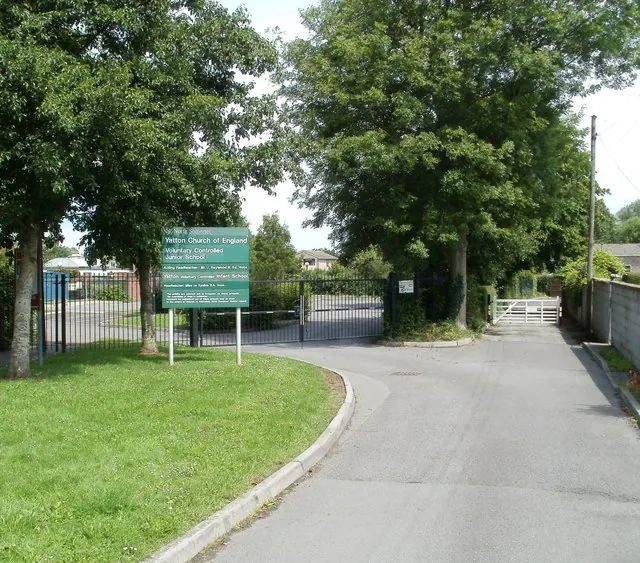
Entrance to Yatton Church of England Junior School and Infant School - geograph.org.uk - 2958574.jpg — Jaggery; CC BY-SA 2.0. Resized and converted to WebP; source: https://commons.wikimedia.org/wiki/File:Entrance_to_Yatton_Church_of_England_Junior_School_and_Infant_School_-_geograph.org.uk_-_2958574.jpg
Map the ordinary day first
Write each person's usual location and travel arrangements for the days that differ. Monday's after-school club may need a different collector from Friday's childminder. Include split shifts, shared care, school transport and a teenager who travels independently. Do not assume one weekly pattern covers every afternoon.
Next to each location, write the responsible organisation and its normal contact route. Use the school office number, nursery's published contact and employer's agreed emergency arrangements. A teacher's personal mobile or an informal parents' group may not be an appropriate route during an incident.
Identify the moments when responsibility changes. Who knows that a child has boarded transport, reached a club or been collected? Decide how the adults will confirm a handover. The useful message is "Collected Sam from the school office at 15:40; going to Aunt Jo's", not just "sorted".
Keep the plan factual and respectful of family arrangements. Where court orders, safeguarding restrictions or disagreements affect collection, give the school the relevant formal information. An informal emergency plan must not override those restrictions.
Ask the school what it actually permits
Read the school's collection and emergency communication policies. NSPCC guidance explains why schools need clear arrangements for authorised collectors and late collection. Do not assume that being listed as an emergency telephone contact automatically gives someone permission to collect.
Ask how to register a backup adult, how changes are authenticated, what identification may be needed and which channel carries an urgent instruction. If the school uses a collection password, follow its system and share it securely only with authorised people. Do not invent a competing family password that staff have never agreed to use.
Check what happens if the school closes early, moves to another site or asks families to stay away temporarily. Some incidents require a controlled collection process. Travelling straight to the gate because another parent sent a message can obstruct access or put you in the affected area.
Policies vary. As one local example, West Lothian Council explains that children remain supervised until suitable arrangements are made when no adult can receive them. That example is not a promise about every UK school. Obtain your own school's current instructions.
Choose backup adults by availability
A nearby trusted adult may be more useful for collection than a close relative an hour away. Ask before adding anyone. Explain the school, the child's needs, possible collection times and whether the arrangement includes caring for the child afterwards.
Check that the backup is not exposed to the same likely delay. If both parents and the nominated neighbour commute on the same railway line, find out whether another authorised adult is usually local. Do not create a long list of people who have all assumed somebody else will attend.
| Person or setting | Usual arrangement | Backup to confirm | Required detail |
|---|---|---|---|
| Primary-school child | Parent collects | Named nearby adult | School authorisation and handover confirmation |
| Nursery child | Other parent collects | Separately registered collector | Nursery procedure and suitable transport |
| Independent teenager | Bus home | Agreed safe staffed location | When to stay put and whom to contact |
| Household coordinator | Adult with access to updates | Named alternative | Receives collection status and avoids duplicate journeys |
Make transport suitable. Check child restraints where required, space for a mobility aid and whether the driver is able and willing to make the journey. A collection arrangement is incomplete if it depends on squeezing an extra child into an unsuitable car.
Include essential care information with the setting's agreed procedures. The collector needs to know about immediate access or allergy needs and who can answer questions. Do not ask an untrained helper to give unfamiliar treatment or change a care plan.


Full image attribution
WallCalendar.jpg — Claudio Elias; Public domain. Resized and converted to WebP; source: https://commons.wikimedia.org/wiki/File:WallCalendar.jpg
Agree who coordinates changes
Choose one adult to keep the current picture where possible. That person records who has been contacted, who is collecting and where everybody is going. They need not be the person doing the most travelling. The role can transfer, but tell the other adults clearly.
Use a short sequence when a journey fails. First establish your own safety and the official travel information. Then tell the coordinator that you cannot perform the agreed collection. The coordinator contacts the authorised backup and confirms the change through the school's required route.
Do not treat a sent message as an accepted task. Ask for an explicit reply such as "I can collect; school has confirmed". Until that arrives, the original responsibility remains unresolved. A group chat with several blue ticks does not establish which adult is acting.
Use the rail-disruption guide for your own travel decisions. Rushing onto an unfamiliar route while also trying to coordinate several pickups can make both tasks harder. If safe, pause somewhere suitable to make the arrangements first.
Plan for a missing connection
Write essential numbers on a small card as well as storing them in phones. Include the school, authorised backup and one agreed household contact. Keep the card private; children should not display a full address and family schedule on an external bag tag.
Agree a fallback order for ordinary contact, such as a call followed by a brief text and then the named alternative contact. Messages can be delayed, so include the time and location. Avoid repeatedly sending conflicting instructions as people move.
A person outside the affected area may help relay information if local relatives cannot reach one another. Ask them first and explain their limited role. They cannot confirm a child's safety unless the responsible adult or setting has actually provided that information.
The mobile-outage guide explains wider communication limits. Do not promise that a messaging app, Wi-Fi call or second SIM will work through every disruption. Emergency services numbers are for real emergencies, never for testing the family plan or tracing a routine delayed train.
Choose meeting points with clear conditions
Distinguish a nearby meeting place after leaving home from a place to go when the neighbourhood is inaccessible. The government's household preparation advice includes agreeing where to meet. Choose places everybody can identify without a phone map.
Check opening hours, shelter, accessibility and whether you have permission to wait there. "Outside the library's main entrance" is more precise than "at the shops", but a library closed on Sundays may be a poor overnight destination. A trusted person's home requires their agreement.
Write when to use each place. A family meeting point is not a reason for a child to leave school independently or for an adult to cross a police cordon. Follow the responsible organisation's instruction even if that changes the meeting arrangement. Safety comes before completing the planned route.
For children travelling alone, agree age-appropriate rules with them and the school. Discuss what to do if a bus stops early, the usual stop is closed or the phone battery is flat. Prefer a known staffed place and trusted contact over wandering between possible destinations.


Full image attribution
Chester Public Library - geograph.org.uk - 6363691.jpg — John H Darch; CC BY-SA 2.0. Resized and converted to WebP; source: https://commons.wikimedia.org/wiki/File:Chester_Public_Library_-_geograph.org.uk_-_6363691.jpg
Handle shared care and additional needs explicitly
Use one current version across households where appropriate and safe. Note which home holds essential items and which adults are authorised on each day. A child should not have to decide between competing adult instructions during an emergency.
Where someone needs accessible transport, communication support or a familiar routine, include those arrangements in the collection decision. Read accessible emergency planning and ask the school or care setting how its own plan handles the need.
Protect privacy when distributing copies. A workplace contact may need to know whom to notify if you cannot leave, but not a child's detailed medical history. Keep a recoverable private copy using the offline documents guide.
Try one realistic afternoon on paper
Use a scenario such as a train cancellation at 14:30. Ask the usual collector to find the right number, the backup to explain the school procedure and the coordinator to describe the final confirmation. Keep the discussion calm and clearly labelled as practice.
Follow the household practice guide; do not stage a surprise disappearance, send alarming messages or test school security. If the discussion reveals a gap, fix the record or contact the school during normal hours.
Review at the start of each school term and when work patterns, contact details or collection permissions change. Remove people who can no longer help. An old authorisation is not useful merely because it remains in an app.
School and working-day checklist
- Map different weekday locations and handovers.
- Read each setting's current collection and emergency communication rules.
- Register willing backup adults and confirm suitable transport.
- Name a coordinator and require clear acceptance of collection tasks.
- Keep essential contact details available offline.
- Agree meeting points and the conditions for using them.
- Make children clear that school and emergency-service instructions still apply.
- Review the plan after timetable, address or safeguarding changes.
Sources
Sources checked on 2 November 2026. Worked examples and household worksheets are illustrative planning aids.
- NSPCC: Dropping off and picking up before and after school. Verified 2 November 2026.
- West Lothian Council: Emergency Contact Details. Verified 2 November 2026.
- UK Government: Be ready for emergencies. Verified 2 November 2026.