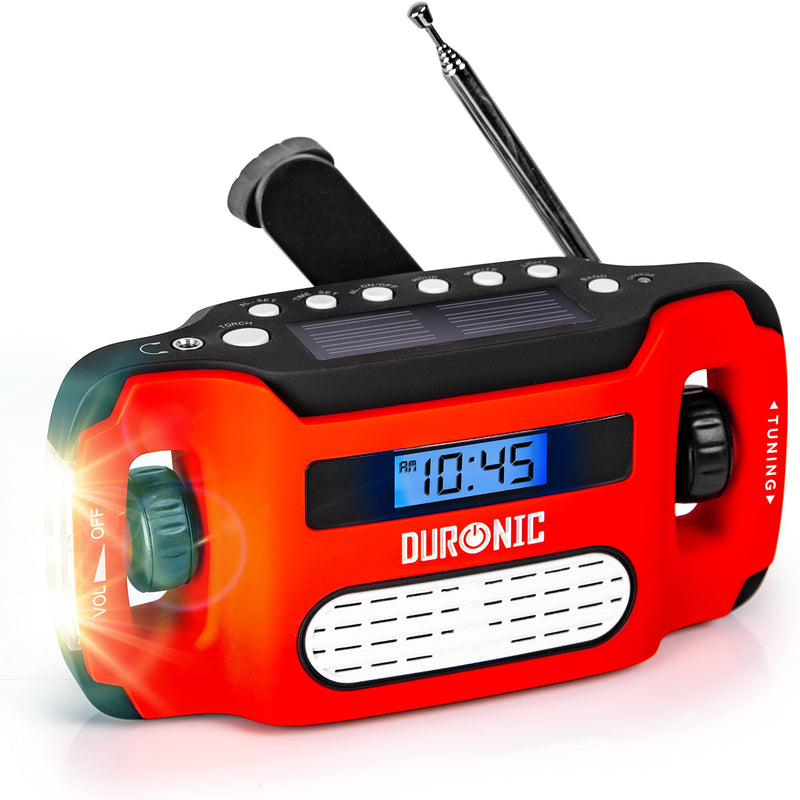
Reception comes first
Choose a broadcast service you can receive at home, then choose a radio that can play it without mains power. A wind-up handle describes a charging method; it says nothing about which stations the radio receives. FM, AM and DAB are reception formats. A digital frequency display does not establish DAB reception.
Test the set in the room where people will listen, with its intended backup power source. Adjust the aerial as the instructions allow and check speech is clear at a comfortable volume. A household member should be able to switch it on, find the preset and change the volume without working through unfamiliar menus.
| Model | Reception and power | Useful question |
|---|---|---|
| Duronic APEX | AM/FM; internal battery with USB, wind-up and solar charging | Can the intended user comfortably operate the handle and maintain the battery? |
| Roberts Play 11 | DAB/DAB+/FM; battery operation or USB-C power | Are its stations and controls a better fit, with suitable batteries kept ready? |
The full emergency radio comparison links to both manufacturers and explains their published information, checked on 30 October 2026. We have not tested reception, battery endurance or winding effort. Check the current model manual for battery requirements and included accessories.
Plan ordinary charging and a fallback
A wind-up radio still has an energy-storage system to maintain. Keep the USB cable with it and follow its storage-charge instructions. Duronic's published APEX solar charging time is 35 to 42 hours under its conditions. A small solar panel therefore needs realistic expectations in UK weather; it is not a promise of a full battery after a grey afternoon.
For a replaceable-battery set, store the type permitted by its manual and check their condition and dates. A USB-C power socket does not automatically recharge cells inside the radio. Keep a separate, suitable phone power bank if phone charging matters; the radio's small energy reserve already has a listening job.
Leave instructions beside the radio
Write down the station name, reception band and local frequency where relevant. Save a preset, but leave written tuning instructions in case someone changes it. The UK emergency radio listening guide explains how to find broadcaster information for your area. Frequencies copied from another region may be useless.
Keep the set where it can be found without moving heavy furniture or climbing. Show another person how to use it and include a reception check in your kit review. A radio receives broadcasts; it cannot send a request for help. Keep written contacts and the other communication arrangements in your household power-cut plan.